

More news on this day
Air travelers in the United States are facing a fresh round of disruption as 28 flights are canceled and more than 500 are delayed across major hubs in California, Illinois, and New York, with publicly available data showing Air Canada, United Airlines, and Lufthansa among the hardest hit carriers.
Get the latest news straight to your inbox!
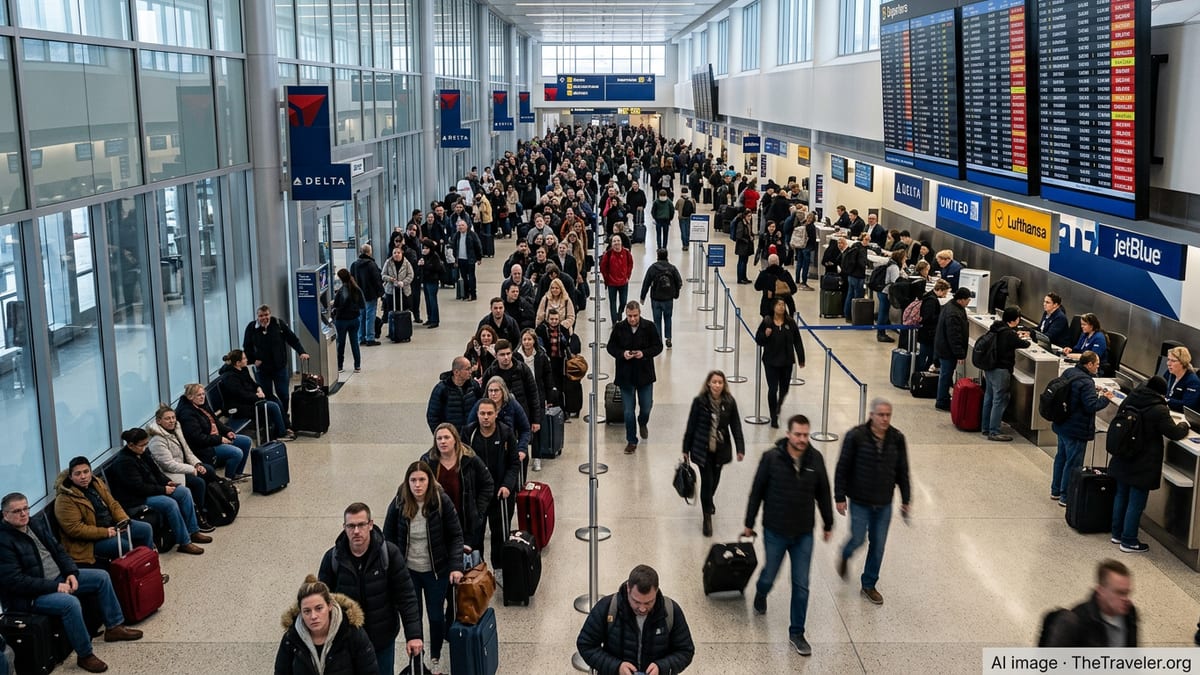
Where the Disruptions Are Hitting Hardest
Operational data from flight-tracking services and aviation-focused outlets indicates that the newest wave of disruption is concentrated at large coastal and Midwestern hubs, including airports in the Los Angeles and San Francisco areas, Chicago O’Hare, and the New York City network. These facilities are already operating close to capacity during the spring travel period, which means relatively small weather or traffic-management changes can translate quickly into widespread knock-on delays.
Reports from recent days show a pattern in which ground delay programs, runway maintenance, and storm systems combine to slow arrivals and departures, particularly at Chicago O’Hare and New York-area airports. With each missed departure slot, aircraft and crews are pushed further out of position, making it harder for airlines to recover their schedules later in the day.
California hubs have also been under pressure from infrastructure constraints, including runway work and tighter spacing rules that reduce the number of arrivals per hour. In this environment, the 28 cancellations now recorded, along with roughly 506 significantly delayed flights, are enough to create lengthy queues at check-in, security, and rebooking desks for travelers across multiple time zones.
Because these hubs act as connection points for domestic and international routes, delays in California, Illinois, and New York are rippling into secondary airports elsewhere in the United States and Canada. A single canceled or late inbound aircraft can disrupt onward flights for hours, particularly on heavily banked schedules.
Carriers Under Strain: Air Canada, United, and Lufthansa
Publicly available tracking information shows that Air Canada, United Airlines, and Lufthansa are among the carriers experiencing the most significant operational strain in the current disruption, reflecting their dependence on transborder and transatlantic hub networks. United’s large presence at Chicago O’Hare and the New York area, combined with its role as a primary connector to Europe and across the United States, makes the airline especially sensitive to any reduction in capacity at these airports.
Recent coverage of United’s performance in the spring travel period has highlighted how weather systems and air traffic initiatives can escalate into hundreds of delays and dozens of cancellations in a single day when hubs such as Newark, Chicago O’Hare, and Washington Dulles slow down. Similar dynamics are now playing out again, with schedule challenges evident across the carrier’s main connecting points.
Air Canada’s cross-border operations are also deeply intertwined with US hubs, particularly New York and key West Coast gateways. When congestion builds up in these US airports, flights arriving from or bound for Canadian cities are often delayed or rescheduled, compounding pressure on the airline’s domestic network and onward international services.
Lufthansa, which relies heavily on US–Europe flows via airports in New York and Chicago, is seeing long-haul services affected when inbound aircraft depart late from North America or are forced into holding patterns due to congestion. Even a moderate delay departing from the United States can push arrivals into European morning peak periods, straining airport resources overseas and increasing the risk of missed connections for onward passengers.
Why Relatively Small Numbers Still Cause Big Problems
Although 28 cancellations and around 506 delayed flights may appear modest compared with past mass disruptions, the timing and location of these problems are magnifying their impact. The affected hubs in California, Illinois, and New York sit at the core of many carriers’ banked schedules, where large blocks of flights are designed to arrive and depart within tight windows to support connections.
When even a handful of flights in those banks run late, aircraft and crews miss their planned rotations, gates become occupied longer than expected, and departure slots are lost. This forces airlines to choose between operating late flights that will cause rolling delays throughout the day or proactively canceling selected services in an effort to stabilize the schedule for later departures.
Weather remains a major underlying driver, with recent storm systems and low visibility episodes prompting capacity reductions at multiple hubs. At the same time, ongoing runway and infrastructure projects, as well as air traffic control constraints, limit how quickly operations can recover once the worst of the weather passes. The result is a recurring pattern of afternoon and evening congestion, particularly on peak travel days.
These structural pressures help explain why passengers can experience long queues and late arrivals even on days when the raw number of cancellations appears relatively low. For travelers, the on-the-ground experience often feels more severe than the statistics might suggest.
How to Check Your Flight and Minimize Disruption
Travel and aviation advisories consistently emphasize that the most effective step passengers can take during periods of disruption is to monitor flight status closely before leaving for the airport. Airline mobile apps and official airport departure boards are generally updated more quickly than third-party tools and can show gate changes, aircraft swaps, and rebooking options in near real time.
Publicly available guidance from consumer-advocacy and travel-compensation services also recommends enabling push notifications for every segment of an itinerary, not just the first flight. This can be especially important on routes connecting through hubs in California, Illinois, and New York, where a delay on the initial leg can jeopardize later connections by relatively narrow margins.
When a delay stretches into several hours or a cancellation is announced, passengers are often able to rebook via the airline’s app or website without waiting in physical lines. In some cases, virtual chat functions or call centers may offer alternative routings through less congested hubs, including overnight connections or re-routing on partner carriers such as fellow Star Alliance members.
Travelers already at the airport are advised to keep all boarding passes, delay notifications, and receipts for meals or accommodation. While compensation rules vary by jurisdiction and the cause of the disruption, this documentation is often required when submitting claims under international regulations or airline-specific customer service policies.
What Your Rights Look Like on Both Sides of the Border
Passenger protections differ significantly depending on whether a flight falls under US, Canadian, or European rules, and whether the disruption is deemed within an airline’s control. Broadly, US regulations focus on refunds when a flight is canceled or significantly changed, while Canadian and European frameworks can provide additional compensation in certain circumstances.
Publicly available summaries of US Department of Transportation policy indicate that if a flight is canceled or a schedule change is substantial and a traveler chooses not to fly, they are generally entitled to a refund of the unused portion of the ticket, even on nonrefundable fares. However, there is no universal federal requirement for airlines to provide meals or hotels during delays, and many carriers treat such support as a customer service commitment rather than a legal obligation.
In Canada, the Air Passenger Protection Regulations outline cash compensation and standards of treatment for certain delays and cancellations that are within the airline’s control or within its control but required for safety. This can include meal vouchers, hotel accommodation, and ground transportation when passengers are stranded overnight, depending on the carrier’s size and the length of the delay.
For flights operated by or connecting to European carriers such as Lufthansa, or for itineraries departing from the European Union, passengers may benefit from more extensive protections under European rules, which can include fixed-sum compensation for long delays and cancellations except in extraordinary circumstances. Travelers on joint itineraries involving United, Air Canada, and Lufthansa are therefore encouraged to review which segments fall under which legal framework and to keep detailed records of how their journey was disrupted.