

More news on this day
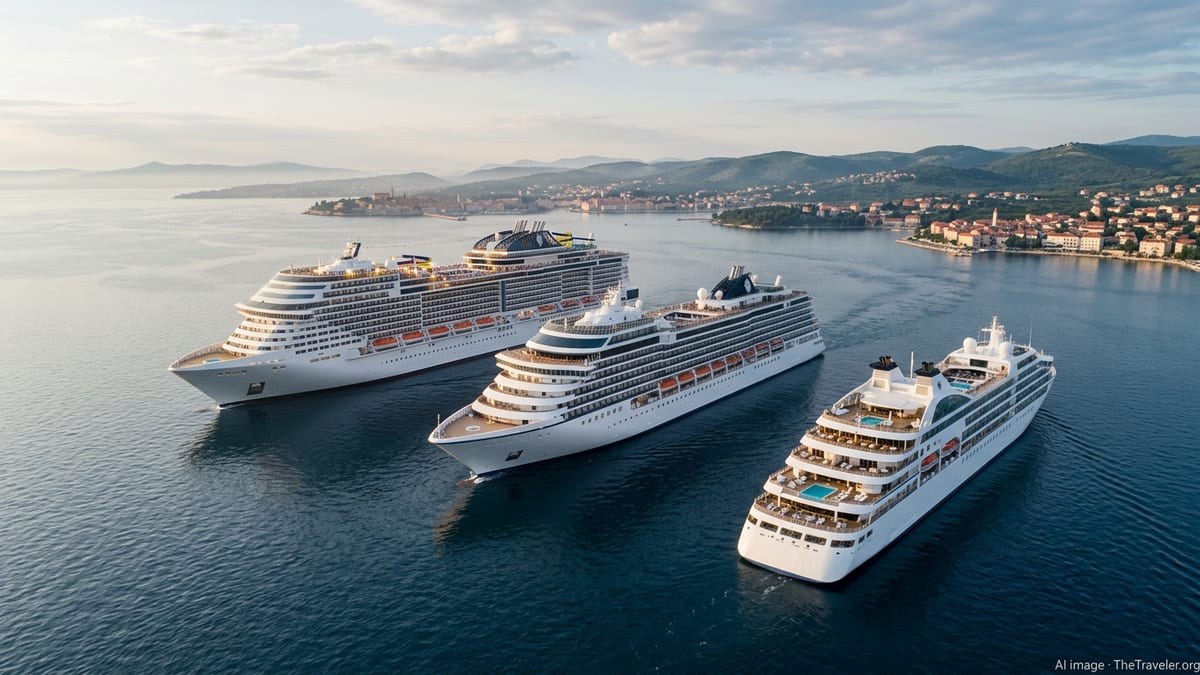
Global cruise lines are preparing for a sweeping wave of new luxury ships from 2026 through 2037, revealing an order book that ranges from record-breaking mega-vessels to intimate, ultra-luxury yachts as brands race to capture surging demand for high-end vacations at sea.
Mega-Resort Icons: Royal Caribbean Leads the Size Race
Royal Caribbean is set to anchor the next decade of cruise growth with an expanded Icon Class, building on the headline-making debut of Icon of the Seas and its 2025 sister ship, Star of the Seas. The third vessel in the series, Legend of the Seas, is scheduled to enter service in July 2026, first sailing Western Mediterranean itineraries before repositioning to the Caribbean. With capacity for well over 5,000 guests and a design focused on multi-generational travel, the ship underscores the brand’s focus on delivering resort-style complexity at sea.
Corporate statements and investor briefings indicate that a fourth and fifth Icon Class ship are now firmly in the pipeline, with targeted deliveries in 2027 and 2028. Royal Caribbean has also secured options for additional Icon units that would stretch into the early and mid-2030s, signaling that the class will remain central to the company’s fleet plan through at least 2036. The strategy is aimed at supporting growth in key North American homeports and new private-destination developments in the Caribbean.
Industry analysts say the Icon expansion is likely to reshape the competitive landscape, not only in size but in the standard of onboard amenities. Early design cues point to more expansive suites neighborhoods, larger thermal spa complexes and increasingly sophisticated waterparks, as well as continued investment in cleaner propulsion and energy-efficiency technologies. For travelers, the result will be an escalating choice of high-density, feature-rich ships on weeklong Caribbean and Mediterranean routes as the class fills out over the next decade.
MSC Cruises Builds Out Its World-Class Flagships
MSC Cruises is pursuing an aggressive expansion of its World Class platform, positioning the series as its answer to the mega-resort concept while infusing European design and environmental technology. Following MSC World Europa and the 2025 launch of MSC World America, the line plans to introduce MSC World Asia in late 2026, debuting in Europe before likely shifting to high-demand routes in Asia or the Middle East. The ship is expected to feature LNG propulsion and advanced waste and energy systems in line with international emissions targets.
Additional World Class ships, including vessels referred to in shipyard records as MSC World Atlantic and further unnamed sisters, are scheduled to arrive between 2027 and 2030. By the end of the decade, MSC is projected to operate close to 30 ships, with at least six in the World Class family. The newbuilds are intended to strengthen the brand’s presence in the North American market while maintaining its stronghold in Europe, offering large-scale entertainment, extensive family programming and expanded premium accommodation decks.
The company’s parallel investment in technology means that each successive World Class vessel is designed to be more energy efficient than its predecessor, with refinements to hull forms, air lubrication systems and waste-heat recovery. For guests booking late-2020s sailings, the experience is likely to combine the feel of a contemporary European resort with a growing emphasis on quieter, more exclusive spaces, such as yacht-club style enclaves and specialty dining tailored to long-haul fly-cruise markets.
Ultra-Luxury Growth: Suites, Space and Service at Sea
At the top end of the market, ultra-luxury lines are quietly building a new generation of small and mid-sized ships that prioritize space and service over scale. Order books from major shipyards show multiple vessels on the way for brands such as Silversea, Regent Seven Seas Cruises, Seabourn and Explora Journeys between now and the early 2030s. These ships, typically carrying fewer than 1,000 guests, are being crafted to deliver residential-style suites, expansive wellness areas and high staff-to-guest ratios.
Explora Journeys, backed by MSC Group, is moving ahead with a full fleet build-out that includes LNG and, for later units, hybrid or hydrogen-assisted propulsion. Explora III and Explora IV are planned for the middle of the decade, with further ships such as Explora V and Explora VI extending into the late 2020s. The line is marketing the vessels as “ocean state of mind” resorts at sea, with a heavy emphasis on slow travel, long port calls and yacht-style itineraries that deviate from traditional mass-market cruise routes.
Regent Seven Seas and Seabourn are following similar paths, with additional boutique-sized ships due near the end of the decade and into the early 2030s. Their designs concentrate on all-suite accommodation, expansive balconies and culinary programs tied to regional sourcing. For affluent travelers, these new entries will translate into more choice on grand voyages and world cruises, along with expanded options in regions such as the South Pacific, South America and polar destinations that require smaller, more maneuverable hulls.
Yacht-Style Luxury: Ritz-Carlton and Boutique Brands Scale Up
Beyond the traditional cruise sector, hotel-backed yacht collections are emerging as an influential force in the luxury segment. The Ritz-Carlton Yacht Collection is extending its presence with additional custom-built ships following Evrima and its next-generation sisters. Shipyard documentation highlights a vessel named Luminara and at least one more sister ship scheduled around the middle of the decade, each carrying fewer than 500 guests in suite-only configurations with large private terraces and a strong focus on culinary partnership concepts.
These small-ship expansions are intended to replicate the feel of a private superyacht within an upscale hotel environment, appealing to guests who may be new to cruising but loyal to luxury hospitality brands. Itineraries tend to favor longer overnight calls in marquee ports such as Saint-Tropez, Dubrovnik and San Juan, as well as access to smaller harbors not typically reachable by large ships. The approach allows brands to maintain high per-diem rates while offering a less crowded, more residential onboard atmosphere.
Other boutique operators, including emerging Mediterranean and Middle Eastern brands, are also commissioning yacht-like vessels scheduled to arrive before 2030. Many of these ships are being designed with reinforced hulls and advanced stabilizers to expand their operating seasons, enabling shoulder- and winter-season cruising in regions that were once largely restricted to the summer months. For travelers, the decade ahead will bring a noticeable increase in choice for intimate, design-forward voyages that bridge the gap between private yacht charters and conventional cruises.
Environmental Technologies and the Long Horizon to 2037
Across all segments, from mega-ship to micro-yacht, the new tonnage entering service between 2026 and 2037 is being shaped by regulatory pressure and changing consumer expectations around sustainability. Shipyards in Finland, France and Italy report that most current luxury orders specify LNG, methanol-ready or hybrid propulsion systems, as well as heat-recovery equipment and smart energy management. Several brands have reserved space and weight for future fuels, acknowledging that engine technology may shift during the ships’ operating lives.
By the early 2030s, this is expected to yield a fleet of large luxury vessels that are significantly more efficient per passenger than their predecessors, even as onboard amenities expand. For travelers, visible changes will include quieter engines, redesigned funnels, more shaded outdoor areas and an increase in forward-facing lounges and observation spaces made possible by revised superstructure layouts. Less visible will be the data-driven systems controlling lighting, air conditioning and route optimization to trim fuel burn.
With options and letters of intent extending into the mid-2030s, the pipeline suggests that luxury cruising will remain a growth story well into 2037. While delivery dates and individual ship names may shift as shipyards balance capacity and costs, the direction of travel is clear: larger, more complex mega-ships for mainstream luxury, paired with a substantial build-out of ultra-luxury and yacht-style vessels. For passengers considering future bookings, the coming decade promises an unprecedented range of ways to experience high-end life at sea.