

More news on this day
Thousands of air travelers from Toronto to Dubai and across major U.S. hubs are facing unexpected overnight stays, missed connections and mounting frustration after a fresh wave of disruption at Orlando International Airport added 327 new flight delays and 80 cancellations to an already strained global airline network.
Orlando Disruptions Add New Strain to Packed Spring Travel
Operational data from airlines and tracking services on March 7 indicate that Orlando International Airport has become one of the latest flashpoints in a week of cascading aviation turmoil, posting 327 delays and 80 outright cancellations in a single day. The figures place Orlando among the hardest hit U.S. airports for schedule reliability, just as families and students surge into Florida for spring break and theme park holidays.
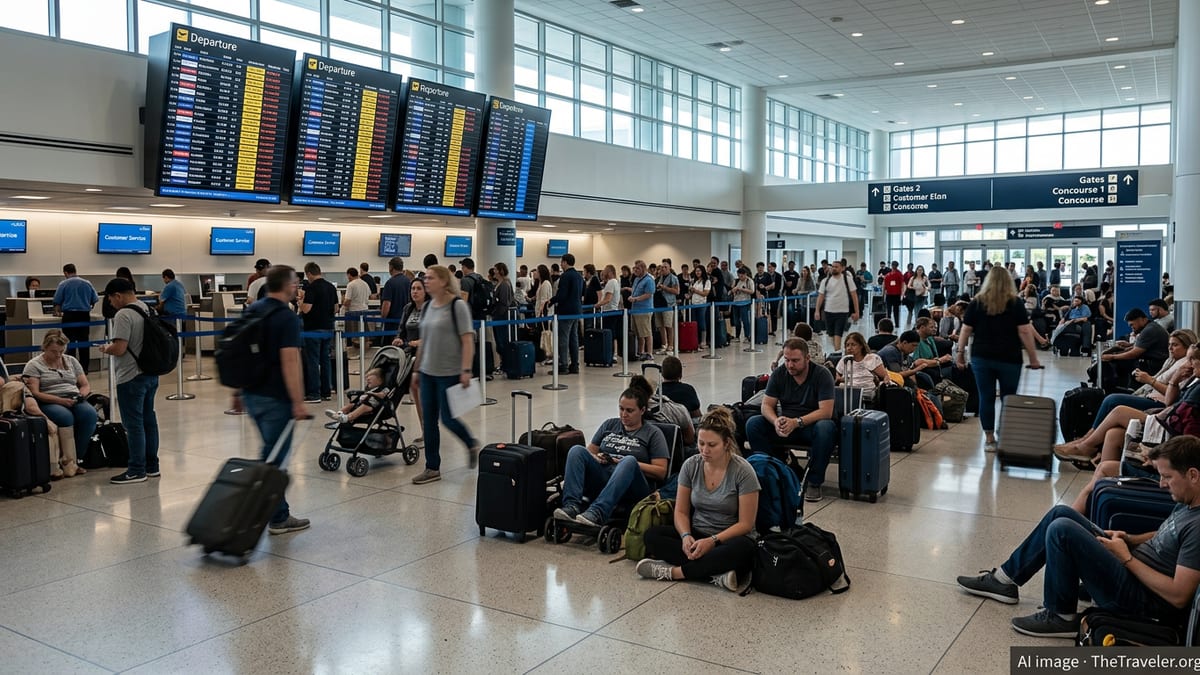
Passengers reported hours-long waits in crowded concourses, with departure boards at Orlando’s main terminal showing long strings of red and amber notices for flights to major domestic and international hubs. Airlines cited a combination of tight aircraft rotations, crew availability issues and congestion across the national airspace system, all of which made it difficult to recover once early-morning departures began slipping behind schedule.
Industry analysts note that Orlando has been trending as one of the more delay-prone major U.S. airports over the past two years, reflecting both its explosive leisure demand and its vulnerability to weather and traffic bottlenecks. Today’s numbers underscore how quickly routine operational stress can tip into a wider disruption when airlines are running near peak capacity.
For travelers on the ground, the statistics translate into missed cruise departures, lost vacation days and expensive last-minute hotel bookings as they wait for seats on already full alternative departures out of Florida.
Ripple Effects From Atlanta, Chicago and Boston Compound the Chaos
Orlando’s problems on March 7 did not emerge in isolation. In Atlanta, the world’s busiest passenger airport, severe storms and a hail-producing cell passing directly over Hartsfield-Jackson on the evening of March 6 led to hundreds of cancellations and an extended ground delay program into Saturday. Delta Air Lines alone scrubbed close to 200 flights and reported more than 230 cancellations and over 235 delays tied to the reset of its Atlanta operation, leaving aircraft and crews out of place along key domestic routes.
Those operational snags quickly spilled into Orlando, where many flights either originate from or rely on inbound aircraft from Atlanta and other southeastern hubs. Airlines were forced to delay departures while waiting for planes to be inspected for weather damage, for flight crews to reach legal rest minimums or for congested air traffic control slots to open. Passengers connecting through Atlanta to reach Orlando or to continue beyond central Florida often found themselves stranded mid-journey.
To the north, weather-related congestion and earlier winter storms at Chicago O’Hare and Boston Logan have also contributed to a fragile system. Both airports rank among the top U.S. hubs for delay and cancellation rates, and recent storms have magnified those tendencies, pushing airlines to run leaner schedules and tighter turns. When those hubs falter, knock-on delays radiate throughout the network, shrinking the margin for recovery at leisure-heavy destinations like Orlando.
The result for many travelers this weekend has been a patchwork of short delays that add up to missed connections, reroutes through unfamiliar airports and long rebooking lines as agents juggle limited spare capacity across multiple carriers.
International Shock Waves Reach Toronto and Dubai
While the latest figures at Orlando focus on domestic movements, the disruption is intertwining with a far larger international crisis. In Canada, Toronto Pearson has been contending with its own sequence of winter storms and earlier mass cancellations, leaving airlines with stretched resources on cross-border and transatlantic routes. Flights linking Toronto to Orlando and other U.S. leisure gateways have faced rolling delays as carriers reposition aircraft around lingering weather and staffing challenges.
At the same time, the war-related airspace shutdown across parts of the Middle East has thrown global scheduling into disarray, grounding or diverting thousands of services through major Gulf hubs. Dubai International Airport, one of the world’s busiest long-haul connectors, has seen extensive cancellations in recent days, stranding passengers who would normally connect seamlessly onward to North America.
For travelers booked on itineraries that pair Orlando with long-haul flights to South Asia, Africa or Europe via Dubai or other Gulf hubs, the Orlando delays are compounding an already daunting rebooking puzzle. With crews and aircraft caught out of position across multiple regions, some passengers are being told that the first available seats back to their original destinations may be days rather than hours away.
The combined effect is a sense of deep uncertainty for international travelers who see disruption in Florida feeding into a global system already destabilized by conflict, weather and high seasonal demand.
Scenes of Frustration Across U.S. Hubs
In Atlanta, local media and passengers on social platforms described scenes of exhausted travelers sleeping on terminal floors, long lines at customer service desks and aircraft waiting for hours on taxiways as lightning and hail forced ground stops. Some planes arrived so far behind schedule that flight crews reached their legal time limits, triggering further cancellations even after the storm had passed and skies had cleared.
Similar images have emerged from Boston and Chicago in recent weeks, where prolonged security lines, baggage delays and repeated gate changes have left travelers with little confidence that published schedules will hold. In Orlando, the mood on March 7 was one of mounting dismay as each fresh delay announcement pushed departure times deeper into the night, testing the patience of families traveling with young children and older passengers on long-haul journeys.
Airlines have issued standard waivers allowing affected customers to change their travel dates without additional fees, but limited spare capacity during the busy spring period means that many rebooked passengers are receiving seats well after their original travel dates. Airport hotels around Orlando, Atlanta and Boston reported higher walk-in traffic from stranded fliers seeking last-minute rooms.
For airport workers and airline staff, the sudden spikes in disruption are also taking a toll. Frontline agents are managing heavy volumes of frustrated customers, while ground crews and cabin staff face the challenge of maintaining safety and service standards amid constantly shifting operational plans.
What Travelers Should Do Today
With conditions still fluctuating across multiple hubs, airlines and aviation authorities are urging passengers traveling to or from Orlando, Atlanta, Boston, Chicago, Toronto and Dubai to treat their itineraries as provisional. Travelers are being advised to check flight status frequently through airline apps, sign up for text alerts and arrive at the airport earlier than usual, particularly if they need to check baggage or clear international formalities.
Experts recommend that stranded travelers quickly explore alternative routes, including connections through secondary hubs that may be less congested, and consider split-ticket options only after confirming that their original segments have been formally canceled or reissued. Travel insurance with flexible or “cancel for any reason” coverage can provide limited recourse for nonrefundable hotels and tours, though policies vary widely.
In Orlando specifically, airport officials are asking passengers to remain in close contact with their airlines rather than heading to the airport hours ahead of any confirmed departure, in order to avoid unnecessary crowding in terminal areas. With 327 newly delayed flights and 80 cancellations already logged today, the expectation among industry observers is that residual disruption will persist into the next operating day.
As the global network grapples with overlapping crises from Florida to the Middle East, the thousands of travelers grounded with little warning are once again being reminded of just how interconnected, and fragile, international air travel has become.