

More news on this day
Air travelers across the United States are facing another wave of disruption as 28 flights are reported canceled and more than 500 delayed across major hubs in California, Illinois, and New York, with publicly available tracking data and media coverage indicating that Air Canada, United Airlines, and Lufthansa are among the carriers experiencing the heaviest operational strain.
Get the latest news straight to your inbox!
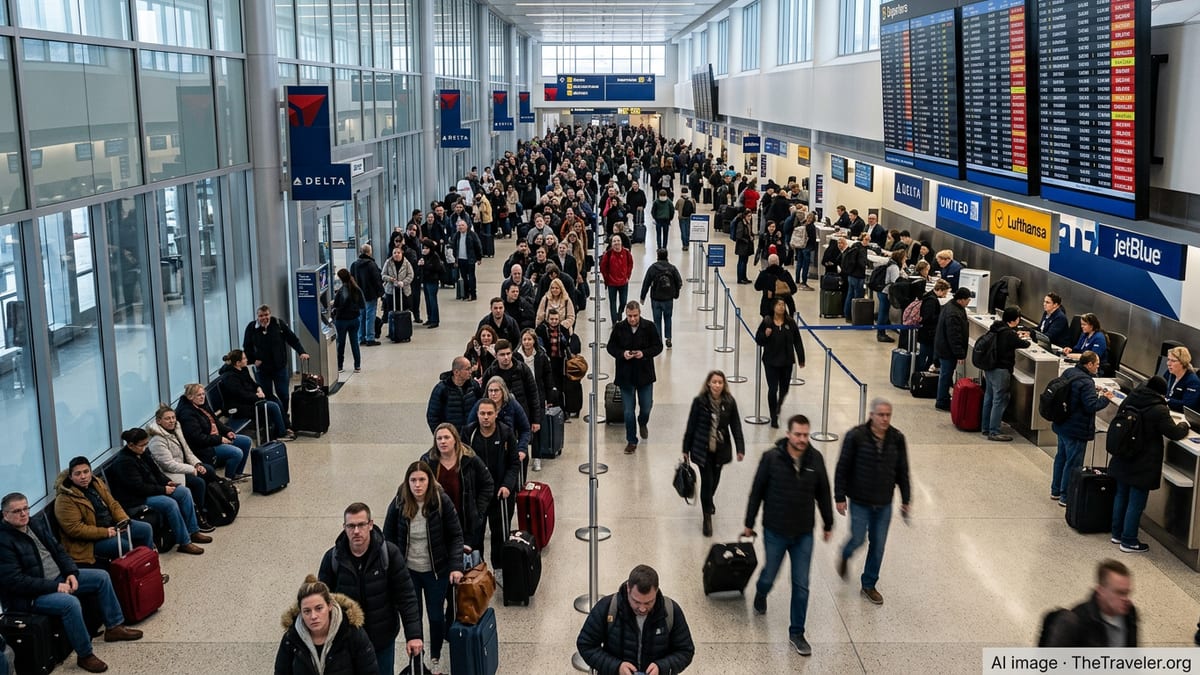
Major Hubs See Fresh Turmoil
Flight-tracking dashboards and recent coverage point to new turbulence across the U.S. aviation network, centering on large coastal and Midwest hubs. Airports serving the San Francisco Bay Area and Los Angeles in California, Chicago in Illinois, and the New York metropolitan system are again appearing among the facilities with the highest number of disrupted flights.
The latest figures indicate at least 28 flights canceled outright and around 506 experiencing delays or other disruptions, a relatively modest number compared with historic weather or system meltdowns, but significant enough to snarl connections and upend travel plans on some of the country’s busiest domestic and international corridors.
Because these hubs act as central connection points, even a limited number of cancellations can cascade across the day’s schedule. A canceled early rotation on a transcontinental or transborder route can remove both a plane and a crew position from the system, setting up longer queues and tighter margins for on-time operations by late afternoon and evening.
In practical terms, the burden often falls unevenly on travelers using these hubs for tight connections. A delay of less than an hour may be manageable for those originating at the airport, but it can translate into missed onward flights for passengers who have already flown several hours to reach the hub.
Air Canada, United and Lufthansa Among the Worst Hit
Publicly available data and recent reporting show that Star Alliance carriers Air Canada, United Airlines, and Lufthansa are among those most affected in the latest round of disruptions, particularly on routes linking U.S. hubs with Canada and Europe. These airlines operate dense schedules through gateway airports in California, Illinois, and New York, which magnifies the impact when operational problems arise.
Air Canada has been navigating repeated weather and airspace challenges since the start of the year, with previous storms and regional disruptions contributing to rolling delays and cancellations at major U.S. and Canadian airports. When conditions deteriorate around New York, Chicago, or key Canadian hubs, cross-border flights are often among the first to be trimmed or rescheduled to keep the overall network moving.
United, with its extensive domestic and international network out of Chicago and the New York area, can experience similar ripple effects. When high-volume hubs face ground delay programs, air traffic restrictions, or staffing bottlenecks, the carrier may consolidate departures, adjust frequencies on shorter domestic segments, or delay long-haul services in order to re-align crews and aircraft.
Lufthansa’s operations, heavily focused on transatlantic routes into New York and other major U.S. gateways, can be particularly vulnerable to knock-on effects from congestion and weather. Published coverage in recent months has highlighted how broader geopolitical tensions, airspace closures, or Middle East route changes can tighten aircraft availability and scheduling flexibility on U.S.–Europe routes, leaving less room to absorb new disruptions.
Why the Numbers Matter Even if They Look Small
For travelers scanning headline numbers, a tally of 28 cancellations and 506 delayed flights may appear modest compared with extreme events in which thousands of flights are scrubbed over several days. However, aviation analysts frequently note that even smaller waves of disruption can feel just as severe to travelers caught in the wrong place at the wrong time.
In highly banked hub systems, airlines schedule many flights to arrive and depart in narrow time windows to maximize connections. When weather, air traffic management programs, or equipment issues slow operations during one of these peaks, delays compound quickly. A short ground hold in the New York or Chicago area can push arriving aircraft past their scheduled departure banks, resulting in missed connections and the need for rebooking across multiple carriers.
International itineraries are especially sensitive. A single cancellation on a transatlantic or transborder service may strand hundreds of passengers who then need to be accommodated on later flights that are already near capacity. That is one reason published guidance from consumer advocates frequently urges travelers on long-haul routes to build in extra buffer time and avoid very tight connections at large hubs when possible.
Furthermore, operations may take several days to fully normalize even after the immediate trigger for disruption passes. Aircraft and crews can end up out of position, forcing airlines to reshuffle schedules, swap equipment, or consolidate flights, which can lead to additional short-notice changes well after the initial day of trouble.
How to Check Your Flight and Minimize Disruption
For passengers with upcoming trips through California, Illinois, or New York hubs, the most important step is to verify flight status repeatedly on the day of travel. Publicly available guidance from airlines and travel agencies consistently recommends checking directly with the operating carrier’s app or website before leaving for the airport and again after clearing security, since gate assignments and departure times can continue to shift.
Most major airlines now provide real-time push alerts through their mobile apps and allow customers to track an aircraft’s inbound flight, which can offer early warning of likely delays. Some travel advisories also suggest using airport status dashboards to monitor whether a particular hub is experiencing widespread ground delays or weather-related restrictions that might affect multiple carriers at once.
Travelers holding tickets with Air Canada, United, or Lufthansa should review their booking management tools for any active travel alerts, which may offer the option to change flights without additional fees when disruptions reach a certain threshold. Where such flexibility policies are in place, rebooking to earlier departures, different routings, or less congested hubs can sometimes prevent more serious disruptions later in the day.
At the airport, passengers facing longer delays or missed connections may have the option to use self-service kiosks and smartphone tools to secure new itineraries rather than waiting in physical lines. Industry observers note that these digital channels can sometimes show rebooking options more quickly than staffed desks, especially during peak disruption periods when lines at customer service counters grow rapidly.
What to Know About Rights, Refunds, and Rebooking
Passenger rights in disruption scenarios depend heavily on the airline involved, the origin and destination of the journey, and whether the disruption is considered within the carrier’s control. Publicly available policy summaries highlight that in the United States, airlines are generally required to provide a refund if a flight is canceled and the traveler chooses not to be rebooked, but compensation for delays is more limited and varies by carrier.
For flights touching Canada or the European Union, additional frameworks may apply. Canada’s Air Passenger Protection Regulations and the European Union’s EC261 regime can, in certain circumstances, require compensation or specific care such as meals and hotel accommodation when cancellations or long delays are deemed to be within the airline’s control and not related to extraordinary circumstances such as severe weather or airspace closures.
Given the complexity of these overlapping rules, consumer advocates frequently advise travelers to keep detailed records of disruption timelines, including boarding passes, receipts for meals or hotels, and screenshots of delay notifications. Such documentation can be helpful when submitting claims directly through airline customer care channels or, where applicable, to national enforcement bodies.
Ultimately, while the current wave of disruptions involving Air Canada, United, Lufthansa, and other carriers covers a relatively modest slice of the vast U.S. flight network, the impact on individual itineraries can be substantial. Travelers planning to pass through major hubs in California, Illinois, or New York in the coming days are encouraged to stay closely informed, build extra time into their schedules where possible, and make full use of digital tools and flexible booking options to keep their journeys on track.