

More news on this day
New York’s airport renaissance is colliding with a winter of punishing snowstorms and relentless construction, and one company, Black Prime Limousine, is turning that turbulence into a showcase for high‑touch, luxury ground transport.
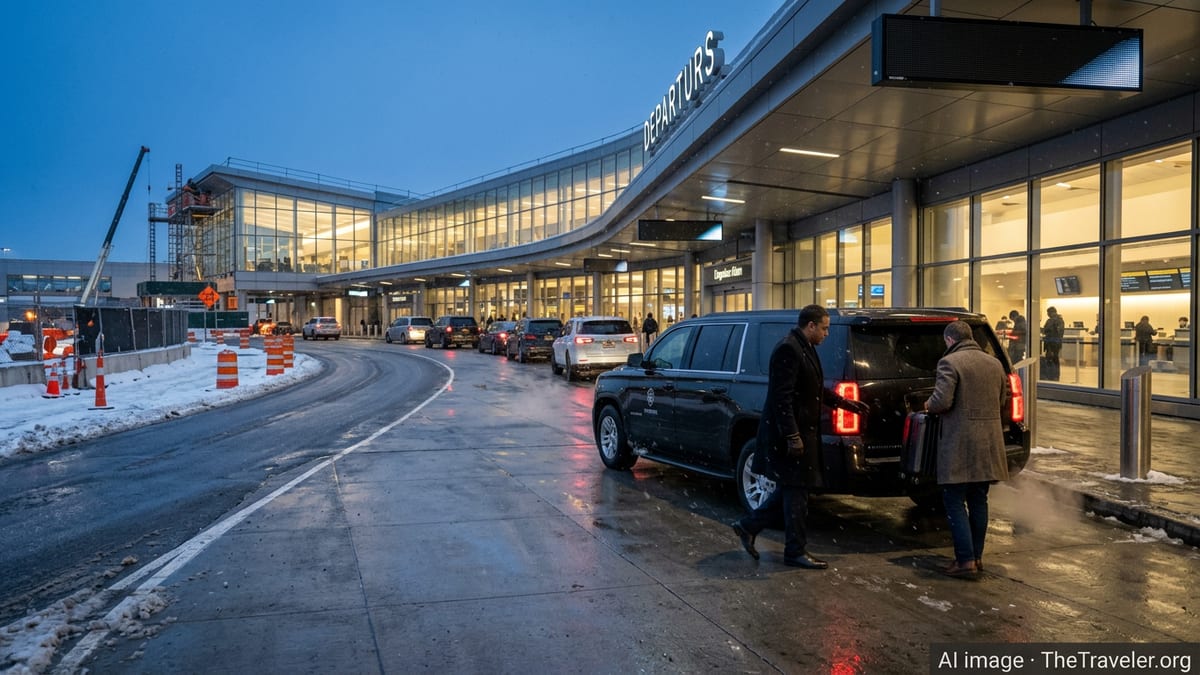
Airports Under Construction, Expectations on the Rise
From LaGuardia’s award-winning rebuild to the ongoing transformation of John F. Kennedy International Airport and Newark Liberty, New York’s three main gateways are in the midst of one of the most ambitious aviation makeovers in the country. New terminals, expanded security halls and redesigned roadways are reshaping how passengers arrive and depart, particularly at the premium end of the market.
Port Authority plans for JFK include the multibillion-dollar New Terminal One and a new Terminal 6, projects that are adding modern check in halls, larger gate areas and a focus on sustainability, including one of the largest terminal rooftop solar arrays in New York City. LaGuardia’s new facilities, already largely complete and drawing industry awards, have reset traveler expectations for what a once-maligned airport can offer in terms of comfort and design.
At Newark Liberty, work to replace the aging AirTrain system and reconfigure access roads has turned curbsides and parking areas into active construction zones. Temporary shuttle buses, shifting pickup points and longer walks between terminals are now routine features of the airport experience. For travelers stepping off long haul flights or racing to make connections during tight layovers, the ground journey has become as critical as the flight itself.
The result is a new standard for end to end journeys in which airlines and airport authorities focus on infrastructure, while private limousine operators compete to deliver calm, predictable service amid detours and delays. That intersection of public investment and private service is where Black Prime Limousine is positioning itself most aggressively.
Black Prime Limousine Steps Into the Premium Gap
Black Prime Limousine, a New York based operator specializing in chauffeured airport transfers, has quietly expanded its presence across JFK, LaGuardia and Newark as the region’s capital projects accelerate. While ride hailing apps continue to dominate mass market trips, the company is targeting business executives, luxury leisure travelers and families who want a guaranteed vehicle, professional driver and seamless handoff from terminal to curb.
The company emphasizes traditional limousine hallmarks such as meet and greet service in arrivals halls, luggage assistance and pre coordinated pickup points that are updated in real time as airports shift traffic patterns around construction. Dispatchers track inbound flights, monitor announced road closures and adjust driver routes before passengers even land, aiming to shield clients from the most disruptive elements of the rebuild.
Inside the vehicles, Black Prime Limousine leans into a hotel like experience, with late model sedans and SUVs, Wi Fi, bottled water and charging ports standard across most of its fleet. In a market crowded with black car brands, the company is betting that consistent service and human dispatch support will resonate with travelers weary of algorithm driven surge pricing and inconsistent airport pickups.
Travel agents and corporate travel managers say that, as New York’s airports move upmarket, expectations at the curb are following suit. A refreshed terminal, they note, loses some of its appeal if passengers find themselves navigating unmarked construction fences in sleet while scrolling through an app to locate a driver.
Snowstorms Turn Reliability Into a Luxury Feature
This winter has tested every part of the region’s travel ecosystem. A major February blizzard brought blizzard warnings to the New York metropolitan area, triggering airline travel waivers, mass cancellations and rolling delays across JFK, LaGuardia and Newark. For many travelers, the hardest part of the journey was simply getting to or from the airport as roads disappeared under snow and public transit schedules were repeatedly curtailed.
For Black Prime Limousine and its competitors, the storm became a high stakes stress test. The company kept a core team of chauffeurs on duty with four wheel drive vehicles, staggered rest periods and pre positioned cars in hotel garages near airport corridors to reduce deadheading in whiteout conditions. Dispatchers used real time weather and traffic data to reroute drivers away from closed bridges, jackknifed trucks and impassable side streets.
Passengers arriving in the middle of the storm described stepping from darkened terminals into a line of idling black SUVs, drivers already briefed on alternative routes into Manhattan and the outer boroughs. For departing travelers, chauffeurs helped navigate shifting airline schedules and advised on when to leave for the airport, adjusting pickup times as carriers issued fresh rounds of waivers.
Industry analysts say these kinds of weather events underscore a growing divide in the travel market. For some passengers, a delayed subway or rideshare is an accepted inconvenience. For others, particularly those connecting to international flights or heading directly to boardrooms, guaranteed ground transport is no longer a discretionary indulgence but a risk management tool.
Navigating Detours While Terminals Modernize
As construction cranes loom over terminals and temporary barriers redirect traffic, ground transport companies are finding that local knowledge is just as important as luxury fleets. Lane closures at JFK’s outer roadways, periodic restrictions around LaGuardia’s arrivals loops and work linked to Newark’s AirTrain replacement have all shifted traditional pickup and drop off patterns.
Black Prime Limousine has responded by hard wiring those changes into its operations. New driver training modules focus on revised terminal maps, updated wayfinding signage and backup routes that use lesser known access roads when primary approaches are congested or blocked. The company says it regularly updates its internal airport playbooks as Port Authority notices evolve from week to week.
For travelers, the benefit is less visible but immediately felt. Instead of receiving generic text messages instructing them to meet a driver in a crowded rideshare zone, clients are often met inside the terminal, guided to the most efficient exit and escorted directly to a waiting vehicle staged in an area that accounts for the day’s construction pattern and weather.
Observers note that this kind of detailed logistical planning is becoming a competitive differentiator as New York’s airports grow more complex. The gleaming terminals may grab the headlines, but the ability to navigate a maze of cones and concrete barriers, especially in snow and ice, increasingly defines whether the overall experience feels like an upgrade.
Luxury Travel Redefined Beyond the Jet Bridge
The convergence of high end airport design, extreme winter weather and heavy construction has shifted the definition of luxury in New York air travel. For an emerging class of travelers, the journey begins at the front door, not the jet bridge, and extends through the curbside welcome on arrival.
Airlines are investing heavily in premium cabins and lounges, while airport authorities pour billions into terminals with natural light, local restaurants and art installations. On the ground, firms such as Black Prime Limousine are tightening the final links in that chain by promising door to door predictability, even when snow blankets the runway and cranes dominate the skyline.
Travel consultants say that as corporate itineraries resume at pre pandemic intensity and international tourism rebounds, demand for this level of seamlessness is likely to grow. New York’s airports may be construction sites for years to come, but for passengers stepping into warmed leather seats after a long flight, the city’s evolving airport landscape is already beginning to look like a victory for luxury oriented travel.