

More news on this day
Travel through New York’s John F. Kennedy International Airport faced fresh disruption today as public data showed around 90 delayed flights and nine cancellations affecting major carriers including Delta Air Lines, Kuwait Airways and American Airlines, interrupting journeys to Fort Myers, West Palm Beach, Kuwait City and several other destinations.
Get the latest news straight to your inbox!
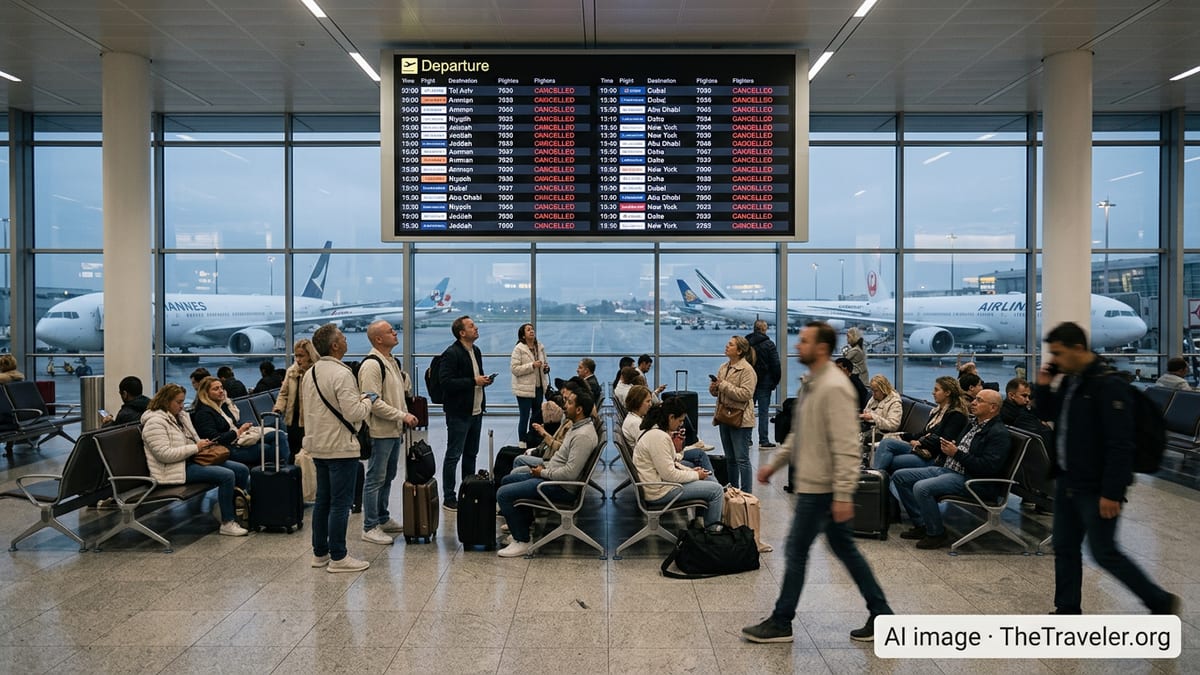
Broad Disruption Across Carriers at JFK
Operational data and published coverage indicate that New York travel is again under strain, with John F. Kennedy International Airport reporting dozens of delays and a cluster of cancellations across multiple airlines. The disruptions are concentrated in domestic U.S. traffic and select long haul services, with Delta Air Lines, American Airlines, Kuwait Airways and other carriers all affected.
Reports summarizing today’s performance at JFK point to roughly 90 delayed departures and arrivals, alongside nine outright cancellations. While these numbers are a fraction of the nationwide totals for flight disruptions, they are significant for a single hub and are being felt by passengers relying on JFK as both an origin and connecting airport.
Published flight tracking information shows delays scattered across peak travel periods, particularly in the late morning and early evening banks, when JFK typically handles dense waves of domestic and international traffic. The knock on effect is extended connection times, missed onward flights and last minute rebookings for travelers moving through the New York region.
Information from aviation analytics platforms suggests that the delays are not isolated to one carrier or terminal. Instead they are spread across several operators and concourses, underscoring how even moderate schedule disruption can quickly ripple through a major transfer hub.
Florida Links to Fort Myers and Palm Beach Hit
Among the clearest impacts for U.S. travelers today are on leisure focused routes between New York and Florida. Flight schedule data for links between JFK and Southwest Florida International Airport in Fort Myers show recent and recurring delays on services marketed by major carriers, with some departures operating more than two hours behind schedule in recent days.
Routes serving West Palm Beach have also seen pressure, with performance data around Palm Beach International Airport pointing to irregular operations on select New York services. These coastal Florida destinations are popular with both holidaymakers and seasonal residents, meaning that any reduction in reliability can quickly translate into crowded departure lounges and competition for limited rebooking options.
Travel industry reporting notes that Florida operations are particularly sensitive at this time of year, as spring traffic overlaps with school breaks and late season tourism. Even a small cluster of delayed departures from JFK can back up aircraft rotations, affecting later flights into and out of regional airports such as Fort Myers and Palm Beach.
Passengers on these routes are being advised by airlines and travel agents through public channels to monitor departure times closely and to build extra time into connections, especially when linking through New York to smaller markets across the Southeast.
Long Haul Travel Affected on Kuwait City Services
The disruption at JFK today coincides with ongoing instability on some routes connecting the United States with the Gulf region. Kuwait Airways, which normally links New York with Kuwait City, has already been contending with broader schedule uncertainty tied to regional airspace issues and operational constraints, according to recent public discussion and airline communications referenced in news coverage.
Published data on transatlantic and transcontinental services indicates that long haul operations tend to experience cascading effects when departures from a hub like JFK are delayed. A late arriving aircraft or crew can force schedule adjustments on subsequent legs, including overnight flights to the Middle East.
For passengers traveling between New York and Kuwait City, today’s mix of delays and cancellations at JFK adds another layer of complexity to an already challenging environment. Some travelers have reported, through publicly available forums and coverage, last minute changes in routings or departure days as Kuwait Airways and other regional carriers adjust their networks.
Industry observers note that when long haul flights are canceled, rebooking options can be more limited than on domestic routes, especially where airspace restrictions or capacity constraints reduce the number of alternative services. That raises the prospect of extended layovers or overnight stays for some travelers whose JFK departures are disrupted.
What Is Driving Today’s Irregular Operations
While no single cause has been identified for every delay and cancellation at JFK today, publicly accessible aviation data and forecasting point to a combination of factors that often converge at major Northeast airports. These can include low cloud ceilings, congestion in regional airspace, and aircraft or crew rotations affected by earlier disruptions elsewhere in the network.
Air traffic management summaries frequently highlight New York, Boston and Philadelphia as pressure points when weather patterns or volume surges reduce available capacity. When that happens, ground delay programs and airborne holding can quickly accumulate, leading to late arrivals that push back subsequent departures.
Operational bulletins and airline schedule adjustments suggest that some carriers are proactively trimming frequencies or building additional time into turnarounds in an effort to recover on time performance. However, these measures can also result in isolated cancellations when resources are stretched or when demand on a specific route is easier to consolidate onto fewer flights.
For passengers, the practical effect is much the same regardless of the underlying cause. Longer queues at check in and security, crowded gate areas and sporadic schedule updates are common features of days when delay tallies rise into the dozens at a single hub like JFK.
Advice for Travelers Moving Through JFK
Travel experts and consumer advocates reviewing today’s conditions at JFK are emphasizing the importance of real time monitoring when disruption levels begin to climb. With around 90 flights reporting delays and nine cancellations at the airport, even travelers whose own services are currently listed as on time may face knock on effects if inbound aircraft or connecting passengers are held up.
Public guidance from airlines and airport information channels typically urges passengers to confirm their flight status before leaving for the airport, to use mobile apps or text alerts where available, and to arrive earlier than usual for departures during periods of irregular operations. For those with tight connections in New York, building in additional buffer time or considering alternative routings can reduce the risk of missed onward flights.
On affected routes to Fort Myers, Palm Beach and Kuwait City, passengers may benefit from researching alternative services from nearby airports in the New York area if their original flight is canceled. However, industry commentary notes that same day rebooking options can be limited when multiple carriers are contending with delays at once.
As the day progresses, improvement in local weather or air traffic conditions may allow airlines to recover portions of their schedules. Until then, travelers using JFK are likely to encounter continued signs of strain in the form of rolling delays, selected cancellations and crowded terminals.