

More news on this day
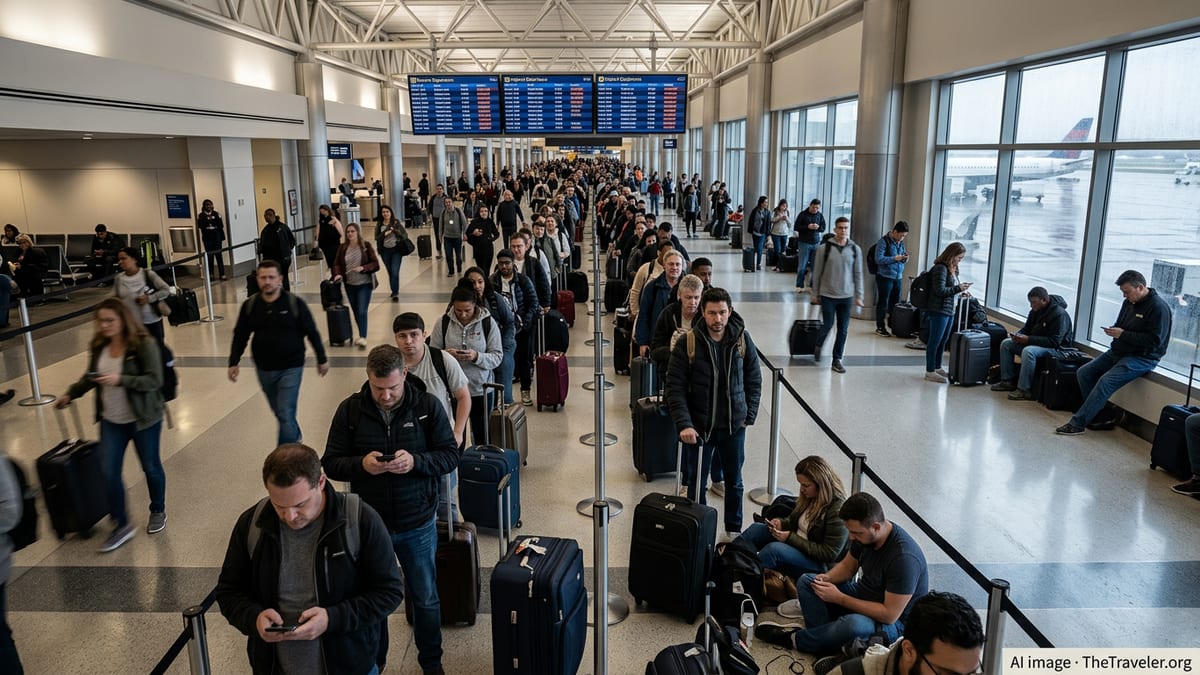
Travelers moving through New York City’s major airports and Newark Liberty International are facing a turbulent start to the week, with widespread flight cancellations, cascading delays and reports of security lines stretching toward three hours as severe weather, federal staffing strains and peak spring break demand converge.
Get the latest news straight to your inbox!
Severe Weather and a Strained System Hit Northeast Hubs
Storms sweeping across the eastern United States from March 13 to 16 have pushed an already fragile air travel system around New York to a breaking point. A powerful storm complex has brought damaging winds, intense rain and disruptive winter weather across large parts of the country, with the system tracking directly into the busy Northeast corridor. Published coverage indicates that thousands of flights nationwide have been canceled or delayed on March 16 alone, with New York City airports among the hardest hit.
These conditions are arriving on top of a winter that has already battered New York–area operations. A historic blizzard from February 22 to 24 dumped more than two feet of snow at Newark Liberty International and forced hundreds of cancellations there, while a separate late-January winter storm caused more than 10,000 flight disruptions nationwide and severe knock-on delays at Newark, LaGuardia and John F. Kennedy International. Publicly available data from the Federal Aviation Administration shows that weather remains the leading cause of flight delays in the United States, and current storms are again testing capacity at some of the country’s most congested hubs.
The result for passengers traveling through New York and Newark this week is a pattern of rolling ground delays, last-minute cancellations and aircraft arriving well behind schedule. Airline waivers for the New York region, including Newark, LaGuardia and JFK, are in effect around March 16 and 17, allowing some travelers to rebook without change fees if they can shift to less impacted days.
Why Newark Is a Particular Bottleneck
Newark Liberty International has become a focal point of the current disruption because it was already operating under tight constraints before this latest round of storms. FAA orders have capped arrivals and departures at Newark to about the low 70s per hour through late 2026, following a period of chaotic operations tied to air traffic control staffing shortages, technology outages and runway construction. That cap is intended to reduce chronic gridlock, but it also limits the airport’s ability to recover when bad weather or other shocks hit.
In recent months, FAA statements and industry coverage have pointed to ongoing staffing and equipment challenges in facilities that manage Newark’s airspace. Ground delay programs, which slow or hold inbound flights before they depart for Newark, have become a repeated feature during storms or staffing dips. Airlines using Newark as a hub have responded with schedule cuts, including dozens of daily round trips removed by at least one major carrier, yet delays and cancellations have remained elevated whenever weather and demand spike together.
Because Newark is tightly integrated with JFK and LaGuardia in the New York airspace system, disruptions there often spill over into the broader region. When Newark’s movements are throttled, flights are rerouted or held, which can force diversions to other airports or compress departures into narrower windows later in the day. That pattern increases the risk of missed connections and long tarmac waits as planes queue for limited runway slots.
Long Lines and Three-Hour Waits Inside the Terminals
While the most visible problems are on the departure boards, travelers are also encountering severe congestion inside terminals, particularly at security and check-in. Publicly accessible crowd reports and traveler accounts from March indicate that at peak times in the New York region, standard security lines have stretched well beyond typical wait estimates, with some passengers describing queues that approach or exceed two hours at Newark and heavy pressure at LaGuardia and JFK as well.
Transportation security staffing has come under additional strain during the ongoing partial federal government shutdown that began in October 2025. National coverage notes that the shutdown has exacerbated existing shortages at certain checkpoints and contributed to longer screening times across a number of busy hubs. The combination of constrained staffing, weather-disrupted schedules and higher-than-usual passenger volumes is a key factor behind reports of near three-hour waits at major airports serving the New York metropolitan area.
For travelers, the impact is felt from curb to gate. Those flying in the early morning hours, historically a relatively smooth period, are arriving to heavy queues that can extend into check-in halls. Later in the day, rolling delays force waves of passengers into terminals at the same time, overwhelming food, seating and restroom capacity and making it harder to rebook or obtain timely information when flights are canceled or significantly delayed.
Spring Break Crowds Collide With Government Shutdown
The latest surge in disruption is also tied to timing. March is one of the peak months for spring break travel, and TSA throughput data and airline forecasts point to passenger volumes that rival or exceed pre-pandemic levels. New York and Newark function as major gateways for both domestic leisure routes and transatlantic flights, concentrating vacationers, college students and international visitors into a narrow seasonal window.
That seasonal rush is unfolding while the federal government remains partially shut down, affecting agencies that oversee both air traffic control and airport security. Reports indicate that mandatory staff are still on duty, but many are working under significant strain, training pipelines are disrupted and overtime requirements are elevated. Industry analyses suggest that when key facilities are not fully staffed, the FAA institutes more frequent ground delay programs and route restrictions to maintain safety, which further reduces flexibility at already congested airports like Newark, JFK and LaGuardia.
The interaction of these forces means that even on days when the weather briefly improves, operations may not quickly snap back to normal. Aircraft and crews are often out of position after earlier ground stops, and reduced staffing levels in some control centers lengthen the time required to work through backlogs. This leaves travelers facing continued irregular operations and limited rebooking options, especially on popular routes at peak times.
What Travelers Should Expect and How to Prepare
Publicly available forecasts and airline advisories indicate that weather-related constraints in the New York region, combined with ongoing staffing and shutdown pressures, could continue to affect flights through at least March 17 and potentially beyond if additional storm systems develop. Travelers using Newark, JFK or LaGuardia in the coming days should be prepared for the possibility of last-minute changes, extended waits at security and immigration, and crowded gate areas even when flights remain on schedule.
Airlines are encouraging customers to monitor flight status frequently and to take advantage of flexible travel waivers where they are offered, particularly for itineraries involving tight connections. Many carriers also recommend arriving earlier than usual: three hours ahead for domestic departures from the New York area during peak spring break periods, and potentially longer for international flights given the risk of long security and passport control queues. Passengers with checked bags or families in tow may need additional buffer time.
At the same time, aviation and weather data show that not all time periods are equally affected. Early morning departures sometimes operate more reliably before convective storms build and before daily delays have cascaded through the system, while late evening flights may face higher risk of cancellation if crews run up against duty limits. Travelers able to adjust dates or times to off-peak windows later in the week may find a smoother experience as the current storm system moves offshore and airlines work through backlogs.