

More news on this day
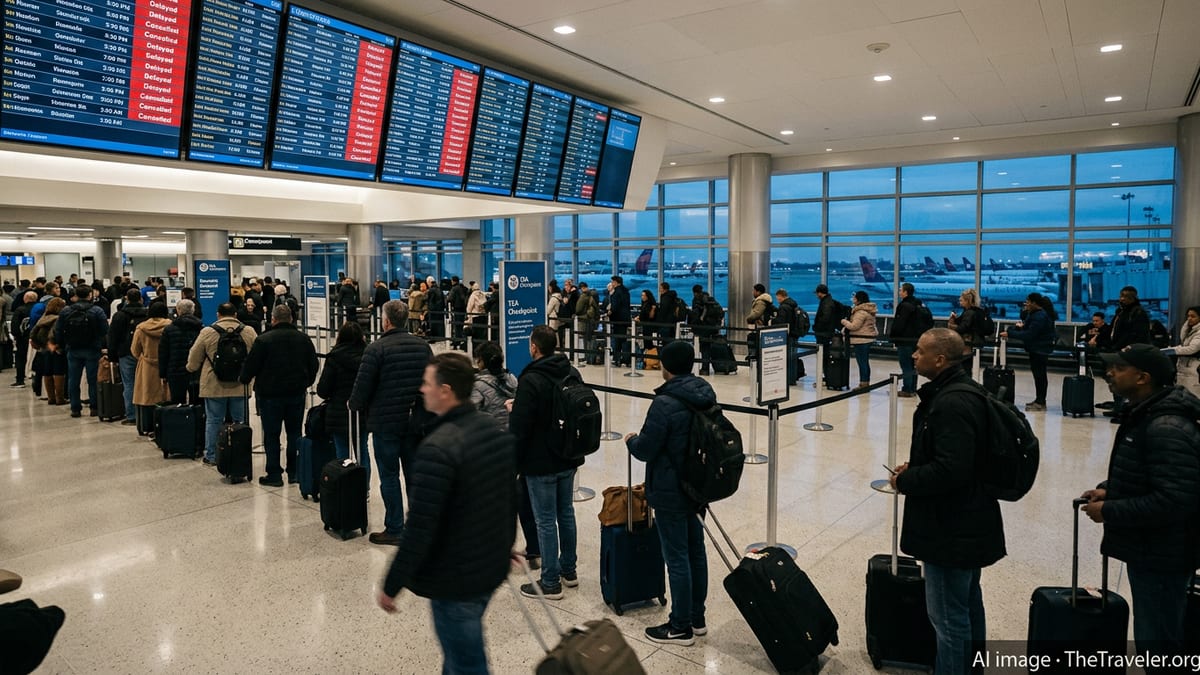
Travelers moving through New York City’s major airports are confronting a difficult mix of flight cancellations, rolling delays and reports of security lines stretching toward three hours, particularly at Newark Liberty International, as congestion and staffing constraints collide with peak spring travel demand.
Get the latest news straight to your inbox!
Persistent Disruptions Across the New York Airport System
New York’s three main airports, John F. Kennedy International, LaGuardia and Newark Liberty International, continue to rank among the most delay‑prone in the United States, and recent weeks have brought fresh disruption. Publicly available tracking data and airline operations updates show clusters of cancellations and multi‑hour delays whenever weather, air traffic control constraints or runway bottlenecks coincide with busy departure banks.
Newark Liberty has been a particular flashpoint. Industry analysis and traveler reports describe frequent late‑day logjams, with flights arriving into already congested airspace and then queuing for limited runway capacity. When schedules are tight, a single ground stop or arrival metering program can cascade into widespread cancellations and missed connections for New York‑bound passengers across the country.
At JFK and LaGuardia, the pattern is similar, although the causes can differ. Slot controls, runway work and terminal crowding regularly compress buffers in the schedule, so minor operational hiccups can quickly translate into system‑wide disruption. For travelers, the result is a sense that any trip touching the New York area carries a higher‑than‑average risk of significant delay.
Why Newark Is at the Center of the Current Turbulence
Several structural factors have converged to keep Newark at the center of the latest travel chaos. Federal aviation documents and airline statements highlight long‑running air traffic control staffing challenges in the New York area, particularly in the airspace sector that manages flows into Newark. Those staffing gaps mean fewer flights can safely be brought into the region during peak periods, even when the weather is clear.
To manage congestion, the Federal Aviation Administration has extended limits on the number of hourly arrivals and departures permitted at Newark through at least late 2026. Schedules are being capped at around 72 operations per hour, below the levels airlines historically flew when demand surged. These controls are meant to reduce the risk of gridlock, but they also leave less flexibility when storms, low visibility or equipment outages disrupt the system.
Airline network strategies compound the problem. Newark serves as a major hub for connecting traffic, so a ground delay there quickly reverberates throughout domestic and transatlantic routes. When inbound aircraft cannot land on time, outbound flights lose their scheduled planes and crews, increasing the likelihood of same‑day cancellations. Travelers connecting through the hub can find themselves stranded, even when their origin and final destination are unaffected by weather.
Three‑Hour Security Lines and Crowded Terminals
Inside the terminals, passengers are facing a different kind of gridlock. Social media posts, aviation forums and crowd‑sourced wait time trackers point to recent episodes of security and check‑in lines at Newark stretching toward the three‑hour mark during peak morning and late‑afternoon banks. Similar, though often shorter, surges are reported periodically at JFK and LaGuardia.
These extreme waits typically occur when several stress points hit at once: early‑morning bank departures, staffing gaps at security checkpoints, off‑schedule flight arrivals that push multiple planeloads of passengers into the same screening lanes, and weather‑related banked rebookings that crowd terminals with disrupted travelers. When airlines consolidate flights or roll passengers forward after cancellations, lines for bag drop, customer service counters and boarding can swell further.
Even trusted traveler programs are not a guaranteed escape. Reports indicate that dedicated lanes sometimes close without much notice when staffing is reassigned, pushing enrolled passengers into standard security lines and contributing to longer overall waits. Travelers who budget for average conditions can find themselves squeezed, especially if they arrive less than two hours before departure.
Recent Storms and Seasonal Surges Intensify Cancellations
Weather remains a major driver of the recent chaos. Large winter storms in January and February across the Northeast and Mid‑Atlantic triggered thousands of cancellations over a few days, and a sizable share of those disruptions involved flights into and out of the New York area. Once airlines cancel that many flights in a short window, it can take days to reposition aircraft and crews and clear backlogs of displaced passengers.
These weather‑driven cancellations often coincide with seasonal travel peaks, amplifying the impact. Long holiday weekends, school breaks and early spring getaways crowd already busy schedules, leaving fewer open seats to rebook stranded travelers. When storms close runways or reduce visibility below safe landing minima, even the reduced, capped schedules at Newark may prove impossible to operate as planned.
Infrastructure work also plays a role. Ongoing and planned runway and taxiway projects in the region can temporarily cut airport capacity, lengthen taxi times and force changes to typical traffic patterns. While these projects aim to improve long‑term efficiency and safety, they can create short‑term bottlenecks that heighten the risk of cancellations anytime conditions deteriorate.
What Travelers Can Do Now to Navigate the Disruptions
For travelers with upcoming trips through Newark, JFK or LaGuardia, preparation is increasingly important. Publicly available guidance from airlines and airport authorities emphasizes building extra buffer time into itineraries, particularly for morning and evening departures when delays tend to cluster. Many carriers now advise arriving at least two to three hours early for domestic flights and even more for international departures when traveling through these hubs.
Day‑of‑travel flexibility can make a difference. Same‑day flight changes through airline apps, voluntary rebooking ahead of major storms and choosing earlier flights in the day all help reduce exposure to rolling delays that accumulate by late afternoon. When disruptions hit, rebooking tools and standby lists often move quickest via mobile apps rather than crowded gate counters.
Travelers may also weigh alternatives to Newark when origin and destination options allow. Some published analyses show that, in certain periods, on‑time performance has been stronger at JFK or LaGuardia than at Newark, although conditions change week to week. For regional trips, trains or nearby secondary airports can sometimes provide more reliable options, especially when forecast models highlight significant storm systems moving toward the New York area.
Ultimately, the combination of structural congestion, staffing challenges and volatile weather patterns means New York–area air travel is likely to remain fragile in the near term. For now, flyers passing through Newark and its neighboring airports should expect the possibility of cancellations, build in extra hours for security and connections, and plan their journeys with a level of caution that reflects the region’s ongoing operational strain.