

For travelers who crave mountain air, walkable downtowns, and a rhythm that slows as soon as you park the car, few regions in the United States compete with northern New York and neighboring Vermont. Both promise tree-lined main streets, historic inns, and trailheads just beyond the last house in town. Yet they deliver very different versions of the ideal mountain-and-small-town escape. Understanding those differences can help you choose where to spend your next long weekend or road trip.
Big Picture: Two Mountain States With Very Different Personalities
New York and Vermont sit side by side, share a love of snow, maple, and mountain views, and often appear together on fall foliage maps. For visitors, though, they feel distinct from the moment you arrive. New York’s mountain country is bigger, more varied, and more dramatic, with the Adirondacks and Catskills offering vast wilderness, deep lakes, and a patchwork of quirky small towns and resort hubs. Vermont, by contrast, is smaller in scale and tightly curated, with storybook villages threaded along river valleys beneath the Green Mountains.
Travelers who thrive on choice and contrast often gravitate to New York. In a single trip, you can go from the High Peaks region and Olympic history around Lake Placid to the artist communities and river-hugging towns of the Catskills. Vermont’s appeal is more about consistency and cohesion. Across the state, you find church steeples on village greens, white clapboard farmhouses, and gently rolling ridgelines that lend themselves to scenic drives as much as to big summit days.
Climate and seasons are similar, with four true seasons, snowy winters, and vivid autumn color. The differences come in how each place manages that seasonality. New York’s mountain towns often double down on events and attractions in peak periods, from ski seasons to summer festivals. Vermont, especially in recent years, has focused more visibly on preserving rural character, directing visitors to scenic byways and encouraging responsible travel habits in its most photographed locations.
Choosing between them is less about deciding which is better and more about matching your travel style. If you want scale, challenge, and options that range from rugged to refined, New York has an edge. If you dream of slow mornings in picture-perfect villages, easy access to farm stands and craft breweries, and a more intimate landscape, Vermont may be your best fit.
Mountains and Trails: High Peaks vs Green Mountains
For mountain-focused travelers, the most important difference is the scale of the terrain. The Adirondack High Peaks region in New York includes dozens of summits over 4,000 feet, with extended backcountry routes and long, often steep approaches. Trails around places like Keene, Keene Valley, and Lake Placid lead into a protected wilderness area where infrastructure is intentionally limited. Hikes can feel remote very quickly, which is thrilling for experienced hikers and backpackers but can surprise visitors used to more developed trail systems.
New York also adds the Catskill Mountains to the mix. The Catskills are lower and more rounded than the Adirondacks, but they are still rugged, with dense forest, waterfalls, and a long tradition of hiking and camping. Towns like Phoenicia, Tannersville, and Saugerties offer quick access to classic day hikes while keeping you close to restaurants and galleries. Recent attention to trail stewardship and access around reservoirs and protected watersheds reflects how this region balances outdoor recreation with environmental protection.
Vermont’s Green Mountains are more modest in elevation but surprisingly varied. Peaks like Killington, Mount Mansfield, and Camel’s Hump rise above long, forested ridges, and many summits are reachable as day hikes for reasonably fit visitors. The famed Long Trail, which largely follows the Green Mountain spine, overlaps with the Appalachian Trail in the southern part of the state and knits together a series of trail towns. The tone on the trail often feels more neighborhood-like than wilderness-expedition, with frequent intersections with ski areas, backroads, and village centers.
If your idea of a perfect trip includes long days in the backcountry and high, rocky summits, New York’s Adirondacks hold the clear advantage. If you want satisfying climbs with lots of moderate options and easier logistics between trail and lodging, Vermont’s Green Mountains may be more comfortable. Both states see increasingly heavy use on popular routes, so in either case it pays to look for lesser-known trailheads and midweek visits.
Small-Town Atmosphere: Adirondack Villages vs Classic New England Greens
Travelers who love small towns will find two different flavors of charm. In New York’s Adirondacks, villages such as Lake Placid, Saranac Lake, and Tupper Lake combine traditional main streets with a strong outdoor-sports identity. Around Lake George and Schroon Lake, the feel shifts toward classic resort towns, with waterfront promenades, summer events, and easy access to beaches and boat cruises. Many of these communities serve as year-round gateways to hiking, paddling, and skiing, but they also host art walks, film festivals, and live music that reflect a local creative streak.
The Catskills showcase a different small-town character again. Hamlets like Woodstock and Phoenicia have a long history as artist retreats, while newer hotspots such as Saugerties and Bovina have become magnets for chefs, designers, and second-home owners looking for a slower pace. The result is a layer of contemporary culture tucked into very traditional village streets. Vintage shops, farm-to-table restaurants, and independent bookstores sit just a short drive from trailheads and river access, making it easy to blend culture and nature in a single day.
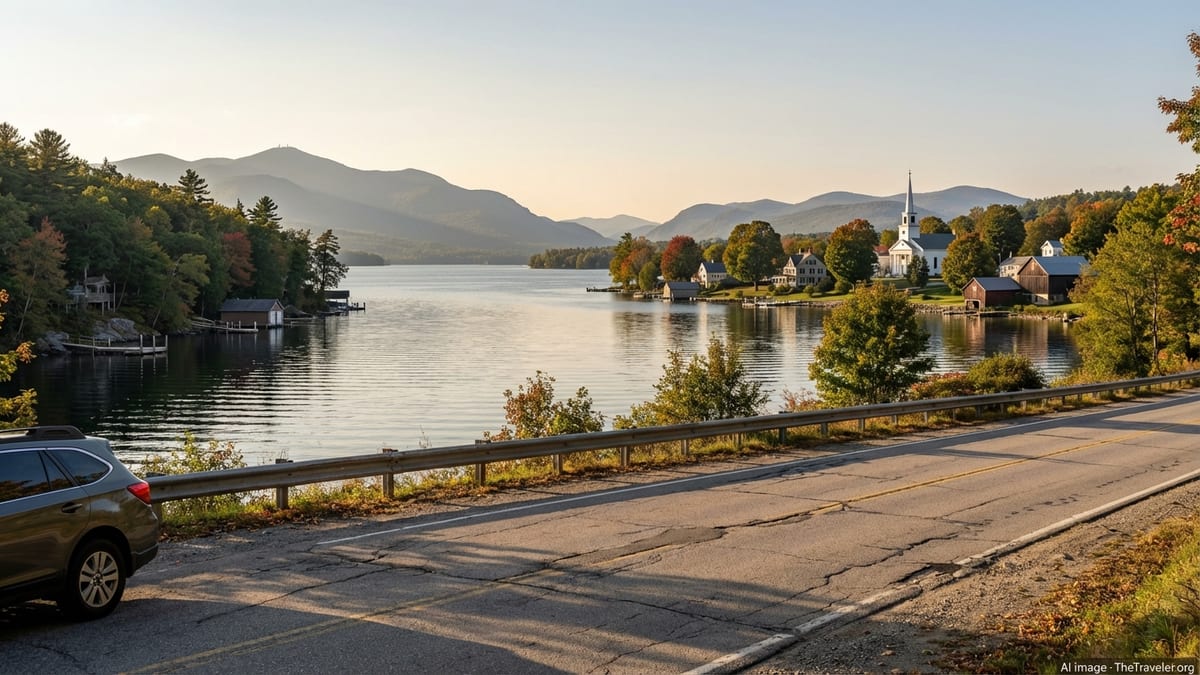
Vermont delivers the image many travelers hold of a New England town. Think white-steepled churches on a green, general stores with creaky floors, and covered bridges at the edge of the village. Places like Stowe, Woodstock, Manchester, Waitsfield, and Middlebury are popular bases for travelers who want to park once and walk to bakeries, breweries, and galleries. Even when tourism is a major economic driver, the pace feels unhurried. Many town centers are compact and pedestrian-friendly, which makes them especially appealing for couples, families with strollers, and travelers who prefer evenings on foot after a day on the trail.
Overall, New York’s mountain towns lean slightly larger and more varied in style, with some communities feeling quite busy in high season. Vermont’s villages tend to be smaller and more uniform in scale, with a strong emphasis on historic preservation and a consistent architectural vocabulary. If you prioritize striking that specific postcard tone, Vermont has the edge. If you want a mix of village vibes from sporty to artsy to historic resort, New York offers more range.
Driving, Scenic Routes, and Ease of Getting Around
Both states reward travelers who love to explore by car, but the character of the driving is different. New York’s Adirondacks cover a vast area of protected forest crisscrossed by two-lane highways and rural roads that can feel quite remote between towns. Drives around Lake George, through the Lake George Wild Forest, or along routes connecting Keene, Wilmington, and Saranac Lake deliver big mountain views and frequent access to lakes and trailheads, but distances can be longer than they appear on the map. In winter, snow and ice can significantly extend travel times, and some smaller roads close or become challenging for low-clearance vehicles.
Reaching the Catskills from major East Coast cities is relatively straightforward. Many travelers from New York City, Philadelphia, and the Mid-Atlantic treat this region as a weekend escape, using the network of parkways and interstates that feed into small valley roads. Once you arrive, drives between towns are generally short and scenic, often following rivers or skirting reservoirs. That convenience, however, means that traffic can spike on peak foliage weekends and during summer festivals, particularly near popular trailheads and swimming holes.
Vermont has invested heavily in marketing and maintaining a network of official scenic byways that help guide visitors along its most appealing corridors. Routes that trace the Green Mountain spine, link river valleys, or follow the edge of Lake Champlain tie together clusters of villages, trailheads, and farm attractions. These byways are ideal for travelers who prefer relaxed driving, with frequent opportunities to pull over for photos, short walks, and roadside farm stands. At the same time, Vermont’s rural road network can be narrow and winding, particularly on dirt backroads, so winter and mud season driving require extra attention.
In practical terms, New York’s mountain regions favor travelers who are comfortable with longer stretches between services and who enjoy the feeling of crossing big landscapes. Vermont is better suited to those who like shorter hops between towns, more frequent amenities, and the structure of clearly signed scenic routes. Either way, having your own car remains the most flexible way to explore, especially when visiting smaller communities and lesser-known trailheads.
Outdoor Activities Beyond Hiking: Lakes, Snow, and Shoulder Seasons
In both New York and Vermont, hiking might be the main draw, but it is far from the only reason to visit. In New York’s Adirondacks, a dense network of lakes and rivers shapes the travel experience. Summer brings canoeing and kayaking on chains of connected lakes, quiet paddles on remote ponds, and multi-day trips that combine portages with island camping. Destinations around Lake Placid, Lake George, and the Saranac Lake chain support everything from casual boat rentals to guided paddling trips, while anglers find a mix of roadside and backcountry options. Winter converts many of these same landscapes into terrain for cross-country skiing, snowshoeing, and snowmobiling, with several towns offering groomed trail networks.
The Catskills lean toward river-focused recreation. Tubing, fly-fishing, and swimming holes are part of the warm-weather culture, while fall brings a focus on vistas and waterfalls. In winter, a collection of small to mid-sized ski areas and Nordic centers offer downhill and cross-country options without the scale or bustle of the larger Adirondack or Vermont resorts. For travelers who like a more relaxed mountain atmosphere with plenty of water access and lower-key slopes, the Catskills deliver a good balance.
Vermont’s wider identity is closely tied to its ski and bike culture. Major resorts like Killington, Stowe, and others have built robust four-season offerings, with lift-served mountain biking, adventure parks, and extensive networks of cross-country trails. Many smaller towns also support community-maintained trail systems for Nordic skiing, fat biking, and snowshoeing, so it is possible to design a trip that never touches a big resort while still staying active every day. In summer, Vermont’s lakes are generally smaller and more intimate than those in the Adirondacks, but they can be wonderfully swimmable and accessible, often with town beaches and calm coves ideal for paddling.
Shoulder seasons matter in both states. Early spring is often muddy and quiet, with some trails temporarily closed to prevent erosion. Late fall after leaf drop can be a peaceful time, with open views on the trail and fewer crowds, but some seasonal businesses scale back hours. Travelers who like to plan for quieter experiences should pay attention to these rhythms and expect reduced services in exchange for more solitude.
Crowds, Costs, and Responsible Travel
For all their rural charm, neither New York’s mountain regions nor Vermont are secrets. Both see busy weekends during prime foliage, peak summer, and midwinter ski holidays. In recent years, Vermont in particular has grappled with the impact of fall tourism in certain scenic spots, where private farms and narrow backroads attract large numbers of visitors seeking the perfect photo. Some local communities have responded by restricting access to specific roads during peak foliage, posting clearer signage, and encouraging travelers to spread out to lesser-known areas.
New York’s Adirondacks have long navigated similar challenges around popular High Peaks trailheads and fragile alpine zones. Hiker education initiatives, shuttles in some corridors, and more visible information on parking and safety are part of the evolving response. The Catskills, too, have had to balance rising interest in popular waterfalls and swimming holes with limited parking and the need to protect streams and steep slopes from overuse. Travelers who stay flexible about trail choices and are willing to explore beyond the most photographed spots will often find quieter experiences and fewer parking frustrations.
Costs vary widely within both states. In general, lodging and dining in marquee destinations like Lake Placid, Stowe, and Woodstock trend higher, particularly during weekends and holidays. Smaller villages or towns slightly removed from the main corridors can offer better value while keeping you within a short drive of major sights. Vermont’s strong local food culture, farmers markets, and farm-to-table restaurants can make dining a highlight of the trip but can also increase the daily budget. In New York, prices can range from simple motels and classic diners to upscale lakefront resorts and chef-driven restaurants, often within the same valley.
Responsible travel habits help both your experience and the communities you visit. In practice, that means packing out trash, respecting posted signs on private land, parking legally even if it requires a longer walk, and supporting locally owned businesses. Planning visits midweek or outside absolute peak periods also spreads economic benefits while easing pressure on small-town infrastructure.
Who Should Choose New York, and Who Should Choose Vermont?
When you weigh New York against Vermont as a mountain-and-small-town destination, the decision often comes down to personality. New York’s Adirondacks and Catskills suit travelers who like variety, scale, and a sense of exploration. The landscape is bigger and in many places wilder, the roster of small towns broader, and the possibilities for combining adventure sports with culture and history extensive. If you want to mix high peaks with paddling chains of lakes, explore both artist enclaves and old resort villages, or pack multiple distinct regions into a single itinerary, New York is hard to beat.
Vermont, on the other hand, excels at focus. It is the place to go if you value cohesive scenery, an emphasis on village life, and consistent access to local food and drink. Its Green Mountains deliver plenty of challenge without the same scale of remoteness as New York’s High Peaks, and its official scenic routes make it easy to wander without a rigid plan. For many travelers, especially those coming from farther away who want their first taste of New England, Vermont offers the archetypal experience in a compact package.
Families might appreciate Vermont’s walkable town centers and resort infrastructure, which often bundle lift tickets, lessons, and off-slope activities. Serious hikers and paddlers could lean toward New York for its extensive wilderness and longer routes. Road-trippers with time to spare might reasonably decide that the best solution is not to choose, but to design a loop that samples both sides of Lake Champlain, pairing a few days in the Adirondacks or Catskills with a village stay in Vermont.
In the end, both states reward curiosity and unhurried travel. The more you are willing to explore side roads, talk with locals, and adapt your plans to the weather and the season, the more each landscape will reveal the nuances that make it special.
The Takeaway
For travelers who love mountains and small towns, New York State and Vermont are not rivals so much as complementary characters in the same story. New York brings drama, scale, and diversity, with the Adirondacks and Catskills offering big views, deep forests, and a patchwork of communities that range from Olympic heritage towns to artist hamlets and classic lakeside resorts. Vermont delivers the distilled essence of New England, where village greens, covered bridges, and gently rising ridgelines shape a quieter, more tightly woven travel experience.
If you lean toward long hikes in serious mountains, paddling across wide lakes, and mixing outdoor intensity with varied culture, New York is likely your better fit. If your ideal trip centers on scenic drives, approachable trails, and evenings spent strolling from inn to cafe along a lantern-lit main street, Vermont will feel like the destination you imagined. Many travelers ultimately find their favorite approach is to alternate between the two, using each as a different lens on the same northern landscape.
Whichever state you choose, planning with seasons, crowds, and responsible travel in mind will deepen your experience. Give yourself space to linger in a single town, to follow a side road without a fixed agenda, and to return to a viewpoint at different times of day. In both New York and Vermont, it is in those slow, unscripted moments that mountains and small towns come together most memorably.
FAQ
Q1. Which is better for serious mountain hiking, New York or Vermont?
New York generally offers more demanding hikes, especially in the Adirondack High Peaks, while Vermont provides plenty of rewarding but often more moderate routes in the Green Mountains.
Q2. Where will I find the most picturesque small towns?
Vermont is famous for postcard-style villages with church steeples and village greens, though New York’s Catskills and Adirondack towns also offer charming main streets and historic architecture.
Q3. Is New York or Vermont better for a fall foliage road trip?
Both excel in autumn. Vermont’s official scenic byways make planning easy, while New York offers broader variety if you want to combine mountain passes with lake and river valleys.
Q4. Which state is more budget friendly for mountain getaways?
Costs vary by town, but staying outside the best-known resorts often stretches your budget further in both states. Some smaller New York communities can offer especially good value.
Q5. Where should skiers and snowboarders focus, New York or Vermont?
Vermont is well known for its major ski resorts and extensive lift-served terrain, while New York offers a mix of sizeable mountains and smaller, lower-key ski areas in both the Adirondacks and Catskills.
Q6. Do I need a car to enjoy mountain towns in either state?
A car is strongly recommended in both New York and Vermont, since public transportation is limited in many mountain areas and trailheads are often far apart.
Q7. Which destination suits families with young children better?
Vermont’s compact village centers and resort amenities can be particularly convenient for families, though many New York towns around lakes and gentler hikes also work very well with kids.
Q8. How can I avoid crowds in peak seasons?
Travel midweek, start hikes early, choose lesser-known trails, and consider staying in smaller towns a short drive from the busiest hubs in either state.
Q9. Is one state better than the other for swimming and paddling?
New York’s Adirondacks offer extensive lake chains and backcountry paddling, while Vermont has smaller but very accessible lakes and rivers that are ideal for casual swimmers and paddlers.
Q10. If I only have one long weekend, which should I choose?
Pick New York if you want big scenery and diverse towns in a single trip, and choose Vermont if you prefer a focused, classic New England village-and-mountain experience.