

More news on this day
Nonstop travel between New York and the Cayman Islands is about to change significantly, as Cayman Airways prepares to end its long-standing JFK–Grand Cayman route in late 2026, forcing travelers to rethink how they reach the popular Caribbean destination from the Northeast.
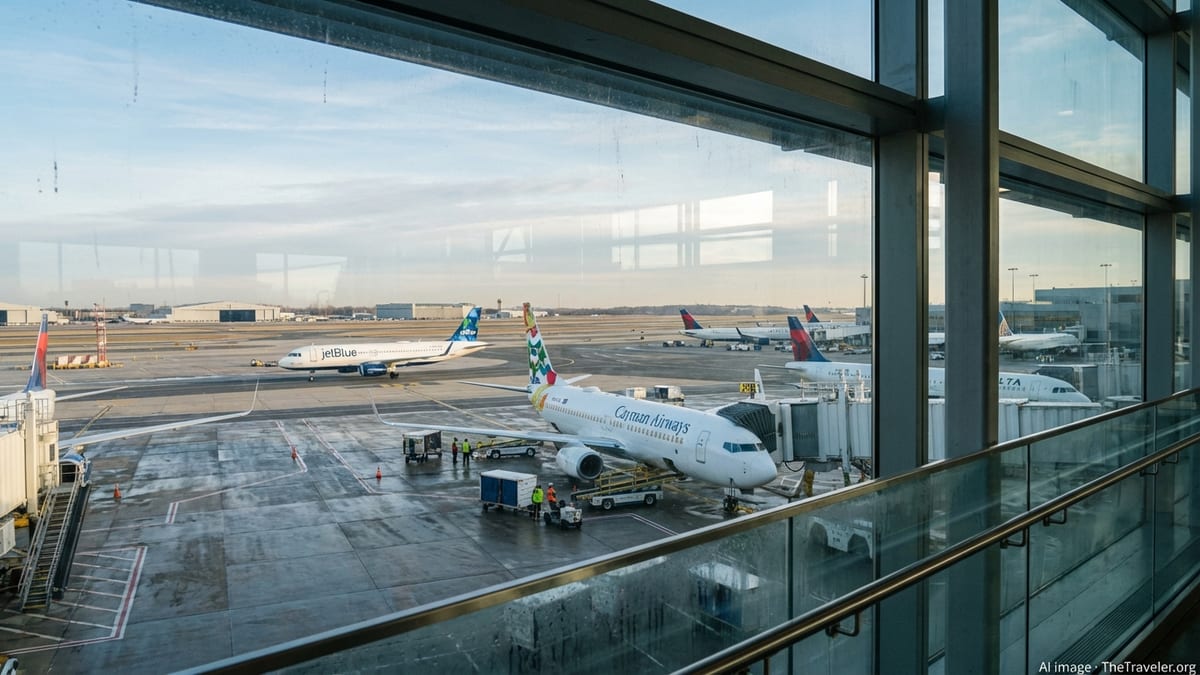
Flag Carrier Confirms End of JFK Service
Cayman Airways has confirmed it will discontinue its direct service between New York’s John F. Kennedy International Airport and Grand Cayman, bringing nearly two decades of continuous flying on the route to a close. The last scheduled flight is set for October 19, 2026, marking the end of an era for the national carrier and for many loyal travelers who have come to rely on the convenience of the nonstop link.
The airline inaugurated the JFK connection in June 2007 and, aside from a pandemic-related pause, maintained consistent service that helped establish New York as one of the Cayman Islands’ most important international markets. Over the years, Cayman Airways carried an estimated half a million passengers on the corridor, serving not only leisure travelers heading to Seven Mile Beach but also business visitors, Caymanians living in the tri-state area, and financial-services executives commuting between the islands and Manhattan.
Executives at Cayman Airways have framed the decision as a strategic shift rather than a retreat from the North American market. In public statements, leadership emphasized that the airline’s network planning is increasingly focused on optimizing its limited fleet to unlock new destinations and strengthen other high-potential markets, even when that means relinquishing routes it once pioneered.
Government officials in George Town have publicly thanked the carrier for its role in building the New York market over the past 19 years and have stressed that the decision does not signal a pullback from the United States. Instead, they describe it as a “rebalancing” that reflects how many more airlines now serve the Cayman Islands compared with 2007, when Cayman Airways was one of only a handful of operators connecting Grand Cayman to the Northeast.
What This Means for Direct Flights From New York
The loss of Cayman Airways’ JFK service does not mean New Yorkers will lose all nonstop options to the Cayman Islands. Other carriers, notably JetBlue, United Airlines and Delta Air Lines, have expanded their presence on the New York–Cayman corridor in recent seasons and are expected to continue operating direct flights beyond 2026. As of early 2026, schedules show JetBlue offering multiple weekly JFK–Grand Cayman flights, while United serves Grand Cayman from Newark with a mix of year-round and seasonal operations.
Delta, which returned to the route in December 2025 after more than a decade away, currently flies once weekly between JFK and Owen Roberts International Airport as part of a winter-only schedule. That seasonal service is slated to run through April each year, providing at least one additional nonstop option during the peak months for sun-seeking Northeastern travelers. Tourism officials in the Cayman Islands have highlighted Delta’s re-entry as evidence of sustained demand from the New York market.
For travelers, however, the departure of the national carrier will still be felt. Cayman Airways has long had a reputation among repeat visitors for its Caymanian crew, generous baggage policies, and close coordination with local tourism stakeholders. Losing that option may push some travelers onto U.S. carriers with different fare structures and customer-service policies, or onto itineraries that involve connections through cities such as Miami, Charlotte, Atlanta or Fort Lauderdale.
In practical terms, the key change is that after October 19, 2026, those who prefer to fly nonstop from New York to Grand Cayman will need to pay closer attention to seasonality, days of operation and departure times on U.S. airlines, as the straightforward three-times-weekly Cayman Airways schedule from JFK will no longer be available.
Why Cayman Airways Is Walking Away From JFK
Cayman Airways’ decision is rooted in a broader fleet and network review that has been underway since the airline transitioned its mainline fleet to Boeing 737-8 aircraft. Operating just four aircraft across an expanding map has left the carrier with tough choices about where its metal can deliver the greatest benefit for both the airline and the Caymanian economy.
Company leadership has described the move as a “thoughtful and deliberate” response to evolving market conditions. With more foreign carriers now serving Grand Cayman from major U.S. hubs, Cayman Airways is no longer the only or even the primary option for many American travelers. That reality gives the airline an opportunity to shift its aircraft to routes where private competitors are less likely to venture, or where the national interest in connectivity is higher than the purely commercial incentive.
One example is the carrier’s planned expansion into emerging U.S. markets, including a new nonstop service between Austin, Texas, and Grand Cayman. Austin has been identified by the Cayman Islands Department of Tourism as a growth market with strong potential to deliver higher-spending leisure visitors and new business links in technology and professional services. Redeploying aircraft from JFK to Austin and other developing routes is expected to generate incremental visitor arrivals without substantially reducing overall access from the Northeast.
The airline is also under pressure to ensure its operations are financially sustainable. Fuel costs, airport fees at congested gateways like JFK, and the rising expense of maintaining crews and aircraft in high-cost cities all factor into route viability. While the New York route has historic importance and emotional resonance for the airline, executives say long-term sustainability requires concentrating capacity where yields and strategic value are strongest.
Impact on the Cayman Islands Tourism Strategy
The end of Cayman Airways’ JFK flights comes at a time when the Cayman Islands is actively courting more visitors from the United States, especially from the Northeast. The Department of Tourism has been pursuing a data-driven aviation strategy that relies heavily on partnerships with major U.S. airlines. Rather than shouldering the entire burden of airlift from New York on its own, the government is now working with multiple carriers to ensure capacity matches demand.
Officials say this diversified approach reduces risk and can even improve resilience. If one carrier exits or cuts back frequencies, others may step in, especially if the destination remains popular and profitable. In recent years, that has been the case for Grand Cayman, where a strengthening hotel pipeline and a reputation for safety, diving and culinary excellence have helped keep load factors high on U.S. carriers across several gateways.
The strategy also aligns with the government’s broader goal of sustaining high-value tourism rather than simply increasing visitor numbers at any cost. By cultivating routes from cities such as Detroit, Minneapolis, Austin and Fort Lauderdale in addition to New York, Caymanian authorities hope to attract a mix of repeat visitors and first-time travelers who are willing to spend on upscale accommodations, dining and experiences.
Still, there is recognition that the optics of a national carrier leaving a marquee route are sensitive. Authorities have been careful to stress that New York remains one of the territory’s top source markets and that they will continue to support airlift from the region, even if Cayman Airways is no longer the primary operator out of JFK.
How New Yorkers Can Reach Grand Cayman After 2026
For travelers in the New York metropolitan area, the end of Cayman Airways’ nonstop service requires a small but important shift in planning habits. Instead of defaulting to a Cayman Airways flight out of JFK, passengers will need to consider a patchwork of nonstop and one-stop options across multiple airports and airlines.
One of the most straightforward alternatives will be JetBlue’s direct flights from JFK to Grand Cayman, which have become a staple of the winter schedule and now operate on select days throughout much of the year. From northern New Jersey and parts of upstate New York, United’s nonstop service from Newark Liberty remains another attractive choice, particularly for travelers loyal to that carrier’s frequent flyer program.
Travelers who are flexible on routing can also connect through secondary hubs. American Airlines funnels many New York passengers to Grand Cayman through Miami and Charlotte, while Delta provides options via Atlanta. New low-cost and hybrid carriers have added further connectivity from Florida, including Fort Lauderdale, making two-leg journeys more competitive in both price and travel time.
Industry experts advise that New York–area passengers planning trips for late 2026 or beyond should book early during peak periods such as Christmas, New Year and spring break, when nonstop seats can sell out quickly. They also suggest checking day-of-week schedules carefully, as many of the New York–Cayman flights are still operated seasonally or on select days rather than daily.
What to Expect if You Already Booked With Cayman Airways
With the final Cayman Airways JFK flight still more than a year away, many travelers will find their existing bookings unaffected, particularly for trips planned before the route winds down. The airline is expected to continue operating its schedule through the end of the published season and then gradually scale back frequencies as October 19, 2026, approaches.
Passengers with tickets beyond that date, or who have booked far in advance through package providers, should monitor communication from both the airline and their travel agents. Typically, when a carrier withdraws from a route, it offers affected passengers the option to rebook via another gateway, receive a refund, or in some cases transfer to a partner airline on alternate flights. The specifics will depend on fare rules and commercial agreements in place at the time of cancellation.
Travel advisers recommend that anyone considering a New York–Cayman trip in late 2026 or early 2027 check routing details at the time of purchase and be prepared for potential schedule changes. Purchasing travel insurance that covers schedule disruption and carrier changes may offer additional protection for complex itineraries, especially during the busy winter season when flights are heavily booked.
For travelers who value the unique experience of flying the national airline, there is still time to plan a final trip on the JFK–Grand Cayman route before it disappears from the map. Tourism officials note that this “last chance” window could itself spur a modest surge in bookings as loyal customers seek one more nonstop journey with Cayman Airways.
Signals for the Wider Caribbean Aviation Market
The decision by Cayman Airways to leave JFK underscores how intensely competitive the Caribbean aviation landscape has become, particularly on routes from major U.S. gateways. As more global and regional carriers add leisure capacity to sun destinations, smaller national airlines are increasingly focusing on niche markets, secondary cities and connectivity that supports local priorities beyond tourism.
Analysts say the shift also highlights how important partnerships with large U.S. airlines have become for island destinations. Instead of relying solely on their own flag carriers to maintain critical long-haul links, tourism boards and aviation authorities are striking deals with American, Delta, United, JetBlue and others to secure routes, co-fund marketing campaigns and align schedules with hotel capacity and cruise arrivals.
For the Cayman Islands, the withdrawal from JFK is therefore less a sign of retreat than an acknowledgment that the role of Cayman Airways is changing. Rather than being the primary bridge to every key market, the airline is repositioning itself as one piece of a broader airlift puzzle, concentrating on routes where its presence is most strategically valuable and where private competitors are less likely to step in.
Travelers, meanwhile, can expect continued flux across the region as airlines fine-tune their networks in response to demand, fuel prices and competitive pressure. The headline for New Yorkers is clear: the familiar Cayman Airways logo will soon disappear from JFK’s departure boards, but with multiple U.S. airlines now serving Grand Cayman, the path from the city to the islands will remain open, if somewhat more fragmented than before.