

More news on this day
A historic nor’easter has brought New York and much of the Northeast to a standstill, with sweeping travel bans, flight groundings and states of emergency following record-breaking snowfall and blizzard conditions along the Interstate 95 corridor.
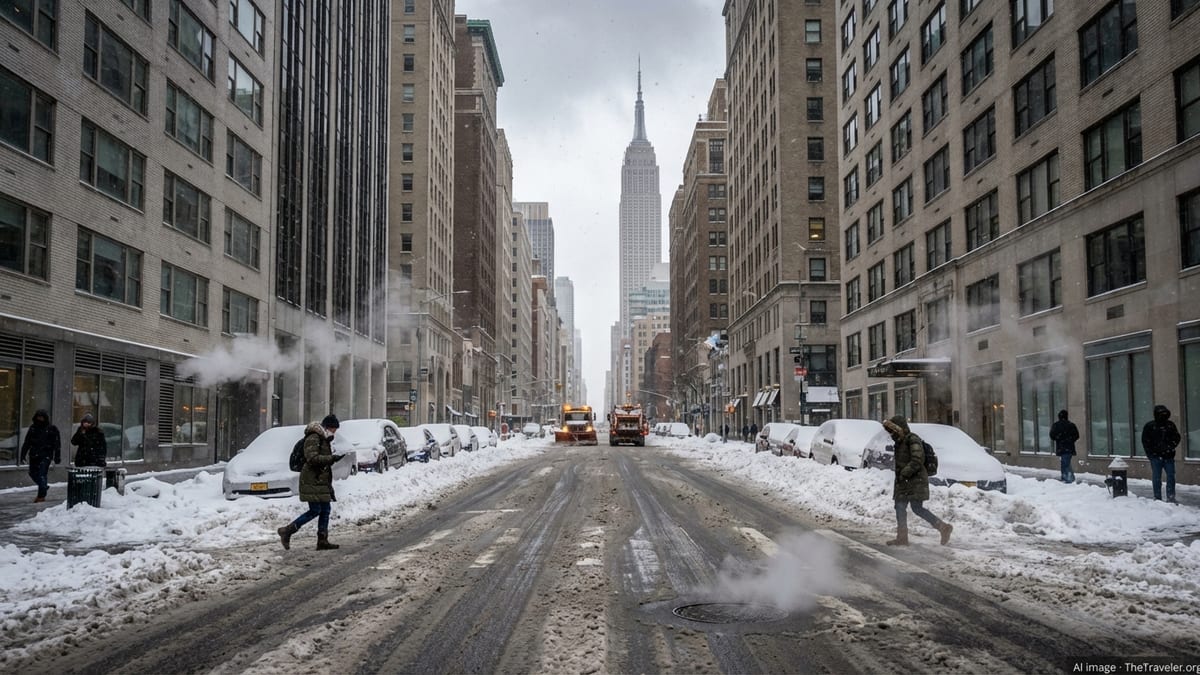
State of Emergency and Citywide Travel Ban in New York
New York City and large parts of the state spent Monday digging out after what officials are calling one of the most disruptive winter storms in decades, a fast-developing nor’easter that intensified into a full blizzard over the weekend. The storm hit its peak from Sunday night into Monday morning, turning major arteries into impassable corridors of snow and prompting leaders to effectively freeze non-essential movement.
Mayor Zohran Mamdani declared a state of emergency and imposed a citywide ban on non-essential travel beginning at 9 p.m. Sunday and running through midday Monday, in an effort to keep residents off treacherous roads and clear the way for plows and emergency crews. Similar restrictions were rolled out across parts of New York State, New Jersey and Connecticut, leaving millions under some form of road travel ban or advisory.
By early Monday afternoon, Central Park had recorded close to 20 inches of dense, wind-driven snow, while suburbs on Long Island and north of the city reported totals well over 2 feet. Officials warned that even as the formal travel ban expired at noon, a hazardous travel advisory would remain in effect into the night, citing deep snowpack, drifting and limited visibility on secondary streets.
Governor Kathy Hochul activated National Guard troops to assist in New York City, Long Island and the lower Hudson Valley, focusing on stranded motorists, snow removal support and welfare checks. She urged anyone not involved in essential operations to stay home and avoid adding pressure to already stretched emergency services.
Flights Grounded and Northeast Transport Network Paralyzed
The nor’easter’s impact rippled across the country’s transportation system, with New York at the center of unprecedented disruption. Between Sunday and Monday, more than 9,000 flights were canceled nationwide, and nearly 20 percent of all scheduled U.S. flights were grounded as the storm swept through key hubs in the Northeast.
New York City’s airports were particularly hard hit. LaGuardia reported cancellation rates approaching total shutdown, with roughly 98 percent of flights scrubbed at the height of the storm. John F. Kennedy International saw more than 9 in 10 departures and arrivals canceled, while Newark Liberty in neighboring New Jersey also logged cancellation rates above 80 percent. Boston Logan and Philadelphia International faced similar near-standstills, effectively severing much of the air bridge along the busy I-95 corridor.
On the ground, mass transit operators took the extraordinary step of halting or sharply curtailing services as conditions deteriorated. New Jersey Transit suspended most bus, rail, light rail and paratransit operations during the worst of the blizzard, while the Long Island Rail Road paused service overnight into Monday. Amtrak canceled or truncated several Northeast Corridor routes, advising passengers to rebook later in the week as crews worked to clear tracks and repair weather-related damage.
Officials and airlines warned that even after the storm’s passage, travelers should expect lingering disruption for days, as aircraft and crews are repositioned, deicing operations continue and airports work through a backlog of stranded passengers. Carriers issued broad travel waivers for the region, allowing customers to change plans without penalty.
Record Snowfall and Life-Threatening Blizzard Conditions
Meteorologists described the system as a classic nor’easter that rapidly intensified offshore into what is known as a bomb cyclone, dropping pressure quickly and generating powerful winds that turned heavy snow into blinding whiteout. Gusts along the coast frequently topped 60 miles per hour, with some exposed locations reporting peaks above 70 miles per hour, enough to down trees and power lines and drive drifts several feet high.
Across the wider Northeast, the storm reset local record books. Parts of Rhode Island measured more than 3 feet of snow, including a record single-storm total at Providence. In New York, the broader metro region commonly saw 12 to 24 inches, with eastern Long Island among the hardest hit. Philadelphia logged around 14 inches, and many cities across New Jersey, Connecticut and Massachusetts reported storm totals exceeding 2 feet.
Forecasters noted snowfall rates of 3 inches per hour or more during the most intense bands, overwhelming road crews that struggled to keep up as blowing snow immediately refilled freshly plowed lanes. The National Weather Service characterized the event as one of the strongest winter storms to hit the corridor in at least a decade, and local officials suggested it may rank among New York City’s ten most significant snowfalls on record.
The combination of heavy, wet snow and strong winds cut power to hundreds of thousands of customers, particularly in coastal New England. Utility crews worked through hazardous conditions to restore electricity, but warned that full restoration could take days in some of the hardest-hit communities where access remained limited.
Residents Shelter in Place as Schools and Businesses Close
With travel all but impossible during the height of the storm, daily life across New York and neighboring states shifted into emergency mode. New York City public schools were closed for a traditional snow day, the first such full closure without remote learning since before the pandemic, as officials urged children to stay home and off icy sidewalks and roads. Many suburban and upstate districts followed suit, announcing closures or remote days as plows focused on main routes.
Businesses across the city and region shuttered for the day, from small shops and restaurants to major corporate offices. Broadway theaters canceled performances, and cultural institutions including museums and galleries closed their doors. Court proceedings were delayed in Manhattan and elsewhere when jurors and staff could not safely reach courthouses.
Delivery services and on-demand platforms paused operations in several metro areas, citing unsafe road conditions for drivers and cyclists. Municipal agencies expanded shelter capacity and outreach to vulnerable residents, including those without stable housing, amid concerns about hypothermia and exposure in sub-freezing temperatures compounded by strong winds.
Despite the severity of the storm, some New Yorkers took advantage of the unexpected pause to flood parks and side streets once conditions eased, building snow sculptures and sledding on the city’s hills. Officials, however, continued to caution that packed snow and refreezing would keep walkways and side streets hazardous even under clear skies.
Slow Reopening and Ongoing Travel Advisories
By Tuesday, plows and salt spreaders had carved passable routes through many main roads in and around New York City, allowing for a gradual lifting of the strictest travel restrictions. Nevertheless, authorities kept a patchwork of advisories in place across the region, warning that unplowed residential streets, narrowed lanes and snowbanks reduced visibility and maneuvering room for drivers.
Airlines began to restore a limited schedule at the major New York airports and other Northeast hubs, but many early flights remained canceled or significantly delayed. Travelers were urged to confirm their flight status before leaving home and to anticipate longer-than-usual check-in and security lines as operations ramped back up.
Weather agencies also flagged the risk of additional wintry systems tracking across the region later in the week, raising the prospect of fresh accumulation on top of existing snowpack. That possibility has prompted transportation departments to keep staff and equipment on heightened alert and could extend the period of intermittent travel disruption along key commuter and freight routes.
For visitors and residents planning trips into or out of New York and the broader Northeast, officials advised building in extra flexibility, monitoring local emergency alerts and allowing ample time for overland journeys. While the worst of the nor’easter has passed, its aftermath continues to reshape how and when people move through one of the world’s busiest travel corridors.