

More news on this day
New Zealand has sharply escalated its travel advice for the Middle East, moving in step with the United Kingdom and a growing list of governments that are warning citizens to leave high-risk countries amid sweeping airspace closures, ongoing conflict and fast-rising political tensions across West Asia.
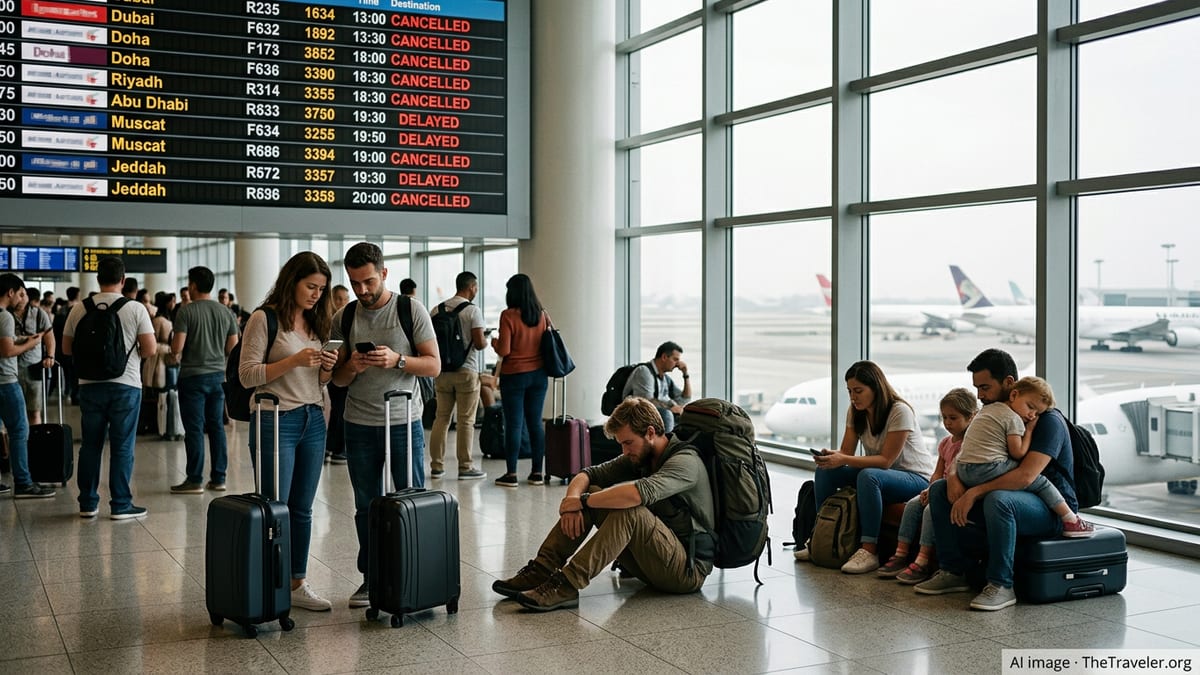
UK Tightens Middle East Guidance as Airspace Shuts Down
The United Kingdom’s Foreign, Commonwealth & Development Office has updated its advice for multiple states across West Asia, reinforcing warnings that conflict-related disruptions could trigger sudden airport shutdowns and airspace closures that leave travelers stranded far from home. Officials in London have been cautioning that commercial flights may be rerouted, heavily delayed or cancelled at short notice as hostilities involving Iran, Israel and Gulf states spill over into regional aviation networks.
British guidance now strongly discourages or restricts nonessential travel to several countries at the heart of the current crisis, highlighting the risk that consular support could be limited if the security picture worsens further. The language mirrors concerns from aviation analysts who note that hubs in the United Arab Emirates, Qatar and Saudi Arabia sit astride critical east–west corridors used by European and Asian carriers.
With missile and drone activity repeatedly targeting infrastructure in parts of the Gulf, authorities in the UK have stressed that overflight risks extend well beyond the borders of any one state. Travelers whose itineraries simply transit the region are being urged to reassess routing, allow significant buffers for disruption and maintain flexible bookings where possible.
The tightening of British advice follows several days of intense military activity that have already triggered widespread cancellations and diversions, particularly around Iran and key Gulf hubs. Airlines have been forced to redesign long haul routes in real time as temporary airspace bans cascade across the region, adding hours to journeys between Europe, Africa, Asia and Oceania.
New Zealand Raises Alarm and Prepares Evacuation Capacity
Wellington has moved quickly to align with other Western capitals, issuing some of its strongest language yet on the deteriorating Middle East security environment. New Zealand’s SafeTravel service now advises citizens in several West Asian countries to leave while commercial options remain available, warning that airspace restrictions and attacks on infrastructure could rapidly cut off exit routes.
In parallel, the New Zealand Defence Force has been pre positioning aircraft and personnel in the wider region to support potential evacuations. Authorities have confirmed preparations involving Royal New Zealand Air Force transport planes and additional consular staff, designed to help extract nationals and eligible residents if commercial services collapse or major hubs become inaccessible for security reasons.
The Ministry of Foreign Affairs and Trade has also updated its standing alert titled “Middle East security situation,” cautioning that even travelers whose destinations lie outside conflict zones may be affected by knock on disruptions. New Zealanders are being told to register their details, closely monitor official updates and consult airlines before heading to the airport, as schedules across the network are being revised with little notice.
Officials have indicated that, while the government will seek to assist where possible, there are strict limits on what consular teams can do if a traveler ignores advice not to enter or remain in a location that is flagged as extremely high risk. Insurance providers are similarly warning that cover may be voided if policyholders travel against official advisories.
Regional Neighbours Tighten Advice: Australia, Singapore, UAE and Others
New Zealand’s move comes amid a broader hardening of travel guidance across the Asia Pacific and beyond. Australia has raised several Middle Eastern states to its highest “Do Not Travel” tier, citing the danger posed by missile and drone strikes, protests and possible reprisals. Smartraveller bulletins flag multiple Gulf and Levant countries where Australians are urged to leave as soon as it is safe to do so, echoing similar language from North American and European governments.
Singapore has updated its own advisories, urging residents to defer nonessential trips to conflict hotspots and to be prepared for major flight disruptions even when only transiting regional hubs. The city state, whose airlines operate extensive networks through the Gulf, has highlighted the likelihood of last minute changes to routings as carriers avoid contested airspace and crowded conflict corridors.
Within West Asia, governments including the United Arab Emirates, Saudi Arabia and Qatar have been issuing rolling security updates as they defend against attacks and manage the operational impact on their flagship airports. Partial or full airspace closures have been implemented at various times, leaving flagship carriers with little choice but to cancel flights or operate limited evacuation style services focused on returning citizens and residents.
China, Thailand and several European states have also strengthened warnings about travel to Iran and neighbouring hotspots, underscoring the global reach of the crisis. Consular statements from capitals as varied as Beijing, Bangkok and Amsterdam reference the same cluster of risks: unpredictable military escalations, constrained diplomatic access and a regional aviation system operating under extreme stress.
Airspace Closures Reshape Global Flight Corridors
At the heart of the current wave of advisories is an unprecedented disruption of airspace across a swathe of West Asia. Strikes and intercepts have prompted temporary bans or severe restrictions in the skies above Iran, Iraq and segments of the Gulf, while missile threats near strategic waterways have further complicated routing options for airlines that rely on these corridors as the shortest path between continents.
Data from flight tracking services show normally dense traffic lanes thinning out or disappearing entirely over affected countries, with long haul services forced to detour over the Caucasus, North Africa or Central Asia. Each rerouting can add hours of flying time, increase fuel burn and put pressure on crew duty limits, which in turn drives more cancellations and missed connections down the line.
For travelers, the result has been a sharp rise in last minute schedule changes, overnight delays and unexpected stopovers in secondary hubs. Aviation experts warn that so long as key airspaces remain contested or periodically closed, airlines will be unable to provide the level of reliability that passengers typically expect on intercontinental routes linking Europe, the Middle East, Africa and the Asia Pacific.
Insurers and corporate travel managers are now revisiting risk assumptions that underpinned pre crisis routing strategies. Many are advising clients to avoid itineraries that rely on single hub connections through the Gulf or Levant, and to build contingency time into urgent business travel, repatriation plans and cargo movements.
What Travelers Should Expect in the Coming Weeks
As New Zealand and the UK join a widening chorus of governments urging their citizens to avoid or leave parts of West Asia, industry insiders anticipate a prolonged period of volatility for global travel. Airlines are adjusting networks day by day, often with only partial visibility into how long airspace restrictions will last or whether additional states might tighten their own rules.
Passengers with tickets that route through affected hubs are being encouraged to explore alternative paths via Southeast Asia, southern Europe or North America where possible, though availability remains tight. Flexible fares and direct bookings with carriers are being promoted as the best way to retain options if circumstances shift rapidly.
Travelers who remain determined to visit or transit the region are being advised to maintain a low profile, stay in close contact with their embassies and follow local authority guidance, especially concerning curfews and shelter in place orders. Governments stress that the security environment can change with little warning, and that commercial evacuation options may disappear quickly if the conflict intensifies.
For now, New Zealand’s alignment with partners such as the UK, Australia, Singapore, the UAE, China and Saudi Arabia signals a rare degree of global consensus around the scale of the risks. Until the underlying tensions in West Asia ease and skies reopen with confidence, Westbound and Eastbound travelers alike are being told to prepare for a longer, less predictable journey.