

More news on this day
New Zealand’s political leaders have rejected renewed calls to sell the government’s majority stake in Air New Zealand after the flag carrier reported a $40 million net loss, insisting the airline remain a publicly controlled strategic asset despite mounting financial and operational pressures.
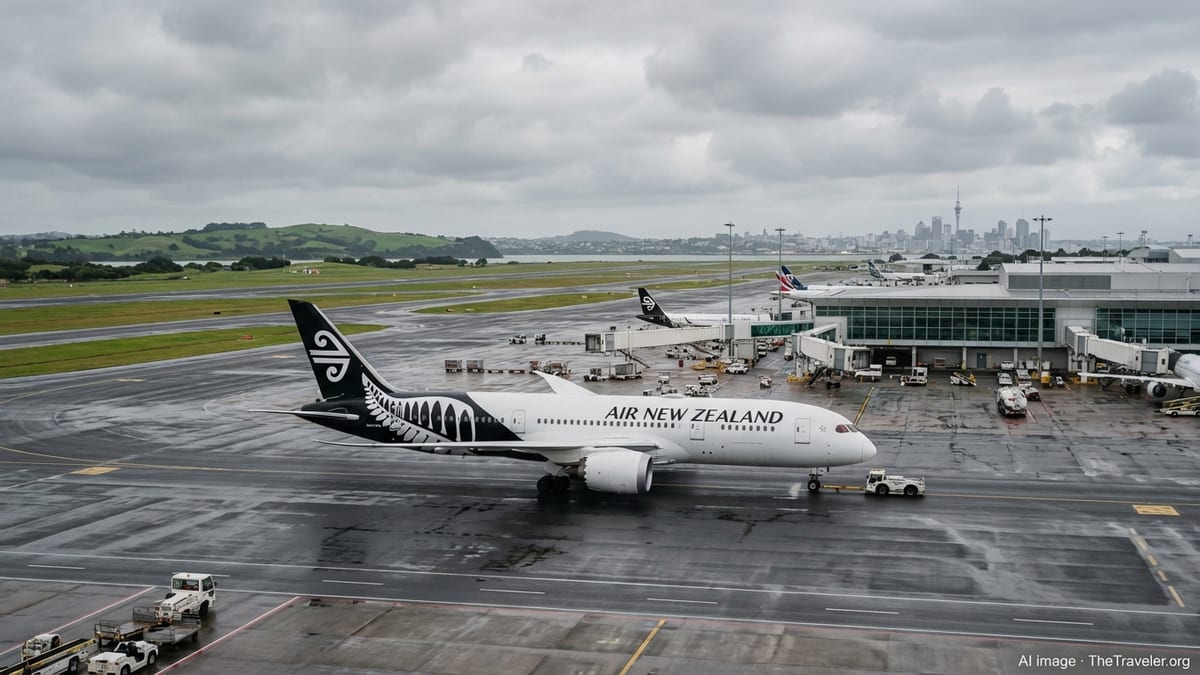
Half-Year Loss Rekindles Privatisation Debate
Air New Zealand this week unveiled an interim net loss after tax of $40 million for the first half of the 2026 financial year, reversing a profit of $106 million in the same period a year earlier. The result, which followed a loss before tax of $59 million, underscored the strain of global engine maintenance delays, elevated fuel prices, aviation cost inflation and a slower than expected rebound in domestic demand.
The figures prompted Deputy Prime Minister and ACT Party leader David Seymour to revive his longstanding call for the government to sell its 51 percent shareholding in the airline. He argued taxpayers had too much capital tied up in a company he says is not delivering reliable, affordable services, and questioned the rationale for continued state ownership after years in which the airline was run as a commercial business.
However, the loss was broadly in line with guidance Air New Zealand had previously issued, and management framed the result as a reflection of cyclical and industry-wide headwinds rather than structural decline. The airline said fleet capacity should gradually improve as grounded aircraft return to service and new widebody jets arrive, though it cautioned that earnings in the second half of the year were likely to be similar to, or only modestly better than, the first.
While investors reacted nervously to the numbers and the suspension of an interim dividend, the sharper response came in the political arena, where the airline’s ownership has once again become a lightning rod for wider debates over strategic assets and public services.
Government Rules Out Asset Sale This Term
Prime Minister Christopher Luxon signalled that, despite ACT’s pressure, there would be no sale of the Crown’s stake in Air New Zealand during the current political term. He characterised the loss as a setback but not a trigger for immediate privatisation, stressing that the government’s focus remained on stabilising the airline’s performance and protecting national connectivity.
New Zealand First leader Winston Peters went further, sharply criticising what he described as “ideological extremism” around asset sales in response to a single period of poor results. Peters, whose party has long opposed privatisation of core infrastructure, warned that selling down the stake while the share price and earnings were under pressure would lock in losses for taxpayers and erode long-term strategic control over the national carrier.
Opposition parties also lined up against a sale. Labour finance spokesperson Barbara Edmonds said a one-off loss did not justify selling “a strategic asset and a key part of New Zealand’s infrastructure,” arguing that the real risk to taxpayers lay in losing public leverage over regional routes and international links. Green Party co-leader Chlöe Swarbrick framed the issue within a broader critique of past asset sales, contending that privatisation tends to prioritise shareholder returns over affordability and service quality for local communities.
The rare cross-party alignment has, at least for now, closed the door on ACT’s push for a sell-down. Yet the episode has highlighted the tensions within the governing coalition and ensured that the future of Air New Zealand’s ownership will remain a live issue as the next election cycle approaches.
Strategic Value of the National Carrier
Supporters of continued public ownership argue that Air New Zealand’s value to the country extends well beyond its balance sheet. As the dominant domestic airline and a key operator on trans-Tasman and Pacific routes, it plays a central role in connecting remote regions, supporting tourism and trade, and ensuring New Zealand’s aviation links remain resilient during crises.
Political leaders caution that full or majority privatisation could see commercial imperatives undermining these broader goals, particularly if future owners were less inclined to maintain marginal regional services or invest in long-term network resilience. Peters and Edmonds have both warned that foreign or purely profit-driven ownership could lead to reduced services to smaller centres and higher fares where competition is limited.
The airline’s role as a de facto piece of national infrastructure was underscored during the pandemic, when government backing helped sustain cargo operations and repatriation flights. Advocates for public ownership say those interventions would have been harder to coordinate had the state not retained a controlling stake, and they argue that future disruptions related to climate, geopolitics or global supply chains could demand similar support.
For travel and tourism operators, the stakes are equally high. Air New Zealand remains a primary gateway for international visitors and a critical partner for regional tourism economies. Industry groups have expressed concern that a short-term focus on profitability, whether under public or private ownership, could result in reduced capacity or higher prices that would weaken New Zealand’s competitiveness as a long-haul destination.
Operational Pressures Weigh on Traveller Experience
The interim loss comes amid a turbulent period for passengers, with Air New Zealand grappling with grounded aircraft, schedule disruptions and elevated fares on many domestic and regional routes. Global engine maintenance bottlenecks affecting both narrowbody and widebody fleets have forced the carrier to pull aircraft from service, compressing capacity and driving up load factors.
Travellers have reported full flights, limited fare availability and higher prices on key domestic corridors, particularly during peak periods and to regional centres with few alternative carriers. Seymour seized on these frustrations, criticising the airline for what he described as an overemphasis on branding and sustainability initiatives at the expense of punctual, affordable core services.
Air New Zealand rejects the characterisation, pointing to its efforts to manage capacity constraints, bring new aircraft into the fleet and support the long-term decarbonisation of aviation. The airline has said that without investment in newer, more efficient jets and in future fuel technologies, operating costs and environmental obligations will ultimately weigh even more heavily on fares and route economics.
For business and leisure travellers, the near-term outlook is mixed. Capacity is expected to improve gradually as more aircraft return to service, but ongoing maintenance windows, supply chain delays and pilot resourcing challenges mean disruption risk will remain elevated through at least the next year. In the meantime, the political debate over ownership adds another layer of uncertainty around how the airline will balance commercial performance with its wider national role.
What the Ownership Debate Means for Future Connectivity
Behind the sharp rhetoric in Wellington lies a broader question about how New Zealand wants its aviation system to function in an era of rising costs, environmental pressures and intensified global competition for visitors. Proponents of a sale argue that private capital and commercial discipline could sharpen the airline’s performance and reduce fiscal exposure. Defenders of public control counter that connectivity, resilience and regional equity are public goods that markets alone cannot reliably deliver.
In practice, any shift in ownership structure would likely trigger a review of route obligations, investment plans and governance settings. Regional leaders and tourism bodies are watching closely for signals on whether future governments might revisit the issue under different financial conditions, especially if Air New Zealand’s performance fails to rebound as quickly as hoped.
For now, the message from most political leaders is that Air New Zealand will remain majority publicly owned while it navigates its present challenges. The airline is pressing ahead with a strategic review designed to reset its cost base, fleet plan and customer offering for the next phase of recovery. How effectively it can restore profitability without sacrificing its wider nation-building role will heavily influence whether calls for privatisation gather momentum again.
As New Zealand heads into another busy travel season, passengers may see little immediate change in daily operations. But the contest over who should ultimately own and direct the national carrier is likely to shape the country’s air links, regional development and travel affordability for years to come.