

More news on this day
New Zealanders caught up in the fast‑moving Iran crisis are being urged to leave the region as soon as it is safe, with Wellington activating contingency plans for assisted departures and warning that consular help inside Iran itself is now “extremely limited.”
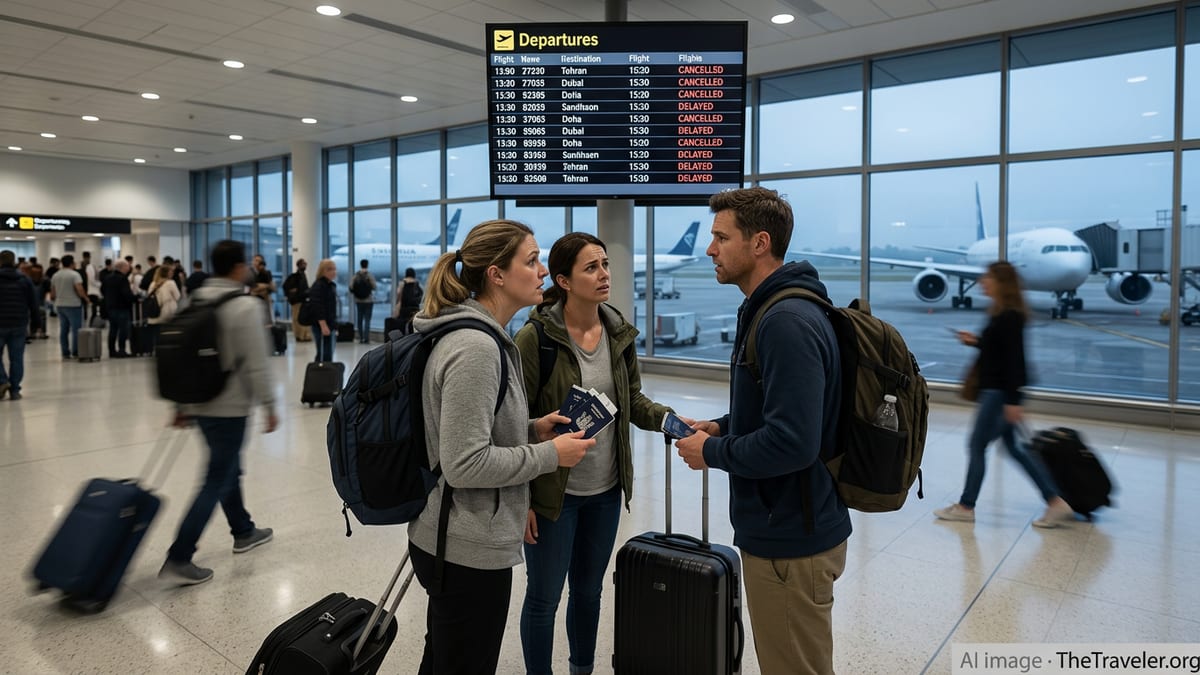
Escalating conflict leaves New Zealanders exposed
The Iran war, triggered on 28 February 2026 by large-scale United States and Israeli strikes against Iranian targets, has rapidly reshaped the security and travel landscape across the Middle East. Iranian retaliatory attacks on regional infrastructure, ports and airspace have followed, pushing several governments to issue urgent calls for their citizens to leave Iran and neighbouring states.
New Zealand authorities have aligned with that increasingly stark international messaging. Updated SafeTravel advisories now firmly warn against all travel to Iran and highlight a clear expectation that any New Zealander still in the country should depart as soon as a safe route is available. Officials stress that the security situation can deteriorate without notice and that foreign nationals risk becoming isolated by sudden airspace closures, internet outages or local restrictions on movement.
The conflict’s reach extends well beyond Iran’s borders. Missile and drone strikes on Gulf states, alongside threats to regional shipping lanes, have fuelled concern that the crisis could widen further. For New Zealand travellers, this is not just a distant geopolitical story but a live operational risk affecting flight paths, transit hubs and the viability of long-planned itineraries through the region.
Travel security analysts say New Zealanders often underestimate the speed with which crises can escalate. The current conflict, they note, moved from tense rhetoric to full-scale military operations in a matter of days, leaving many foreign nationals scrambling to secure exit options before commercial links seized up.
MFAT’s strongest Iran warnings in years
The Ministry of Foreign Affairs and Trade has issued some of its most forceful language on Iran in recent memory. SafeTravel guidance updated on 1 March 2026 notes that military strikes and reprisal attacks have occurred in Iran and across the wider Middle East, and confirms that the New Zealand government’s ability to assist citizens inside Iran is “extremely limited.”
Officials emphasise that New Zealand has no resident embassy in Tehran and that consular reach is constrained by both security conditions and Iranian domestic controls. New Zealanders are advised that in a rapidly evolving conflict zone, local authorities may impose curfews, restrict access to transport hubs or shut down communications networks with little warning, all of which could make it harder for Wellington to locate and support its citizens.
Alongside the Iran-specific alert, the government has reminded New Zealanders that wider sanctions, export controls and financial restrictions relating to Iran have tightened since early February 2026. While those measures are largely targeted at entities linked to the Iranian state, they can complicate routine transactions such as international transfers, insurance claims and business payments for anyone still operating in or around the country.
Foreign Minister Winston Peters has also been sharply critical of Tehran’s regional actions, reinforcing that New Zealand views the conflict through both a security and a principled lens. That political stance, analysts suggest, is another reason for New Zealanders to take official warnings seriously and avoid situations where they might be perceived as leverage in a volatile environment.
Evacuation planning and military airlift options
As the regional conflict widened this week, the New Zealand government confirmed it will deploy two military aircraft to the Middle East to position for potential evacuations. In a joint statement, the foreign and defence ministers said the aircraft would stage into safer hubs outside the immediate conflict zone and stand ready to move if secure corridors and diplomatic clearances can be negotiated.
Officials stress that no assisted departure flights into Iran have been announced and that the deployment is primarily aimed at New Zealanders spread across multiple Middle Eastern states. Approximately 3,000 New Zealand citizens and permanent residents are currently registered as living in the region, a figure that does not include short-term tourists who may not have logged their presence with SafeTravel.
Any airlift would be contingent on conditions on the ground, including the security of airports, the stability of local ceasefires and the ability to coordinate with partners such as Oman, Qatar or other Gulf states offering temporary humanitarian transit. The experience of previous crises, including evacuation flights from Israel in earlier conflicts, suggests that windows for safe movement can be brief and that flights may prioritise the most vulnerable or those without commercial alternatives.
New Zealanders are being told not to wait passively for a government-organised flight. Instead, authorities urge individuals to exhaust commercial options, make contingency plans with family and employers, and be ready to move quickly if they are contacted about a possible assisted departure.
Flight disruptions and strained routes out of the region
The war has already caused widespread disruption to air travel to, from and over the Middle East. International carriers have suspended or curtailed services to Iran, while airspace closures and security rerouting around the Gulf have rippled across global networks. Aviation experts say hundreds of thousands of passengers have been stranded or forced to rebook as airlines adjust schedules day by day.
For New Zealanders, the immediate impact is being felt on traditional corridors that run through hubs such as Dubai, Doha and other Gulf airports. Some services connecting those hubs to Auckland have been paused or reduced, squeezing capacity and complicating travel for both returning residents and transiting tourists. Industry analysts in New Zealand warn that fares on remaining long-haul routes are likely to rise in the short term due to longer flight times, higher fuel costs and displaced demand.
Travel specialists are advising New Zealanders still in or near the conflict zone to remain flexible, monitoring multiple departure points and considering indirect routings via Asia, Europe or North America if direct Gulf connections are unavailable. However, they caution that sudden changes to the security picture could see flights cancelled with little notice, and that even airports outside the immediate conflict zone may be affected by regional missile threats or political decisions.
Airlines and travel insurers are also updating their policies. Some carriers are permitting one-off changes or refunds for itineraries involving Iran and heavily affected neighbours, while insurers may treat the conflict as a known event, limiting new cover for cancellations. New Zealand travellers are urged to read policy wording closely and keep all documentation in case of future claims.
Practical guidance for New Zealanders in Iran and nearby states
Consular officials and security experts are offering a consistent set of practical steps for New Zealanders who remain in Iran or other high-risk Middle Eastern countries. The first is to register on SafeTravel if they have not already done so, providing up-to-date contact details and location information so that alerts, evacuation notices and welfare checks can be targeted quickly.
Those in conflict-affected areas are advised to minimise non-essential movement, avoid political gatherings or demonstrations, and closely follow instructions from locally recognised authorities and reputable news outlets. Travellers are encouraged to maintain a low profile, review their personal security routines and keep essential supplies, documents and a go bag ready in case they need to leave at short notice.
Experts also highlight the importance of communications planning. With internet blackouts and mobile network disruptions already reported in parts of Iran earlier this year, New Zealanders are being urged to identify backup channels such as satellite messaging devices where lawful, pre-arranged check-in times with family, and hard copies of key contact numbers in case digital address books become inaccessible.
Even for New Zealanders whose plans involve only transit through nearby states, authorities recommend a cautious approach. Anyone considering non-essential travel to the broader region is being asked to reconsider, and those with upcoming trips routed through the Gulf are urged to speak with airlines and agents about alternative paths through safer hubs in Asia or the Americas. The underlying message from Wellington is clear: in the current climate, flexibility, preparation and early action are critical for staying ahead of a crisis that is still evolving by the day.