

More news on this day
Newark Liberty International Airport experienced fresh disruption on April 6 as more than 260 flight delays and over a dozen cancellations rippled through schedules for United Airlines, Delta Air Lines, Spirit Airlines, Air France and other carriers, unsettling both domestic and long-haul passengers at the height of the post-holiday travel rush.
Get the latest news straight to your inbox!
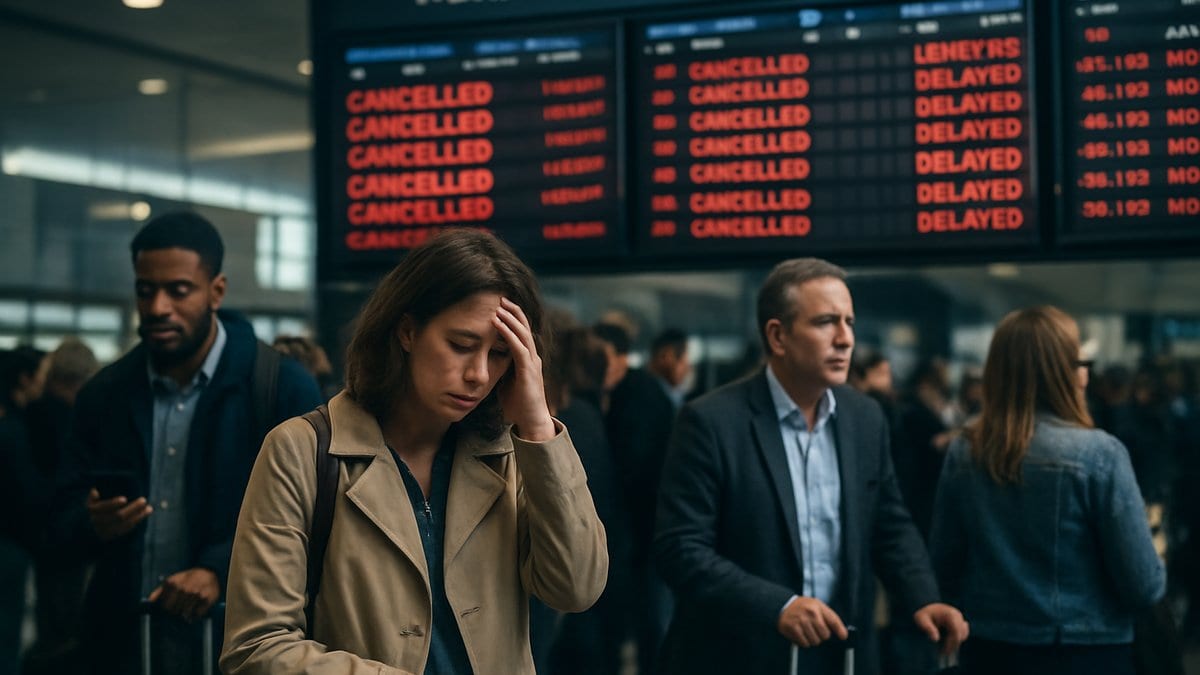
High Volume of Delays Concentrated at a Key Northeast Hub
Publicly available flight tracking data and industry coverage indicate that by Monday afternoon, operations at Newark Liberty had logged in excess of 260 delayed departures and arrivals, along with a cluster of cancellations affecting major U.S. and international routes. The disturbance formed part of a broader pattern of disruption across the national network, but Newark’s role as a critical transatlantic and domestic hub amplified the impact on travelers.
United, the dominant carrier at Newark, bore a substantial share of the schedule strain, with delays spreading across its bank of domestic connections and long-haul services. Delta and Spirit also saw knock-on impacts, particularly on competitive domestic routes, while Air France’s transatlantic services linking Newark with Paris Charles de Gaulle were among the international operations affected.
Reports from aviation data providers show that the disruption unfolded against a backdrop of already elevated delay levels nationwide during the Easter and early April travel period. Major hubs such as Atlanta, Chicago and Houston also contended with high volumes of late departures and arrivals, but the concentration of affected flights at Newark placed additional pressure on one of the country’s most heavily used and historically congested airports.
Although the number of outright cancellations at Newark remained significantly lower than the tally of delays, even a modest wave of scrubbed flights complicated recovery, as aircraft and crews fell out of position. The result was an extended day of rolling changes to departure times, missed connections and rebookings for passengers traveling across the United States and beyond.
Domestic Gridlock Spreads Across U.S. Network
The latest Newark episode unfolded as part of a wider spell of operational strain affecting airports nationwide over the holiday and early April travel period. Recent figures cited in media coverage have pointed to thousands of delayed flights and hundreds of cancellations across the United States over several consecutive days, underscoring the sensitivity of the system when multiple large hubs encounter pressure at once.
At Newark, domestic links to major cities including Los Angeles, Houston, Dallas and other high-demand markets were among those most vulnerable to delay. United and Delta saw peak-time services pushed back repeatedly as aircraft arriving late from elsewhere in the network cascaded delays through subsequent departures, while Spirit’s high-utilization, point-to-point model left little margin to recover when individual rotations ran behind schedule.
Because Newark serves as both an origin and a critical connecting point, disruptions there did not remain confined to the New York metropolitan area. Passengers traveling between non-Northeast cities often found themselves affected if their itineraries routed through Newark, turning what might otherwise have been isolated schedule problems into a broader nationwide ripple.
Available reporting suggests that, while severe weather was not the primary driver of Monday’s issues at Newark, the lingering effects of earlier weather events and holiday demand contributed to crowded schedules and tight turnaround times. Under such conditions, even minor operational hiccups, such as slow gate availability or minor technical checks, can quickly expand into a day-long pattern of rolling delays.
International Flights to Europe and Beyond Also Hit
International services from Newark felt the strain alongside domestic routes, reflecting the airport’s importance as a gateway for transatlantic and other long-haul operations. According to airline timetables and tracking data summarized in travel industry coverage, services operated by United and Air France on routes linking Newark to Europe, including Paris Charles de Gaulle, saw departures pushed back and arrival times revised.
For long-haul passengers, even relatively short delays at departure can have outsized consequences. Late evening and overnight flights that depart behind schedule may arrive across the Atlantic during congested morning arrival banks, potentially compounding air traffic management challenges at destination airports. Travelers aiming to connect onward to other European or international destinations also face a heightened risk of missed onward flights and extended layovers when their transatlantic legs run late.
Disruption was not limited to Europe. Industry reports noted delays on services connecting Newark with destinations in Canada, the Caribbean and Latin America, including routes marketed heavily to leisure travelers. For carriers such as Spirit, which have expanded their presence in sun and island markets, Monday’s irregular operations added complexity for customers planning short breaks or cruise departures on fixed schedules.
Airlines attempted to absorb some of the impact by swapping equipment, consolidating lightly booked flights where possible and rebooking passengers on alternative departures from Newark or other New York-area airports. However, with aircraft utilization already high during the early spring travel window, available replacement capacity for same-day travel remained limited for many affected customers.
Structural Constraints and Ongoing Capacity Limits at Newark
The latest wave of disruption unfolded against a longer-running backdrop of structural constraints at Newark Liberty. Federal regulators have kept hour-by-hour flight limits in place at the airport through at least October 2026, following a series of equipment outages, air traffic control staffing challenges and runway construction periods that previously triggered extended bouts of congestion and delays.
Earlier regulatory filings and public briefings have highlighted Newark’s chronic susceptibility to schedule bottlenecks when conditions deteriorate. The combination of tightly banked departures, limited runway and gate capacity, and dense airspace over the New York metropolitan region means that even small slowdowns in air traffic control or ground operations can quickly result in a backlog of flights waiting to depart or land.
Airlines operating at Newark have already trimmed some flying in response to the caps, shifting a portion of growth to nearby airports or other hubs. United, which relies on Newark as a primary gateway for transatlantic traffic, has pointed in its public statements to ongoing investments in infrastructure and staffing aimed at improving reliability. Nevertheless, Monday’s disruptions illustrate how quickly the airport’s operations can still become strained during peak demand periods.
Travel industry analysts note that while the flight caps are designed to reduce chronic congestion, they cannot fully insulate Newark from days when multiple stressors coincide. The combination of residual holiday crowds, tightly packed schedules and the knock-on effects of earlier national delays created conditions in which a high volume of departures and arrivals slid behind schedule despite formal capacity limits.
What Passengers Experienced and How to Navigate Future Disruptions
Passengers traveling through Newark on April 6 encountered a familiar pattern of disruption that has increasingly characterized busy travel periods in the United States. Reports from travelers and airline information channels described long lines at airline customer service desks, crowded gate areas and frequent departure time adjustments published via airport displays and mobile apps.
Many customers faced missed connections when initial flights arrived too late to make onward departures, particularly for itineraries involving tight connection windows or international transfers. Rebooking options were often constrained by already full flights later in the day, leaving some passengers with overnight stays or reroutes through alternative hubs such as Chicago, Washington or Boston.
Consumer travel guidance commonly emphasizes a set of practical measures for dealing with such disruptions at congested hubs. These include enrolling in airline mobile notifications, favoring longer connection times when routing through historically delay-prone airports such as Newark, and considering early-morning departures, which are statistically less likely to be disrupted by knock-on delays from earlier in the day.
In the wake of the latest Newark disruptions, travel experts are again highlighting the value of flexible tickets, travel insurance that covers significant delays, and familiarity with airline policies on rebooking and meal or hotel vouchers during irregular operations. With federal caps on flight volumes at Newark forecast to remain in place for the next several travel seasons, many observers expect the airport to continue operating close to its practical limits on peak days, leaving travelers well advised to plan for possible schedule changes when using the hub.