

More news on this day
Flight disruptions at Newark Liberty International Airport are rippling across the Eastern Seaboard today, with around 77 delayed departures and arrivals and three cancellations reported as airlines, passengers and air traffic managers struggle with a fresh wave of congestion at one of the country’s most tightly constrained hubs.
Get the latest news straight to your inbox!
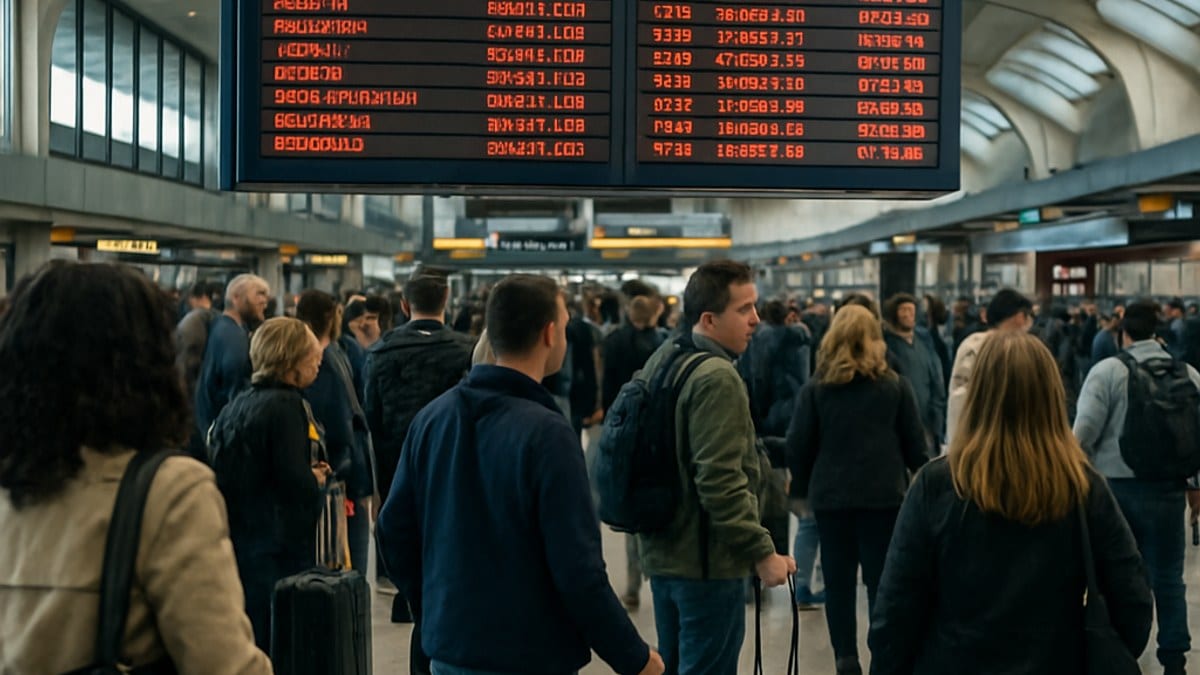
Image by Nomad Lawyer
Newark Disruptions Add Strain to an Already Stressed System
Newark Liberty International Airport has long been a pressure point in the national aviation network, and the latest tally of roughly 77 delays and three cancellations underscores how quickly issues at the New Jersey hub can reverberate across the region. Publicly available tracking data shows that even a modest number of schedule disruptions at Newark can cause knock-on effects at feeder airports along the East Coast, particularly where tight connection windows are common.
Reports indicate that many of Monday’s impacted flights involve short-haul routes to Boston, Washington and other Northeast and Mid Atlantic cities, where aircraft typically cycle through multiple legs in a single day. When an early rotation out of Newark runs late, subsequent departures may be held or re-timed, adding to the overall count of delayed operations throughout the day.
The disruption comes at a moment when passengers are already contending with heightened uncertainty at airport security checkpoints nationwide. Recent coverage of the partial federal government shutdown describes record-setting Transportation Security Administration wait times at several major airports, including Newark, LaGuardia and John F. Kennedy, raising the risk that travelers may miss flights even when airlines manage to depart on schedule.
While Monday’s cancellation total at Newark remains relatively low compared with the mass wipeouts seen during winter storms, travel experts note that sustained bouts of minor delays can have a comparable impact on travelers, particularly when they trigger missed connections or force last-minute rebookings onto already crowded flights.
Constraints at a Key United Hub Limit Recovery Options
Newark functions as a major hub for United Airlines and a critical gateway to Europe, Latin America and the West Coast. That role has made it central to federal efforts to curb chronic congestion in the New York airspace. According to prior notices highlighted in industry coverage, the Federal Aviation Administration has capped Newark’s combined arrivals and departures at roughly the low 70s per hour through at least October 2026, a move intended to reduce cascading delays caused by air traffic control staffing shortages and runway work.
These constraints mean that when disruptions occur, airlines have limited room to add recovery flights or shift departure times without bumping up against the hourly cap. Carriers can attempt to upgauge aircraft, consolidating passengers from multiple flights onto larger jets, but that strategy offers only partial relief on peak travel days.
United executives have previously framed Newark’s operational performance as a priority, pointing to past summers where a mix of thunderstorms, technology outages and construction led to concentrated waves of delays and cancellations. The current operating environment, with government funding questions affecting staffing and technology investments, adds another layer of complexity for carriers trying to stabilize schedules at the airport.
Travel analysts note that even with FAA limits in place, Newark’s runway and taxiway layout, combined with tightly packed schedules during morning and evening peaks, leaves little margin for error. A brief ground stop, a sudden reduction in arrival rates, or a security bottleneck can quickly push the delay count upward.
Wider Eastern Hub Network Feels the Impact
The disruptions at Newark are not occurring in isolation. The airport is deeply intertwined with other eastern hubs such as LaGuardia, JFK, Philadelphia, Washington National and Charlotte, meaning that congestion in New Jersey can feed into broader slowdowns up and down the coast. Recent reporting on LaGuardia’s temporary shutdown after a fatal runway collision, followed by a ground delay program during its reopening, illustrates how quickly scheduling changes at one major field can reshape traffic patterns across the region.
On days when both Newark and New York City’s airports are managing restrictions, airlines often reroute traffic through secondary hubs or shift passengers onto longer routings that bypass the New York area altogether. That can increase flight times and crowd connecting banks in cities like Chicago, Atlanta and Dallas, where travelers from the Northeast compete for limited seats on onward flights.
Industry data compiled by federal transportation analysts has repeatedly ranked Newark among the country’s most delay-prone major airports, with average departure holdups measured in tens of minutes per passenger. While cancellation percentages vary by carrier and season, a consistent theme in the data is that adverse weather or a single point failure in technology at Newark can push network-wide delay statistics sharply higher.
Travelers connecting through the region today may feel these ripple effects even if their airlines are operating from other airports. Aircraft and crews scheduled to originate in Newark in the morning often continue on to other cities later in the day, so an early disruption in New Jersey can ultimately materialize as a late-night delay hundreds or thousands of miles away.
Travelers Confront Long Lines and Limited Flexibility
For passengers, the most immediate impact of Newark’s latest issues is time. Reports from recent days across several major airports describe travelers arriving hours early only to encounter security lines that spill into terminal corridors, followed by additional waits at the gate as aircraft are held for connecting customers or slot availability.
Some carriers are encouraging customers to use mobile rebooking tools and same-day standby options when delays threaten to derail connection plans. Public guidance from federal agencies and consumer advocates continues to emphasize checking the Department of Transportation’s airline dashboard and individual carrier policies to understand what assistance is available in the event of significant delays or cancellations.
Yet the relatively small number of outright cancellations at Newark today limits airlines’ ability to offer seats on alternative flights. With many departures simply running late rather than being scrubbed entirely, open inventory on later services can be scarce. Travelers holding nonflexible tickets may find that rerouting options come with additional costs or longer total journey times.
Experts in air travel operations advise passengers departing Newark or connecting through the airport to build extra buffer time into their journeys, keep a close eye on airline apps or text alerts, and consider carry-on only travel when possible to ease rapid rebooking if a delay causes a missed connection.
Persistent Structural Challenges Cloud the Outlook
The latest wave of disruptions at Newark arrives against a backdrop of long-running debates about how to fix chronic congestion in the New York and New Jersey airspace. Policy papers, federal audits and airline statements over the past year have pointed to a constellation of factors, including outdated air traffic control technology, staffing gaps at key facilities, limited runway capacity and heavy reliance on a few large hub airports serving dense metropolitan regions.
FAA measures to cap hourly operations at Newark are intended to create a more reliable baseline, but they do not fully address the vulnerability to severe weather or localized equipment failures. Airport operators have published contingency plans outlining how they intend to respond to lengthy tarmac delays or terminal disruptions, yet travelers often experience these events as a series of incremental holdups rather than a single clear-cut incident.
Recent national statistics highlight that delays and cancellations have become a persistent feature of U.S. air travel, not just an occasional byproduct of major storms. In that context, a day with 77 delays and three cancellations at a single major hub like Newark is both a snapshot of current conditions and a reminder of the system’s fragility.
For now, passengers moving through Newark and its partner hubs along the Eastern Seaboard face a familiar calculation: arrive early, pack patience and be prepared for plans to change, even when the weather appears cooperative and the schedule on paper suggests a routine day of flying.