

More news on this day
Newark Liberty International Airport has been hit by another severe operational crunch, with more than 100 flight delays and a cluster of cancellations disrupting Spirit, United and JetBlue services across busy U.S.–Europe corridors and key leisure routes into Florida.
Get the latest news straight to your inbox!
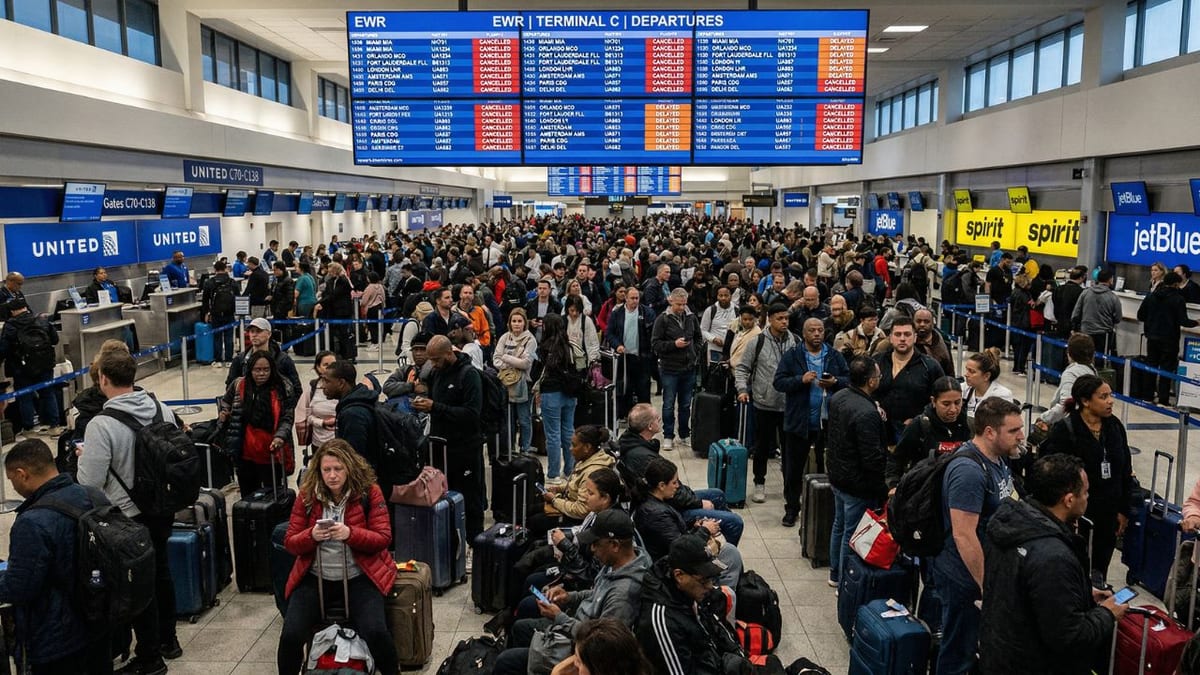
Wave of Disruptions Hits Newark Liberty Again
Recent operational data and travel-industry coverage show Newark Liberty International Airport experiencing a new round of disruption, with around 109 delays and at least 9 cancellations on one of the busiest spring travel days. The disturbance adds another chapter to a turbulent early 2026 for one of the United States’ most delay-prone hubs, arriving just days after reports of more than 260 disrupted flights at the same airport.
Publicly available flight trackers and compensation platforms describe a “severe operational bottleneck” at Newark, noting that already tight schedules struggled to absorb rolling delays. While exact tallies vary across reporting windows, the latest figures place Newark among the country’s most affected airports, with its disruption feeding directly into domestic networks and transatlantic services.
The timing of the latest disruption, closely following the Easter peak, left airlines with limited slack in their operations. High passenger loads, weather complications in the wider Northeast corridor and lingering constraints linked to air traffic control and infrastructure created conditions in which even modest schedule shocks cascaded into widespread delays.
Newark’s role as a major hub for United and an important base for JetBlue and Spirit means problems at the airport rarely stay local. Each new wave of delays or cancellations risks triggering a chain reaction across connecting flights, particularly on heavily banked departure waves to Florida and Europe.
Spirit, United and JetBlue Networks Under Strain
According to published coverage and airline schedule data, United remains the dominant carrier at Newark, with a dense portfolio of domestic and long-haul departures, including multiple daily links to major European cities such as London, Amsterdam and Paris. Spirit and JetBlue, while smaller in scale at the airport, have carved out significant footprints on leisure-heavy routes, particularly to Florida.
During the latest disruption, these three airlines were among the most visibly affected operators at Newark. Reports tracking daily performance across U.S. airports indicate that Spirit and United have each recently logged dozens of delays nationwide in a single day, with a subset tied directly to Newark operations. JetBlue has also appeared repeatedly in disruption tables, reflecting its combination of point-to-point leisure flying and competitive schedules at key East Coast hubs.
Operationally, once departure banks begin to slip, carriers face increasingly difficult choices about whether to hold aircraft for late-connecting passengers, swap aircraft between routes or proactively cancel flights to restore some punctuality. Publicly available analysis suggests that, on recent problem days, airlines using Newark have resorted to a mixture of rolling delays and targeted cancellations, with some shorter domestic segments to Florida bearing a notable share of the cuts.
The knock-on effect for Europe-bound passengers can be significant. Late-arriving aircraft from domestic spokes may be scheduled to continue on to London, Amsterdam or Paris. When inbound flights from cities such as Orlando, Fort Lauderdale or Miami run late or are cancelled, the disruption can spill directly into the evening transatlantic wave, forcing schedule shuffles and narrower connection windows for travelers bound for Europe.
Florida Gateways Bear the Brunt of Schedule Shock
Recent airport statistics from Miami, Orlando and Fort Lauderdale show high levels of disruption in their own right, with near-200 delays and close to 10 cancellations reported on some days at individual Florida gateways. These figures, combined with the Newark irregularities, underline how tightly coupled the corridor between the Northeast and Florida has become.
Newark’s schedule is thick with flights to Orlando International, Fort Lauderdale–Hollywood International and Miami International, shared among Spirit, United, JetBlue and other carriers. Travel analysis published in recent days notes that these routes often run at high load factors, with minimal spare capacity to absorb stranded travelers when irregular operations strike.
When Newark experiences a concentration of delays, the effects reverberate quickly. Aircraft scheduled to shuttle repeatedly between Newark and Florida in a single day can fall hours behind. Once turn times compress beyond what ground operations can reasonably support, airlines may start trimming rotations, leading to cancellations on certain legs and extended delays on others.
In practice, this means travelers heading from New York and New Jersey to Florida beaches or theme parks face elevated risk of missed connections and overnight disruptions. The same is true in reverse for Florida-originating passengers connecting through Newark onwards to European hubs; even when long-haul services ultimately depart, they may do so with a significant number of misconnected passengers left scrambling for alternatives.
Transatlantic Links to London, Amsterdam and Paris Disrupted
Newark’s status as a key gateway for transatlantic travel has amplified concerns about the recent operational difficulties. Publicly available disruption trackers and passenger-rights advisories highlight repeated delays on flights between Newark and major European centers, particularly London, Amsterdam and Paris, over the past several days.
On peak days, Newark supports numerous daily departures to London and multiple frequencies to Amsterdam and Paris, many of them operated by United and its partners. When departure banks slip or aircraft arrive late from U.S. feeder routes, these complex long-haul operations become more difficult to keep on time, especially if crews are approaching duty limits or if aircraft are rotated across several international sectors in quick succession.
Consumer advocacy platforms note that, under current United States and European Union rules, passengers on heavily delayed or cancelled transatlantic flights may be entitled to refunds or compensation in certain circumstances. Those rules depend on factors such as the cause of disruption, the operating carrier and whether a flight originates in the European Union or is operated by an EU-based airline.
The continued volatility at Newark has also raised questions about the resilience of summer transatlantic schedules. With airlines already planning robust capacity between the U.S. Northeast and Europe, analysts warn that even modest infrastructure or staffing shortfalls at a key node such as Newark can quickly ripple into a larger disruption affecting aircraft positioning, crew rotations and passenger itineraries on both sides of the Atlantic.
Broader System Pressures and What Travelers Can Do
Newark’s latest disruption is unfolding against a backdrop of wider strain on the U.S. aviation system. Federal measures limiting flight volumes at certain congested airports, ongoing air traffic control staffing challenges and rolling maintenance or construction work continue to constrain operational flexibility. Industry reports from the past week show thousands of delays and nearly a hundred cancellations across the United States in a single day, with Newark featuring prominently among impacted hubs.
Travel-focused publications and passenger-rights organizations advise that travelers transiting Newark, Miami, Orlando, Fort Lauderdale and other busy nodes should expect an elevated risk of schedule changes as the spring and early summer travel seasons intensify. Recommendations commonly include choosing earlier departures where possible, allowing longer connection times, and using airline apps to monitor gate changes and boarding times in real time.
Publicly available guidance also encourages passengers to review airline customer-service plans and refund policies before travel. Updated federal rules now define what constitutes a “significant delay” for refund eligibility on domestic and international itineraries, giving travelers clearer benchmarks when seeking redress after severe disruption.
As airlines, airports and regulators look for ways to stabilize operations at Newark, the latest episode of delays and cancellations underscores how vulnerable complex route networks remain to local bottlenecks. For passengers connecting between U.S. cities and European capitals or shuttling between the Northeast and Florida, Newark’s operational performance will remain a critical variable in travel planning through the months ahead.