

More news on this day
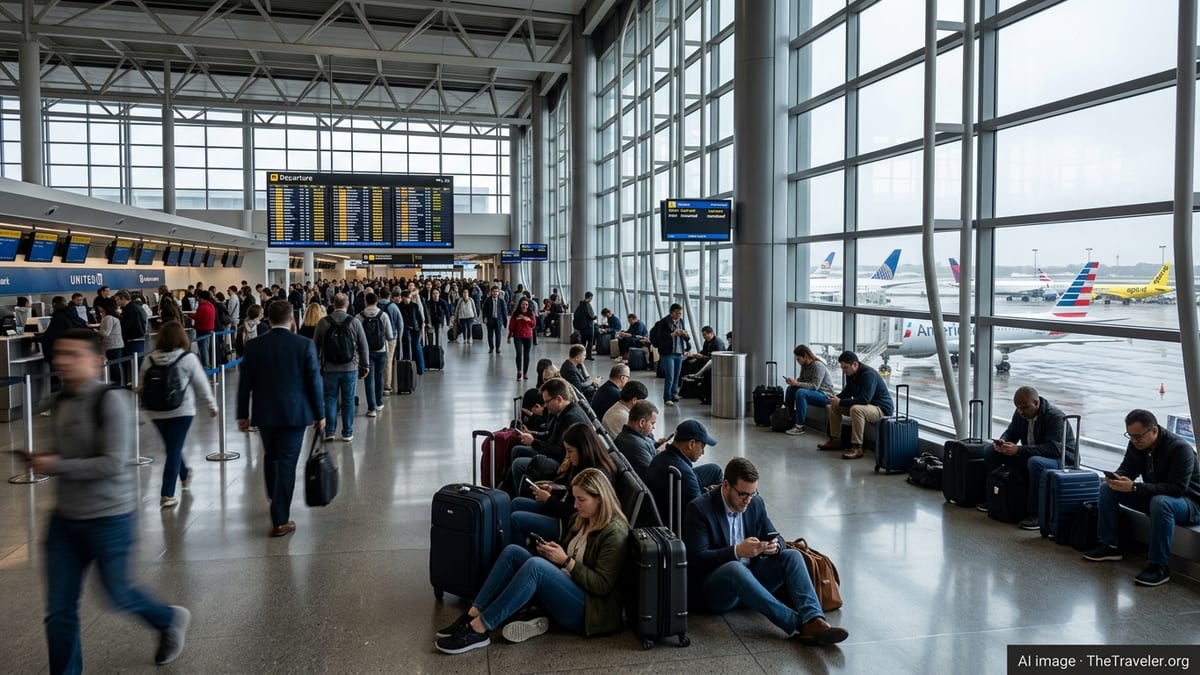
Travelers moving through Newark Liberty International Airport faced another difficult day as 91 flights were delayed and a dozen were cancelled, disrupting itineraries across the United States, Canada and several international routes operated by United, American, Delta, Spirit and other carriers.
Get the latest news straight to your inbox!
Ripple Effects Across a Crowded Spring Travel Week
The latest wave of disruptions at Newark Liberty comes during a busy spring travel period, when schedules are already tight and aircraft utilization is high. Publicly available tracking data shows that the mix of 91 delayed departures and arrivals, along with multiple cancellations, affected a wide range of domestic and transborder routes linking Newark with major hubs in the United States and Canada.
Airlines including United, American, Delta and Spirit bore much of the impact because of their dense schedules at Newark and their connecting-bank patterns. When one departure misses its planned slot, subsequent flights using the same aircraft or crew are often pushed back, creating a chain reaction that can extend far beyond the New York region.
Connections to key Canadian points were among the itineraries affected, as delays on Newark-bound services from cities such as Toronto and Montreal complicated onward travel. Some passengers faced extended layovers, while others were rebooked via alternate hubs when their original flights from Newark were cancelled.
International services beyond North America also saw knock-on consequences. Even when long-haul flights were able to depart close to schedule, inbound delays made it harder for travelers to make tight connections, forcing airlines to adjust boarding times and reassign seats to accommodate disrupted passengers.
Operational Constraints and Weather Add to the Strain
Newark Liberty has been operating under a series of structural constraints that make it particularly vulnerable to days with challenging conditions. Federal aviation data and airport planning documents highlight ongoing airfield works and slot-style limits on arrivals and departures that are intended to reduce congestion but also leave less margin when the system is stressed.
Weather remains a chronic complication. Recent storms affecting the Northeast and Mid Atlantic have highlighted how quickly thunderstorms, low ceilings or strong winds can trigger ground delay programs and temporary ground stops. When those measures are imposed for Newark, aircraft headed for the airport are held at their origin, which often translates directly into late arrivals and misaligned crew schedules later in the day.
Travel waivers published by major carriers in recent weeks have repeatedly listed New York and New Jersey airports, including Newark, among the locations where customers are allowed to change flights without fees because of expected storms and turbulence in the region. Those waivers offer flexibility but are also a visible sign that airlines anticipate continuing operational volatility around the airport.
The combination of weather-related constraints and long-running infrastructure work means that even a relatively modest number of cancellations can lead to a disproportionate number of delays, as carriers try to preserve the integrity of their broader networks while working with a limited number of usable runway and gate configurations.
United, American, Delta and Spirit Juggle Schedules
United Airlines, which operates the largest share of flights at Newark Liberty, saw some of its hub bank timings disrupted as departure gaps opened up and arrivals appeared in tight clusters. According to published schedule information, United routinely runs hundreds of daily movements through Newark, so any extended delay period can quickly ripple through the carrier’s domestic and international operations.
American and Delta, which maintain a more modest but still significant presence at the airport, also had to re-time select services and consolidate passenger loads where feasible. Flight-status boards showed delayed departures on popular business and leisure routes such as Chicago, Atlanta and Florida destinations, as aircraft waited for release times from air traffic management programs.
Spirit and other low-cost carriers at Newark typically operate leaner schedules with less spare aircraft available. On a day with 91 delays and multiple cancellations, those operators have fewer options to swap planes or crews, meaning a single late inbound flight can cascade into hours of delay for subsequent segments.
Publicly available on-time performance statistics for recent months indicate that carriers across the board have already been navigating a tougher operating environment at Newark compared with some other large US hubs. The latest disruptions reinforce that pattern and may put additional pressure on airlines to keep extra buffer time in their schedules during high-demand periods.
Impact on Passengers Across North America and Beyond
The immediate consequence for passengers was a familiar mix of missed connections, overnight stays and rebooked itineraries. Travelers heading from Newark to points across the United States, including the Midwest, South and West Coast, reported longer-than-expected waits as departure times were repeatedly revised throughout the day.
On cross-border routes, delays between Newark and Canadian gateways complicated customs and immigration planning, particularly for those with onward connections on separate tickets. Longer queues at rebooking counters and service desks reflected the complexity of moving customers through multiple carriers and partner networks when a limited number of alternative seats are available.
Travelers bound for Europe, Latin America and other long-haul destinations often experienced disruption in subtler ways. While many long-haul departures left within their scheduled windows, passengers arriving late into Newark found themselves moved to later flights, rerouted through other hubs, or upgraded and downgraded as airlines tried to optimize seating across disrupted services.
Experts who analyze airline operations note that such patterns are typical when a highly constrained hub like Newark faces a concentrated period of schedule disruption. Even when the number of outright cancellations remains relatively low, a high volume of delays can produce a similar level of inconvenience for travelers, particularly those with tight or self-arranged connections.
What Travelers Can Expect in the Coming Days
Looking ahead, publicly available information from aviation and weather services suggests that conditions at Newark Liberty may remain uneven in the near term. Seasonal storms, combined with continuing airfield and airspace constraints, leave the airport susceptible to further operational challenges, especially during peak morning and evening departure banks.
Airlines have been encouraging customers to monitor flight status frequently on days when weather or air traffic programs are anticipated. Some carriers are also proactively issuing flexible-travel policies when forecasts point to severe thunderstorms or high winds in the New York region, allowing ticketed passengers to move to earlier or later flights where space permits.
Travel analysts recommend that passengers connecting through Newark build in extra time between flights, particularly when traveling to or from Canada or other international destinations that involve additional border formalities. Choosing earlier departures in the day, when possible, can also reduce exposure to rolling delays that tend to accumulate by late afternoon and evening.
While operational data shows that Newark Liberty continues to function as a critical gateway for the New York metropolitan area, the latest cluster of 91 delays and a dozen cancellations underlines how quickly the system can seize up. Until longer-term infrastructure projects and airspace adjustments reach completion, travelers using the airport are likely to face periodic bouts of disruption similar to those seen this week.