

More news on this day
Newark Liberty International Airport is experiencing a new wave of disruptions, with 77 flight delays and three cancellations reported today, adding fresh strain to an already fragile U.S. air travel system under pressure from staffing gaps, federal funding uncertainty, and recent operational shocks at major East Coast hubs.
Get the latest news straight to your inbox!
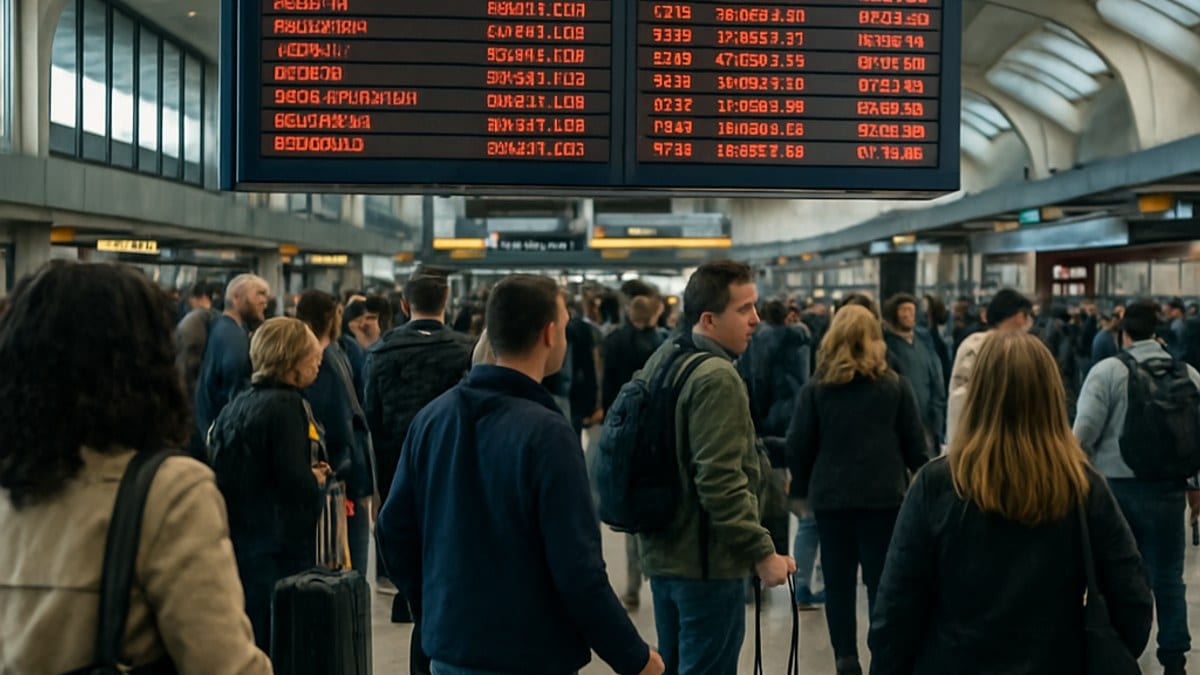
Image by Nomad Lawyer
Fresh Delays Hit Key United Hub at Newark
Newark Liberty International Airport serves as one of United Airlines’ most important hubs on the East Coast, and operational data today indicates at least 77 flights running behind schedule and three cancellations. While the majority of services are still operating, the pattern reflects how quickly minor schedule disruptions can cascade at a tightly choreographed hub airport.
Publicly available tracking information shows that the delays at Newark are spread across domestic and a limited number of international routes, rather than focused on a single destination. Many of the affected departures appear to be operating with modest but compounding hold times, often measured in tens of minutes, which can still be significant for passengers with connections through other East Coast and Midwest airports.
These disruptions are unfolding against a backdrop of heightened attention on Newark’s reliability. Federal aviation documents and previous seasonal planning updates describe the airport as one of the most delay-prone major hubs in the United States, even in normal operating conditions. Capacity constraints, congested airspace shared with New York’s other airports, and susceptibility to coastal weather events all contribute to a fragile operating environment.
To curb some of these structural issues, the Federal Aviation Administration has extended limits on the number of flights permitted to arrive and depart at Newark through late 2026. The move is intended to reduce chronic mid-day and evening congestion, but today’s figures show that even with capped schedules, localized shocks can still trigger measurable slowdowns.
System Under Strain From Funding Lapse and TSA Staffing
The timing of Newark’s latest slowdown coincides with broader national turbulence in the aviation system. A partial federal funding lapse has affected agencies responsible for aviation safety and security, and reports indicate that airport delays linked to staffing challenges have persisted at multiple large hubs across the country.
Transportation Security Administration officers have been working under unusual pay and staffing conditions in recent weeks, prompting elevated callout rates nationally. Public radio and local news coverage note that several major airports have reported historically long security lines and have urged passengers to arrive significantly earlier than they might under normal circumstances.
At Newark, some travelers have shared accounts in public forums of variable security wait times, ranging from extremely long queues during peak hours to surprisingly fast processing when additional lanes are opened or when passenger volumes temporarily ease. The inconsistency itself can complicate airline operations, as late-arriving passengers can push back boarding, create last-minute gate holds, or trigger a need for rebooking when connections are missed.
These security pressures are layered on top of existing air traffic control staffing shortages in the busy New York airspace. Federal planning documents and previous congressional correspondence have pointed to chronic controller understaffing and equipment limitations in the region. When staffing is thin, even modest schedule irregularities can translate into ground delay programs or flow restrictions that ripple out across much of the Eastern United States.
Recent Tower Evacuation and LaGuardia Collision Heighten Sensitivities
Newark’s current disruptions follow closely on the heels of a series of safety-related incidents that have focused national attention on the New York region’s aviation infrastructure. On March 23, air traffic controllers at Newark’s main tower temporarily evacuated after reporting a burning smell in an elevator. According to published coverage, arrivals and departures were paused while staff relocated to a backup facility, with operations resuming after less than an hour.
While that particular pause was brief and no injuries were reported, the episode underscored how dependent Newark is on a small number of critical systems and facilities. When those are compromised, even temporarily, the knock-on effects can last into subsequent days as planes and crews end up out of position.
Meanwhile, nearby LaGuardia Airport is still recovering from a fatal runway collision on March 22 involving an Air Canada Express flight and an airport fire truck. The incident led to a full shutdown of LaGuardia for a period and to an extended ground delay program for arrivals as service gradually resumed. Newark, as one of the closest large alternatives in the region, has absorbed some of the overflow and schedule adjustments sparked by that event.
Together, the LaGuardia collision, the Newark tower evacuation, and today’s delays illustrate how incidents at one facility can cascade through the interconnected airspace of the Northeast corridor. Airlines often respond by thinning schedules, reassigning aircraft, or consolidating flights, measures that can keep the system safe but also increase the likelihood of delays and scattered cancellations across multiple airports.
Weather, Construction and Seasonal Travel Add Further Pressure
Weather remains a persistent wild card for Newark. In recent months, a series of winter storms and coastal wind events have caused waves of delays and cancellations across the Mid-Atlantic and Northeast, with Newark often ranking among the airports most heavily affected. Even when no major storm is present, the region’s frequent low ceilings, rain, and gusty winds can cut arrival rates and force aircraft into holding patterns.
Longer term, Newark is in the midst of an extended period of infrastructure upgrades. Public planning documents and airline communications describe runway and taxiway work, as well as terminal modernization and airside improvements designed to reduce delays in the future. In the short term, however, construction staging and temporary closures can constrain the number of available gates and runway configurations, leaving less room for error when irregular operations occur.
These operational strains come as spring travel demand builds. With school breaks underway in parts of the country and major religious holidays approaching, traffic volumes are rising across the network. Industry data from recent years show that when peak leisure demand collides with constrained infrastructure and staffing, delays tend to climb sharply, especially at already congested hubs like Newark.
Travel planners note that Newark’s role as both a domestic connector and an international gateway magnifies the impact of each delay. A late departure from Newark bound for a secondary U.S. city can strand passengers who had just arrived from Europe or Latin America, forcing a chain of rebookings or overnight stays that consume hotel capacity and airline resources in multiple markets.
What Travelers Through Newark Should Expect Now
Given today’s tally of 77 delays and three cancellations, travelers passing through Newark are likely to encounter pockets of congestion at gates and on the airfield, even if security lines and check-in counters appear manageable at certain times of day. Departures may push back from gates only to wait on taxiways for takeoff clearance, while arriving flights may face brief holding patterns or extended taxi routes to reach available gates.
Airlines operating at Newark are continuing to publish schedule updates through their own channels and mobile apps, while broader disruption trends remain visible on national flight-tracking platforms. Publicly available dashboards from the U.S. Department of Transportation and other consumer tools can help passengers compare airline policies on meal vouchers, hotel coverage, and rebooking options when delays or cancellations occur.
Travel experts often recommend that passengers traveling through delay-prone hubs such as Newark build in additional connection time, especially during high-demand seasons or in periods of known system strain. Early morning departures are frequently cited as less vulnerable to cascading delays that build throughout the day, although no time slot is completely immune during widespread disruptions.
For now, today’s figures at Newark highlight the broader fragility of the East Coast air travel system in late March 2026. Even a relatively modest number of cancellations, combined with several dozen delayed flights at a single hub, can send ripples across the Eastern United States, affecting travelers far beyond New Jersey’s borders.