

More news on this day
Travelers across the Atlantic and along the U.S. East Coast are facing another day of severe disruption after Newark Liberty International Airport logged 109 flight delays and nine cancellations, triggering a fresh cascade of schedule turmoil on busy routes linking Miami, Orlando, Fort Lauderdale and major European hubs including London, Amsterdam and Paris.
Get the latest news straight to your inbox!
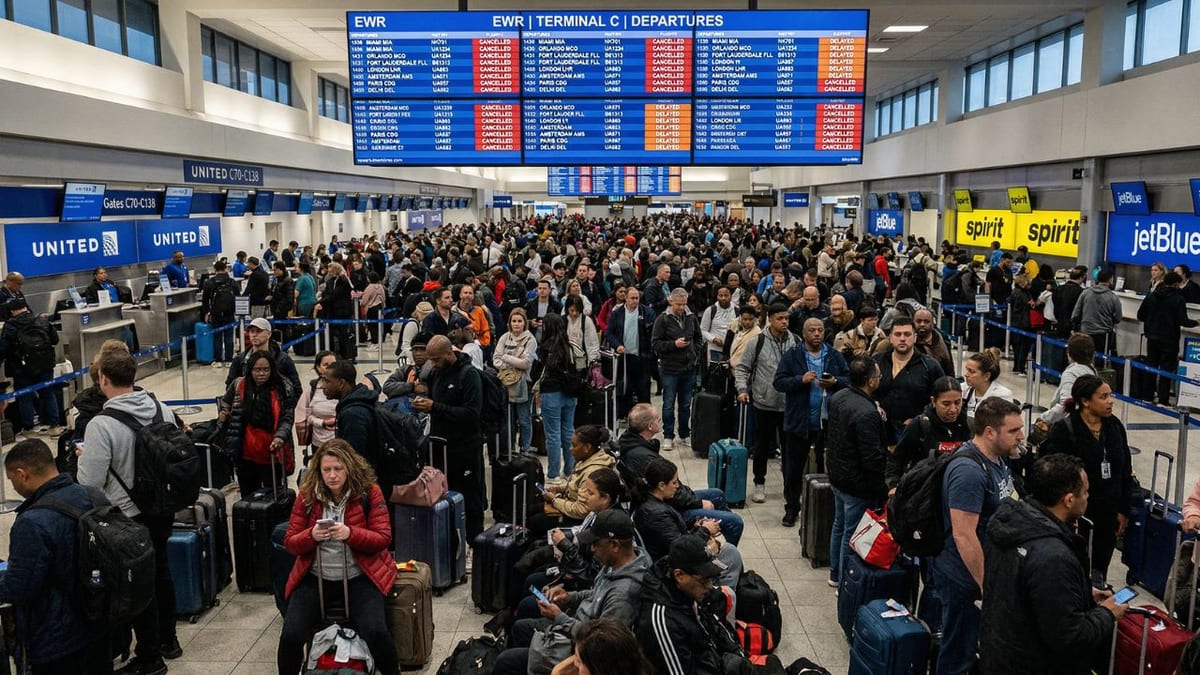
Newark Bottleneck Sends Shockwaves Through Key US and European Hubs
Publicly available flight tracking snapshots for early April indicate that Newark Liberty has once again emerged as a critical chokepoint in the U.S. aviation system, with a concentrated cluster of 109 delayed departures and arrivals and nine cancellations squeezing airline operations into already congested time banks. The figures place Newark among the hardest hit major airports in the country on the affected day, compounding a pattern of repeated disruption at the New Jersey hub.
The latest wave of operational strain has had an outsized effect on high demand leisure and visiting friends and relatives traffic. Flights between Newark and Florida’s major gateways, particularly Miami, Orlando and Fort Lauderdale, have been among the most exposed, with rolling delays pushing turn times later into the evening and narrowing connection windows for onward travel.
Across the Atlantic, Newark’s role as a critical connector between the U.S. Northeast and Europe has amplified the knock on impact. Published flight data show transatlantic departures to London, Amsterdam and Paris experiencing extended waits on the ground or late inbound aircraft, forcing carriers to juggle aircraft rotations and overnight crew schedules as they work to absorb the disruption.
Industry analyses of delay statistics released over recent months already rank Newark among the most disruption prone major airports in the United States, with a comparatively high share of flights arriving late or cancelled. The latest cluster of 109 delays and nine cancellations reinforces that reputation and underscores Newark’s vulnerability whenever weather, air traffic control flow programs or local technical constraints converge.
Spirit, United and JetBlue Struggle to Maintain Newark Schedules
Publicly accessible airline performance dashboards and aviation data reports indicate that Spirit Airlines, United Airlines and JetBlue Airways have all been significantly affected by the most recent Newark disruption. United, which operates a major hub at Newark, has been forced to trim schedules and rework departure banks at various points over the past two years in an attempt to keep chronic congestion under control, yet the latest figures show that concentrated delays remain a persistent risk.
JetBlue and Spirit, both with sizeable leisure focused networks touching Florida and Caribbean markets, have seen their Newark operations particularly stressed when long lines of delayed flights build during peak periods. When a departure to a Florida city leaves late, it can easily knock the aircraft out of its planned timing for a subsequent Newark rotation or an overnight international sector, compounding disruption throughout the day.
According to recent consumer facing travel coverage, this dynamic has again played out across the current episode, where a limited number of Newark cancellations and a broader band of triple digit delays have had disproportionate effects on smaller point to point city pairs. The need to reposition aircraft and crews has made it more difficult for carriers to restore normal operations quickly, especially when they are already running lean schedules to control costs.
Operational databases and historical analyses show that the three airlines have all made public commitments to improve irregular operations handling, including clearer communication, more consistent rebooking options and expanded flexibility when disruptions are within airline control. The latest Newark bottleneck is likely to test those pledges as call centers, airport counters and digital channels absorb another spike in passenger inquiries.
Miami, Orlando and Fort Lauderdale Feel the Downstream Impact
The immediate pressure may be concentrated at Newark, but the effects have quickly spread across Florida’s busiest airports. Flight status boards in Miami, Orlando and Fort Lauderdale have shown clusters of late arriving and departing services tied to delayed Newark aircraft, creating secondary pockets of congestion that affect passengers who never set foot in New Jersey.
Recent disruption tallies for U.S. airports confirm that Florida gateways already contend with some of the country’s highest volumes of delay prone leisure traffic. When a high frequency Newark route is affected, arriving aircraft may miss planned departure slots for their next leg, forcing Florida ground operations to reassign gates, rework crew pairings and temporarily hold boarding processes until connecting passengers arrive.
This pattern has been evident in the latest episode, as public data show multiple Newark related flights into Miami, Orlando and Fort Lauderdale operating significantly behind schedule. Even where outright cancellations are relatively limited, the combination of late in, late out operations and tight turnaround windows creates a rolling backlog that can last well into the night, particularly on days with heavy afternoon thunderstorm activity or other localized weather constraints in Florida.
Passenger advocacy organizations note that these ripple effects are often most keenly felt by travelers on multi segment itineraries, such as those connecting at Florida airports onward to the Caribbean or Latin America. Missed connections triggered by Newark driven delays can result in overnight stays, rebookings on alternative routes or extended waits for the next available seat, particularly during peak holiday or school vacation periods.
Transatlantic Links to London, Amsterdam and Paris Disrupted
While Florida routes have absorbed much of the domestic strain, the transatlantic network out of Newark has also come under pressure. Flight tracking records for services to London, Amsterdam and Paris show a series of extended departure delays tied to late inbound aircraft, air traffic flow programs and congestion in the Northeast corridor, underscoring how sensitive long haul operations are to bottlenecks at a single hub.
Even modest schedule slippages on evening departures can have outsized consequences on overnight flights to Europe, where arrival times are tightly synchronized with early morning bank structures at major hubs. When Newark services land late into London, Amsterdam or Paris, passengers may miss short connection windows to onward destinations across Europe, the Middle East and Africa, forcing airlines to arrange alternative routings or hotel stays.
Data driven assessments of transatlantic punctuality published over the past year already highlight a trend of elevated delays on some Northeast United States to Europe city pairs, with Newark frequently cited among the more challenging departure points. The current round of disruption, with more than a hundred delayed flights in a single day and a nontrivial number of cancellations, adds further evidence that the system remains vulnerable when any additional stress is applied.
For airlines, irregular operations on these trunk routes carry both operational and financial implications. Aircraft and crews scheduled to operate tightly planned rotations across the Atlantic may run up against duty time limitations or lose their next assignment if delays become excessive, forcing last minute substitutions or further cancellations elsewhere in the network.
Structural Strain Keeps Newark Under Scrutiny
Aviation analysts point to Newark’s structural constraints as a key reason why relatively contained disruptions can so quickly flare into broader crises. The airport serves as a primary hub for United and an important focus city for other carriers, with dense banks of arrivals and departures crowding into the same peak morning and evening windows. When a weather system, equipment outage or air traffic control staffing issue reduces capacity, those tightly packed schedules leave little room to absorb delays.
Regulatory documents and policy statements released over the past year show that federal authorities have attempted to ease pressure at Newark by imposing limits on scheduled arrivals and departures, effectively capping the number of flights airlines can operate during certain time periods. While these measures have helped prevent some of the most extreme gridlock seen in earlier years, the current cluster of 109 delays and nine cancellations demonstrates that significant vulnerability remains whenever conditions deteriorate.
Passenger facing guidance from aviation regulators and consumer groups emphasizes the importance of building additional buffer time into travel plans that touch Newark, particularly for those connecting to long haul services or traveling during busy holiday periods. Recommendations typically include selecting earlier flights in the day, avoiding tight minimum connection times and monitoring flight status tools closely for signs of rolling delays.
With air traffic demand continuing to recover and airlines seeking to maximize revenue on every available slot, Newark Liberty International Airport is likely to remain in the spotlight whenever national delay and cancellation tallies spike. The latest disruption, with its 109 delays and nine cancellations and its far reaching impact on both domestic Florida routes and marquee transatlantic links, underlines how a single constrained hub can destabilize flight schedules across an entire continent spanning network.