

More news on this day
Passengers across the United States faced fresh travel disruption after operations at Newark Liberty International Airport were hit by 182 delayed flights and 10 cancellations, snarling JetBlue, United, Spirit and other carriers on busy routes linking Orlando, Fort Lauderdale, Miami and additional domestic destinations.
Get the latest news straight to your inbox!
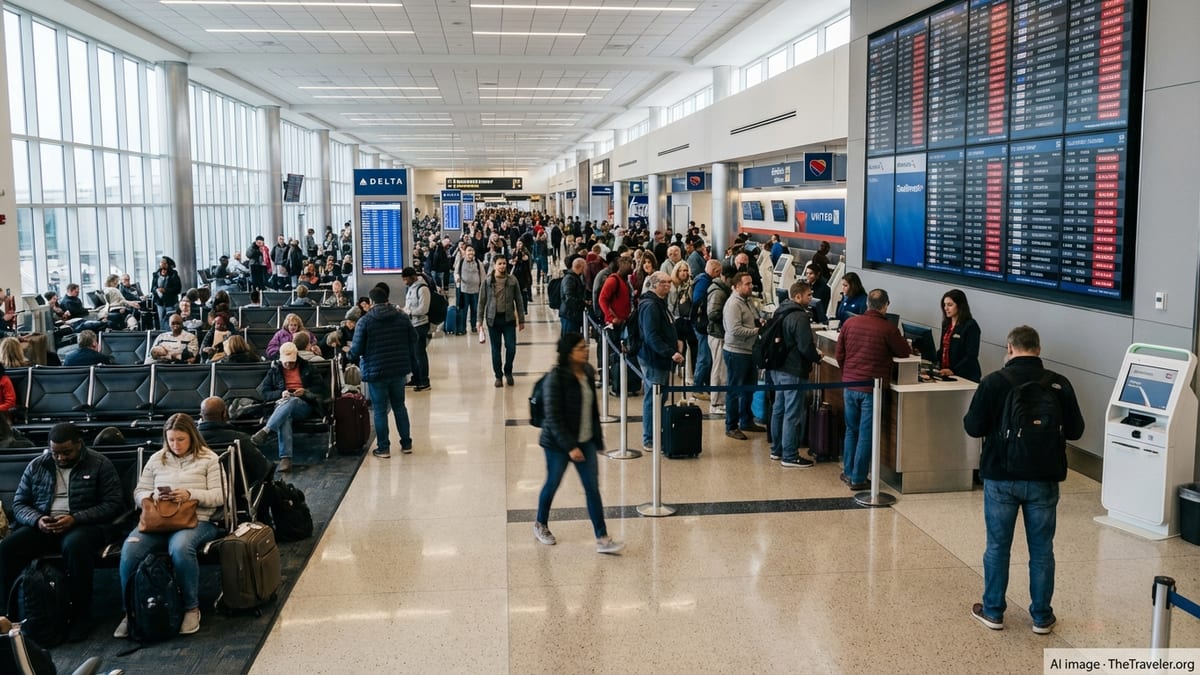
Disruptions Peak Around Easter Travel Rush
The latest disruption at Newark Liberty International Airport unfolded around the busy Easter return period on April 6 and April 7, 2026, when already strained schedules were further pressured by heavy holiday demand and wider North American operational challenges. Flight-tracking and industry reports indicate that Newark saw more than 180 delayed services and at least 10 outright cancellations, affecting both departures and arrivals.
Published coverage notes that the cluster of delays at Newark coincided with thousands of disruptions across the United States and Canada as airlines worked through lingering weather impacts and tight aircraft rotations. Many of the delayed Newark flights were not isolated issues, but part of a broader network pattern in which weather in one region and congestion at hub airports cascaded through the system.
The knock-on effects were felt most acutely on high-traffic leisure routes, including services linking Newark with Orlando, Fort Lauderdale and Miami. These Florida destinations are among the busiest domestic markets for both legacy and low-cost carriers, which meant that relatively small schedule imbalances at Newark quickly translated into long queues, rolling delays and capacity constraints for travelers trying to reach or leave the Sunshine State.
Operational data and recent analyses of on-time performance show that Newark, Orlando, Miami and Fort Lauderdale all rank among the more delay-prone large airports in North America, underscoring how fragile their combined networks can be during peak travel periods. When disruptions flare at one of these hubs, they tend to reverberate quickly along shared routes and among carriers that rely heavily on tight aircraft and crew utilization patterns.
JetBlue, United and Spirit Among Hardest Hit
Publicly available flight information shows that United Airlines, JetBlue Airways and Spirit Airlines were among the carriers most visibly affected by the Newark disruption. United operates a major hub at Newark, giving it a high volume of daily movements and making it particularly exposed when congestion builds or arrival and departure slots back up.
JetBlue, which maintains an important presence across the New York and South Florida markets, saw delays ripple through flights connecting Newark with Fort Lauderdale and Orlando, according to schedule and tracking data. The airline has emphasized South Florida as a focus region, and heavy reliance on those routes meant many of its customers were caught up in rolling hold times at gates or on the tarmac as Newark struggled to absorb traffic.
Spirit Airlines, known for its dense schedules to and from Florida, also encountered cancellations and late departures on services linked to Newark. Recent days have already seen questions raised by travelers about a cluster of Spirit cancellations out of Newark and along Orlando routes, and the latest operational strain added further disruption for passengers booked on already busy flights.
Other major carriers with Newark and Florida operations, including large U.S. and international airlines, also recorded schedule changes and delays, though the most visible impact fell on airlines whose business models depend on frequent, point-to-point links between New York-area airports and key leisure destinations.
Florida Routes Bear the Brunt of Network Ripple Effects
The concentration of delays between Newark and Florida reflects how crucial these corridors have become within U.S. domestic air travel. Orlando International, Miami International and Fort Lauderdale-Hollywood International each serve as gateways for both tourism and visiting friends and relatives traffic, generating consistently high demand and leaving airlines with limited slack on peak days.
Network analyses released in recent months highlight that these Florida airports, much like Newark, can experience elevated rates of late arrivals and departures when weather, air traffic control programs or runway constraints converge. Even short-lived thunderstorms or low-visibility conditions in one region can cause a shortage of inbound aircraft and crews elsewhere, forcing airlines to hold or cancel flights at hubs such as Newark while they reposition resources.
In this latest disruption, passengers on Newark flights to Orlando, Fort Lauderdale and Miami reported extended waits, late-evening arrivals and in some cases the need to rebook through alternate airports or overnight in connecting cities. Families returning from spring and Easter breaks were particularly affected, with some itineraries stretched by many hours beyond original arrival times.
The Florida-bound issues also created challenges in the opposite direction, with delayed inbound aircraft from Orlando and South Florida narrowing turnaround windows for onward connections out of Newark. As a result, even travelers who were not heading to or from Florida itself sometimes faced missed connections and rescheduled departures if their aircraft had been due to arrive from these heavily disrupted routes.
Ongoing Structural Strain at Newark and Across the Northeast
The episode underscores longer-running concerns about congestion and reliability at Newark Liberty International Airport and across the broader New York airspace. In recent years, air traffic control staffing pressures, equipment outages and runway construction have all contributed to periods of significant disruption, prompting federal authorities to temporarily limit flight volumes at Newark in an effort to keep delays at what regulators describe as an acceptable level.
Policy papers and performance reviews have repeatedly listed Newark among the most delay-prone large U.S. airports by percentage of late operations. Orlando, Miami and Fort Lauderdale have also featured on similar rankings, suggesting that the combination of these airports in a single itinerary can expose travelers to heightened disruption risk, especially at peak travel times such as holiday weekends.
Industry analysts point out that even when major storms are not directly overhead, the tight scheduling of aircraft and limited spare capacity mean any disturbance can quickly propagate. When a plane or crew is delayed departing one airport, subsequent flights using the same resources can run late for the rest of the day, a pattern that appears to have been on display as Newark coped with more than 180 delayed departures and arrivals.
Efforts to address these systemic issues have included infrastructure projects, adjustments to slot controls and calls for modernization of air traffic management technology. However, observers note that such measures take time to deliver results, and in the short term passengers are likely to continue experiencing irregular operations when traffic surges or weather conditions deteriorate.
What Travelers Can Expect in the Coming Days
With Easter-period disruptions already stressing airlines and airports across North America, the latest delays and cancellations at Newark are expected to have some residual effects on schedules over the next several days. Aircraft and crew repositioning, along with ongoing high passenger volumes, may leave little room in timetables to absorb additional shocks.
Travel industry guidance suggests that passengers flying on United, JetBlue, Spirit and other carriers through Newark, Orlando, Fort Lauderdale or Miami should be prepared for potential rolling delays, even if their flights initially appear on time. Same-day changes, aircraft swaps and gate reassignments are likely as airlines work to restore normal operations and clear backlogs.
Observers also highlight that early-morning departures tend to be more reliable because aircraft and crews are already in place from the previous night, whereas mid-day and evening flights are more vulnerable to knock-on delays from earlier disruptions. For travelers with flexible plans, targeting earlier flights and allowing generous connection times may help reduce the risk of missed itineraries in the current environment.
While the latest disruption at Newark is part of a wider pattern of strain in the U.S. aviation system, the concentration of delays and cancellations on heavily used Florida routes once again illustrates how quickly conditions can deteriorate for passengers when a major hub reaches its operational limits.