

More news on this day
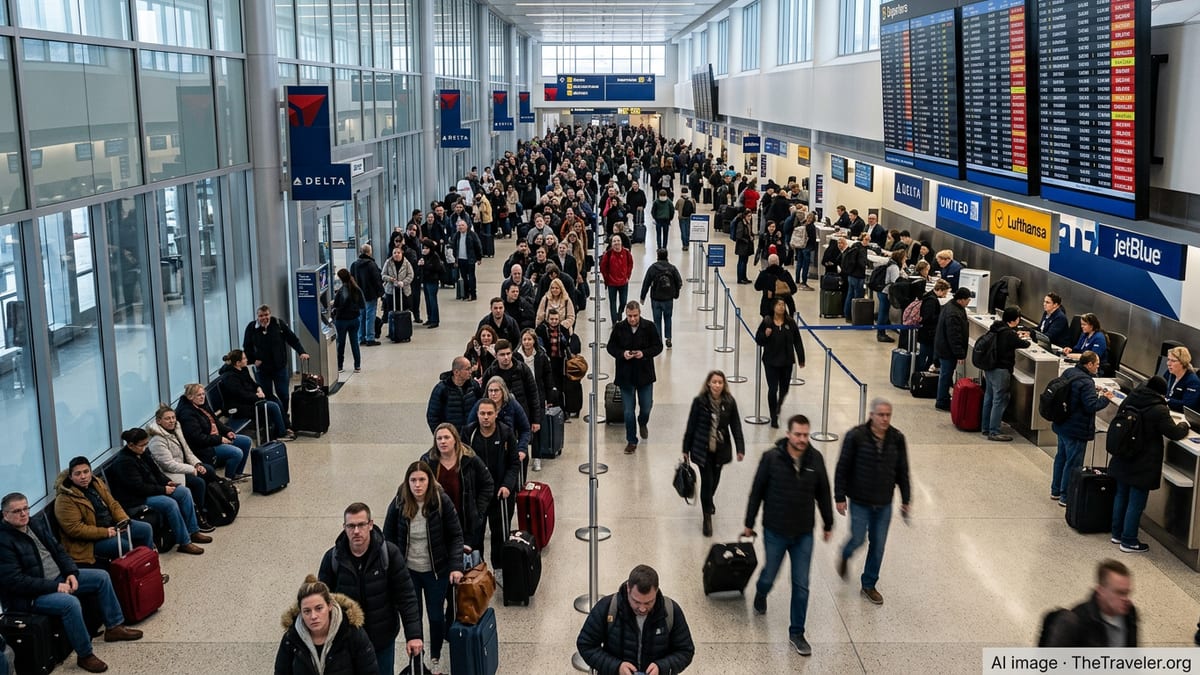
Newark Liberty International Airport experienced a fresh bout of disruption on Thursday, with publicly available flight-tracking data showing 24 cancellations and 121 delays affecting carriers including Spirit, United, Republic and Endeavor on routes to the United States, United Kingdom, Japan, Germany and Canada.
Get the latest news straight to your inbox!
Ripple Effects Across Major Domestic and International Routes
Tracking services for April 2 indicated that the disruption at Newark Liberty was not limited to any single airline or destination, with flights to major U.S. cities and key overseas hubs among those affected. Routes linking Newark with domestic gateways such as Miami and other East Coast and Midwestern cities showed late departures and extended ground holds, creating knock-on delays for onward connections across the country.
International itineraries were also caught in the turmoil. Passengers bound for London, Tokyo, Frankfurt and major Canadian cities reported missed connections or extended layovers as late-departing Newark services fell out of sync with tightly timed transatlantic and transpacific schedules. The impact was particularly acute for travelers attempting same-day connections to long-haul flights operated by partner and codeshare airlines.
While the total number of cancellations remained well below the levels seen during past large-scale system outages, the volume of delays created a cascading effect. Each late departure reduced available gate space and turnaround time for subsequent flights, further compressing already busy afternoon and evening departure banks.
Spirit, United, Republic and Endeavor Among Most Affected Carriers
Publicly available data from flight-tracking and schedule-monitoring platforms showed Spirit and United among the most visible carriers in Thursday’s Newark disruption, joined by regional operators Republic Airways and Endeavor Air that fly under major-airline brands. A mix of point-to-point low-cost services and hub-feeding regional flights appeared on delay and cancellation boards, illustrating how different business models were exposed to the same operational bottlenecks.
On the ultra-low-cost side, Spirit’s Newark operation has already been under scrutiny from passengers over reliability, and reports from travelers on social platforms highlighted additional cancellations and prolonged delays tied to the carrier’s EWR routes. Separate monitoring of United’s mainline and regional network showed multiple departures with late pushes from gates, including services to key domestic connection points that feed its broader U.S. and international network.
Republic and Endeavor, which operate flights on behalf of larger U.S. airlines, were also represented in delay statistics tied to Newark-area flying. Because many of these regional flights serve as critical spokes into hub banks, disruption to even a handful of departures can quickly multiply into missed connections for passengers continuing on to the United Kingdom, Japan, Germany and Canada via larger coastal gateways.
Weather, Congestion and Structural Strain at a Chronically Busy Hub
Newark Liberty has long been one of the most delay-prone major airports in the United States, and aviation analysts regularly point to a combination of airspace congestion, tight scheduling and limited room for recovery when operations slip behind. Even on days when federal status boards show no formal flow-control programs in effect, relatively modest weather impacts or traffic spikes can be enough to slow departures and arrivals.
Industry commentary over the past year has repeatedly highlighted Newark’s sensitivity to air traffic control staffing constraints and infrastructure pressures. Past episodes involving technology issues and regional ATC problems have led to hours-long delays, while earlier policy discussions around schedule reductions at the airport underscored how little slack exists in peak travel periods. Thursday’s pattern of moderate but widespread disruption fit that broader profile of a hub where even a partial slowdown can rapidly spread across multiple airlines.
Carriers using Newark as a critical gateway for transatlantic and transborder flying have, at various points, trimmed schedules or rerouted capacity in an effort to improve reliability. However, passenger reports and tracking data from the latest episode suggest that, despite these efforts, the airport remains vulnerable to bottlenecks that ripple far beyond New Jersey and into long-haul markets in Europe and Asia.
Passengers to US, UK, Japan, Germany and Canada Face Missed Connections
The timing and concentration of Thursday’s delays created particular challenges for travelers heading to or from major overseas destinations. Flights from Newark into large U.S. hubs often serve as the first leg of journeys to London, Manchester, Tokyo, Osaka, Frankfurt, Munich, Toronto and Vancouver, among others. When those domestic segments depart late, passengers can miss carefully planned minimum connection windows, especially in complex itineraries involving multiple airlines.
Reports from travelers indicated that some passengers heading to the United Kingdom and Germany were rebooked onto later overnight services from East Coast gateways or routed via alternative connections through Midwest hubs. Those bound for Japan faced longer total travel times as missed departures disrupted access to limited daily long-haul frequencies. Canada-bound travelers, particularly those connecting through Newark from southern U.S. cities, similarly encountered extended layovers and, in some cases, overnight stays after evening departures fell behind schedule.
For many passengers, the combination of short-notice schedule changes and limited spare seats on alternate flights meant fewer immediate rebooking options. As a result, travelers described spending extended periods at Newark and other connecting airports as airlines worked to absorb the disruption within already busy early spring schedules.
What Travelers Can Do as Spring Turbulence Builds
Aviation analysts note that early spring often brings a mix of volatile weather and tight capacity across North American and transatlantic networks, creating conditions where even localized issues can have outsized effects. With Newark Liberty serving as a major gateway for United, its regional partners and low-cost competitors such as Spirit, operational strains at the airport can quickly spill over into broader route systems touching the US, UK, Japan, Germany and Canada.
Travel experts suggest that passengers connecting through Newark in the coming weeks build extra buffer time into itineraries, particularly on journeys involving long-haul segments or interline transfers between different airlines. Publicly available information shows that same-day rebooking can prove difficult when flights are already heavily booked, making longer connection windows and flexible travel dates a practical hedge against disruption.
Some consumer advocates also point travelers toward tools such as real-time flight trackers, airport status dashboards and airline mobile apps, which can provide early visibility on emerging delays. While these resources do not prevent cancellations, they can help passengers adjust plans more quickly, reposition to alternative airports in the New York region, or contact airlines about rerouting options before call centers and service desks become overwhelmed during peak periods of travel turmoil.