

More news on this day
Newark Liberty International Airport is once again under scrutiny after a new wave of disruption triggered 109 flight delays and nine cancellations, sending shockwaves through busy routes linking U.S. leisure hubs such as Miami, Orlando and Fort Lauderdale with major European gateways including London, Amsterdam and Paris.
Get the latest news straight to your inbox!
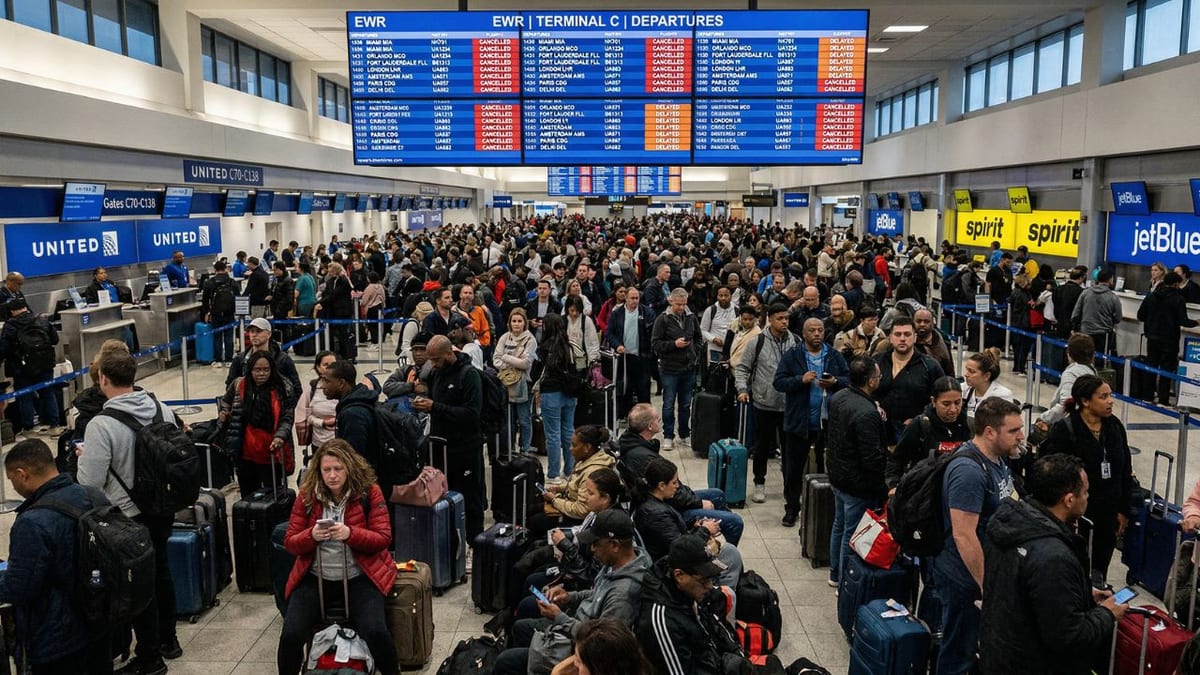
Knock-on Chaos From Newark’s Latest Bottleneck
Publicly available tracking data and recent disruption reports suggest that Newark’s latest operational squeeze did not occur in isolation, but as part of a rolling pattern of strain across the U.S. system in early April 2026. On peak days, national totals have climbed into the thousands of delayed flights with dozens of cancellations, with Newark regularly appearing among the hardest hit major hubs.
Coverage focused on the New York–New Jersey area indicates that Newark has been grappling with a mix of tight schedules, high holiday demand and broader network vulnerabilities linked to weather and staffing. Even on days when official airport status boards list “no major delays,” independent disruption summaries point to substantial numbers of flights leaving late or being scrubbed from the schedule.
Within that wider context, the latest count of 109 Newark-related delays and nine cancellations stands out as a concentrated shock to both domestic and transatlantic traffic. The disruption effectively removed a full bank of departures and arrivals from an airport that already operates at a constrained capacity, magnifying the impact on connections and onward journeys.
While the precise combination of causes varies by flight, operational bottlenecks at heavily used hubs can quickly turn local issues into national headaches. When Newark’s departure and arrival flow slows, aircraft and crews are displaced, leading to rolling late departures on subsequent legs across the United States and beyond.
Spirit, United and JetBlue Bear the Brunt
Disruption monitoring from recent days singles out Spirit Airlines, United Airlines and JetBlue Airways among the most exposed carriers as Newark’s latest problems unfolded. Each operates dense schedules linking the New York metropolitan region with Florida, the broader East Coast and key transatlantic gateways, making them particularly vulnerable when a hub chokepoint develops.
Reports from U.S. aviation news outlets and flight-tracking aggregators show that Spirit has repeatedly featured in national tallies of daily delays and cancellations, including at Newark and at Florida airports such as Miami and Fort Lauderdale. United, for its part, remains the dominant player at Newark, so any schedule compression or ground delay program at the airport rapidly cascades across its domestic and long-haul network.
JetBlue, which has built a strong franchise on leisure-focused routes linking the Northeast to Florida and the Caribbean, has also seen high-profile disruptions on corridors where Newark is one of several key gateways. Social media posts and traveler accounts from the past week highlight a pattern of rolling delays, missed connections and last-minute rebookings when one leg of a multi-stop itinerary through Newark or nearby New York airports falls out of place.
In combination, the three carriers’ challenges translate into crowded gate areas, long lines at customer service desks and heavy demand for rebooking onto already-full services. For many passengers, especially those connecting between U.S. domestic flights and transatlantic departures, a delay at Newark can mean an unplanned overnight stay or an improvised reroute through another hub.
Florida Leisure Links Severely Affected
The immediate fallout from Newark’s latest disruption wave has been most visible on high-volume leisure routes to and from Florida. Recent coverage of U.S. flight operations describes repeated pressure on services linking the New York area with Orlando, Miami and Fort Lauderdale, three airports that have themselves recorded elevated levels of delays and cancellations in early April.
In the days surrounding the Newark bottleneck, Miami International has reported hundreds of delayed flights and a series of cancellations during the peak spring break return period, while Fort Lauderdale and Orlando have also seen heightened disruption. When Newark’s 109 delays and nine cancellations are layered onto that backdrop, the result is a corridor where both ends of the route are struggling to maintain schedule integrity.
Travelers booked on popular Newark–Florida services with Spirit, United and JetBlue have reported missed cruises, shortened vacations and complex reroutings via secondary hubs. Because these routes often operate near full capacity during holiday periods, the options for same-day alternatives are limited once a critical mass of delays accumulates.
The pattern also has financial implications for travelers, who may face additional out-of-pocket spending on meals, hotels and ground transport while waiting for replacement flights. Consumer-advocacy platforms tracking Newark’s latest disruption note that compensation rules vary widely depending on the operating carrier, the cause of the delay and whether the affected sector falls under U.S. or European consumer-protection regimes.
Transatlantic Timetables to London, Amsterdam and Paris Disrupted
The impact from Newark has not been confined to domestic routes. Reports on recent transatlantic operations show that ripple effects reached flights connecting Newark and other U.S. hubs with London, Amsterdam and Paris, three of Europe’s busiest long-haul gateways.
European disruption summaries from March and early April 2026 already pointed to a fragile operating environment, with hundreds of daily delays and cancellations across major hubs including London Heathrow, Amsterdam Schiphol and Paris Charles de Gaulle. When Newark and other U.S. airports feed late inbound aircraft into that system, tight connection windows for onward European or regional flights quickly evaporate.
Industry data comparing U.S. and European on-time performance underscores how vulnerable these long-haul corridors can be when either side of the Atlantic encounters pressure. Even relatively small declines in punctuality at a key hub translate into missed onward links for travelers heading beyond primary European gateways to secondary cities across the continent.
For passengers originating in Florida or elsewhere in the United States and connecting through Newark to Europe, the combination of domestic delays and already-stretched European schedules significantly raises the risk of missed or heavily delayed transatlantic departures. In practice, that means longer total travel times, unexpected stopovers and additional complexity in reclaiming baggage or securing new itineraries.
Structural Strain at Newark Raises Long-Term Questions
Newark’s latest crisis of 109 delays and nine cancellations arrives against a backdrop of longer-running concerns about the airport’s ability to handle sustained peaks in demand. Federal regulators have already extended limits on the number of hourly takeoffs and landings allowed at the airport in an effort to reduce chronic congestion and improve punctuality.
Despite those measures, travel-disruption reports for 2025 and early 2026 consistently rank Newark among the U.S. airports with some of the highest shares of delayed and canceled flights. Construction projects to modernize terminals and upgrade the AirTrain system are intended to improve the passenger experience over the long term, but they add near-term complexity to ground operations and surface access.
Analysts tracking performance across major U.S. hubs note that Newark’s geography and runway configuration leave limited margin for error when weather, air-traffic-control constraints or staffing shortfalls arise. With United relying on Newark as a critical transatlantic gateway and low-cost competitors such as Spirit aggressively pursuing price-sensitive travelers, schedules have little built-in slack to absorb unexpected shocks.
For now, travelers planning to connect through Newark on key U.S.–Europe and Florida routes are being advised, in publicly accessible guidance, to allow more generous connection windows, monitor flight status closely and prepare contingency plans if a key sector is delayed or canceled. As peak summer travel approaches, the latest disruption episode underscores how quickly a cluster of 109 delays and nine cancellations at a single hub can send turbulence across an entire transatlantic network.