

More news on this day
Newark Liberty International Airport has been thrust back into the spotlight as a dense cluster of delays and cancellations on transatlantic and domestic routes triggers fresh disruption for travelers moving between major hubs in the United States and Europe.
Get the latest news straight to your inbox!
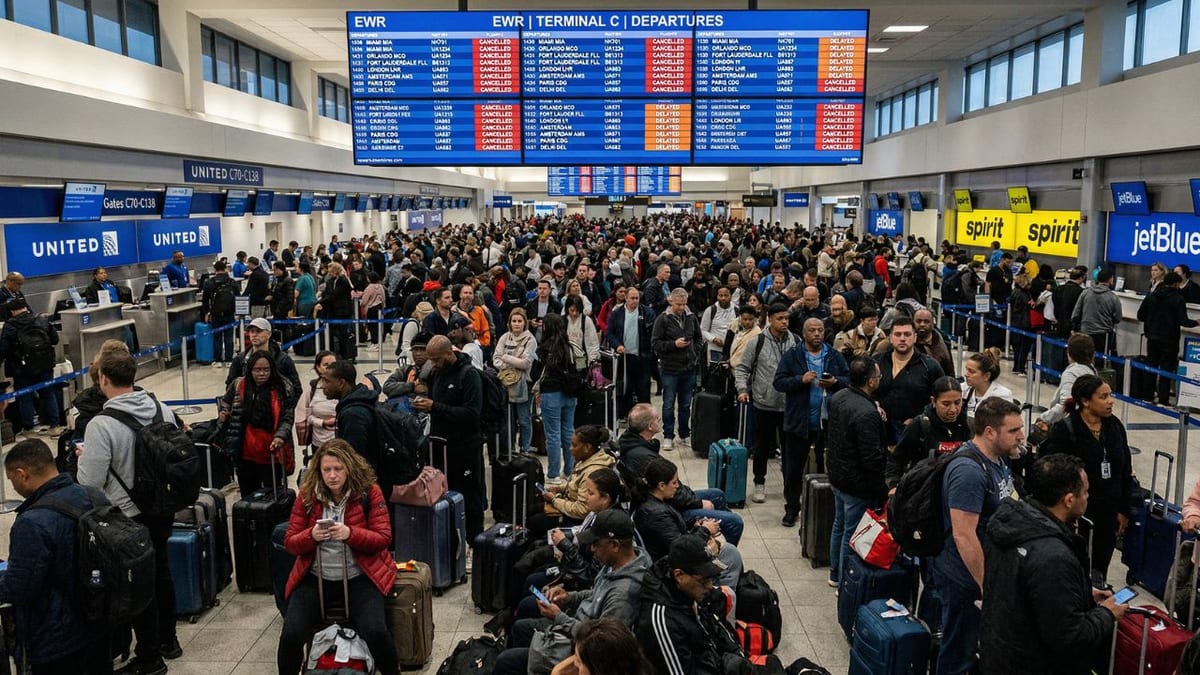
Disruption Peaks as Newark’s Operations Falter Again
Recent operational data shows Newark Liberty International Airport recording more than one hundred delayed departures and arrivals in a single operating day, alongside a smaller but highly disruptive group of cancellations. Publicly available flight tracking and industry reports point to a pattern of congestion at key banks of departures, where multiple aircraft are pushed back late or held in extended queues for takeoff.
Although exact tallies vary by source and time of day, several snapshots indicate that well over a hundred scheduled services through Newark were affected, with around ten flights ultimately cancelled. These figures align with broader assessments that place Newark among the most delay‑prone large hubs in the United States, even as federal and airport authorities continue to enforce caps on hourly movements designed to stabilize operations.
Observers note that the disruption is not driven by a single cause. Flow restrictions in surrounding airspace, runway and taxiway work, weather changes over the busy Northeast corridor, and tight turn‑around times for aircraft and crews all contribute to a fragile operating environment. When multiple stress factors coincide, the result can be a rapid escalation from minor pushback delays to full‑scale schedule breakdowns.
Travel industry coverage suggests that, on the most recent disruption day, Newark’s local problems quickly translated into national and international repercussions. Delayed departures from New Jersey translated into missed connection windows at downstream hubs, forcing rebookings, unplanned overnight stays, and schedule reshuffles well beyond the New York region.
JetBlue, United and Spirit Bear the Brunt
Newark’s role as a critical base for United Airlines and an important focus city for JetBlue and Spirit means that any local operational crunch rapidly becomes a multi‑carrier issue. Publicly accessible performance data and airline schedules show these three airlines operating dense patterns of flights linking Newark with major leisure and business markets in Florida, as well as feeding transatlantic services to key European gateways.
On the disruption day in question, a significant share of flight delays logged at Newark were attached to United, which maintains the largest schedule at the airport, including a broad portfolio of long‑haul services. JetBlue and Spirit, which rely on fast aircraft turns and high daily utilization, were also exposed. A single late inbound flight can cascade across subsequent departures, multiplying the impact across the network.
Analysts point out that low‑cost and hybrid carriers are particularly vulnerable when irregular operations pile up. Their tighter scheduling and focus on high‑demand time slots leave limited flexibility to swap aircraft or crews at short notice. At Newark, where runway and gate space are already constrained, those limitations become even more acute, accelerating the shift from routine delay to cancellations when the day’s schedule can no longer be recovered.
According to published coverage, additional carriers including Delta Air Lines, Icelandair and El Al were also caught in the turbulence, with isolated cancellations and delays on select routes. These disruptions illustrate how even airlines with smaller Newark footprints can be pulled into wider instability once the airport’s daily traffic crosses a critical threshold.
Florida Links Hit Hard: Miami, Orlando and Fort Lauderdale
The most visible early impact of Newark’s latest disruption has been on heavily traveled routes to Florida. Publicly available flight boards and aviation tracking snapshots for the affected period show repeated schedule changes on services to Orlando, Fort Lauderdale and Miami, collectively among the most popular leisure markets in the United States.
United, JetBlue and Spirit all operate multiple daily connections between Newark and these Florida cities, frequently at peak morning and evening times when demand is highest. When departure slots at Newark slip by 30 minutes or more, tightly choreographed rotations can fall out of sync, cutting into aircraft turnaround windows in Florida and squeezing available capacity on later flights.
Travel reports describe long queues at departure gates and customer service counters across these routes as passengers attempted to rebook onto remaining services with seats. In some cases, travelers arriving late into Orlando or Fort Lauderdale missed onward connections to Caribbean destinations, while late arrivals into Miami disrupted departing transatlantic and Latin American itineraries.
The Florida disruption also underscores the knock‑on effect on regional tourism economies. Airlines can often restore schedules within a day or two, but hotel bookings, cruise departures and car rental arrangements are less flexible, leaving passengers and travel providers to absorb the financial and logistical fallout.
Transatlantic Connections to London, Amsterdam and Paris Squeezed
Newark’s role as a major transatlantic gateway means operational problems on the New Jersey side are quickly felt in European capitals. Timetables from United and partner carriers show a tightly spaced wave of evening departures from Newark to major hubs such as London, Amsterdam and Paris, designed to deliver early‑morning arrivals for business travelers and connecting passengers.
When inbound domestic and regional flights into Newark arrive late, the potential for missed or rushed connections onto these overnight services rises sharply. Aviation analysts note that even if long‑haul departures ultimately leave close to schedule, a sizable number of passengers may still misconnect, leading to last‑minute rebookings onto later flights from other East Coast hubs or next‑day departures.
Publicly available delay logs from recent days suggest that several Europe‑bound departures out of Newark experienced rolling departure time revisions, with aircraft pushed back later than scheduled or held in departure queues. Airlines then faced delicate decisions on whether to hold flights slightly longer for connecting passengers, which can safeguard itineraries in the short term but risk triggering crew duty‑time issues and knock‑on delays into the following day’s return flights.
For travelers attempting to string together multi‑city itineraries, a late overnight flight from Newark to Europe can have particularly disruptive consequences. Morning arrival delays into London, Amsterdam or Paris can cause missed trains, lost day‑trip opportunities and broken links to secondary European flights operating from highly slot‑constrained airports.
Structural Strains and Ongoing Measures at Newark
The latest disruption comes against a broader backdrop of regulatory and infrastructure efforts to rein in chronic congestion at Newark Liberty International Airport. Federal aviation authorities have extended a series of limits on hourly arrivals and departures at the airport through 2026, with the objective of easing pressure on air traffic control, smoothing peak‑time flows and reducing the risk of prolonged gridlock.
At the same time, construction projects targeting Newark’s runways, taxiways, terminal facilities and the AirTrain system are reshaping the airport’s physical layout. Public planning documents highlight a long‑term vision aimed at modernizing the airfield and improving passenger circulation, but acknowledge that short‑term work can narrow runway availability and complicate aircraft movements during busy periods.
Industry reports emphasize that Newark has recently experienced multiple episodes of disruption driven by different triggers, ranging from technology outages that affected communications with air traffic control, to severe winter storms that forced mass cancellations and diversions. Each incident has exposed how quickly delays can propagate through an already constrained hub.
Travel advocacy organizations and consumer platforms point to these latest events as evidence that passengers transiting Newark should build additional time into their itineraries, particularly when relying on same‑day connections to Florida or Europe. While on‑time performance data shows periods of calm and even improvement, the scale of the most recent cluster of delays and cancellations underscores how a single bad day at Newark can send shockwaves across domestic and transatlantic networks.