

More news on this day
Flight disruptions centered on Newark Liberty International Airport in early April 2026 are reverberating across the United States network, as a busy post‑holiday travel period collides with chronic air traffic control constraints and lingering winter weather impacts.
Get the latest news straight to your inbox!
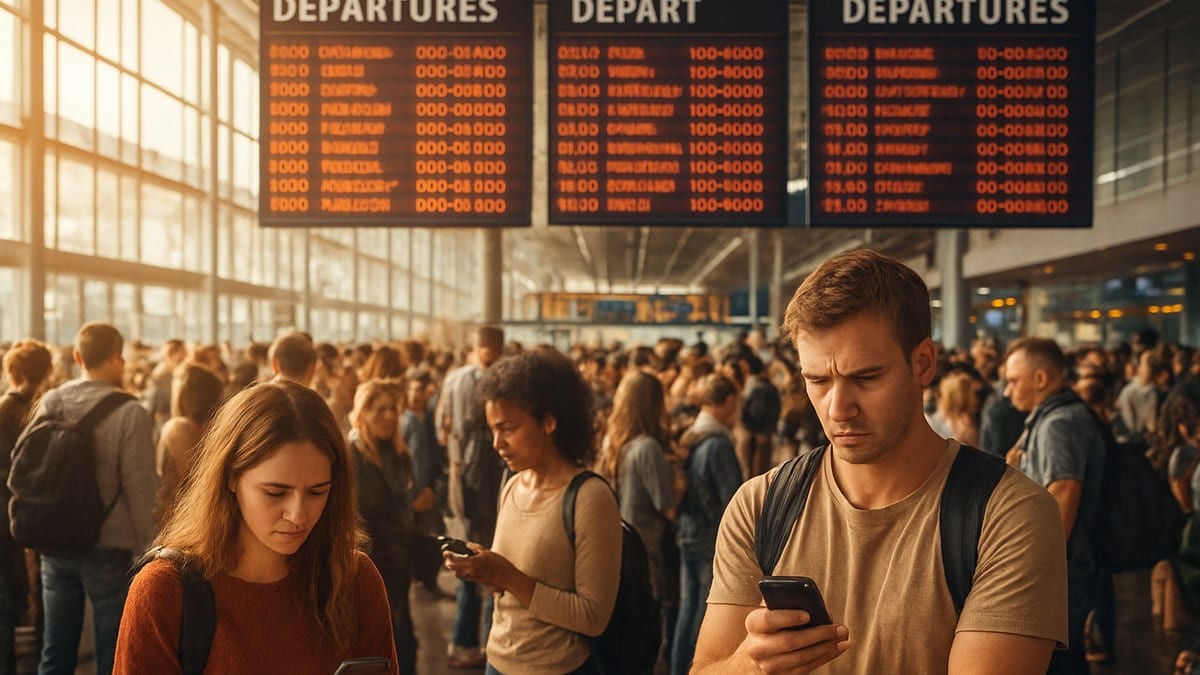
Post‑Easter Bottlenecks Expose System Fragility
Travelers passing through major U.S. hubs this week are encountering extended delays and missed connections, with Newark repeatedly near the top of national disruption tallies. Publicly available tracking data for April 6 indicates that Newark Liberty recorded more than 260 delayed departures and arrivals, along with a cluster of cancellations, affecting both domestic and transatlantic routes. The timing follows a chaotic Easter weekend in which more than 13,000 global delays were logged in a single day and thousands more built up in the days around the holiday.
Newark’s congestion is magnified by its role within the New York metropolitan airspace, which also includes John F. Kennedy and LaGuardia airports. Industry analyses note that the three airports form one of the world’s most tightly choreographed traffic corridors, where any ground stop, weather band, or equipment constraint at one facility quickly constrains the others. Reports indicate that on April 5 and 6, rolling delay programs and ground holds in this region contributed to late‑running aircraft and crews that then propagated through airline schedules nationwide.
Published coverage of U.S. operations after Easter describes a classic cascading pattern. High volumes before and during the holiday period left little slack in airline networks, so when delays materialized in the Northeast, aircraft and crews were left out of position for subsequent rotations. As those aircraft attempted to re‑enter the schedule from Newark and other New York‑area airports, knock‑on delays began appearing on routes linking to Chicago, Denver, Houston, San Francisco, and other domestic hubs.
For travelers, the effect has been a wave of secondary disruptions far from the original chokepoints. A late‑morning delay departing Newark can push an aircraft behind schedule for the remainder of the day, meaning evening flights between inland cities such as Nashville, Dallas, or Phoenix may depart late despite no local weather or airport issue. The pattern seen in early April 2026 mirrors previous episodes in which New York‑area bottlenecks have generated nationwide ripple effects.
ATC Staffing Shortfalls Underpin Newark Vulnerability
The latest disruption comes against a backdrop of widely documented air traffic control staffing shortfalls, particularly at facilities managing high‑density airspace. An April 2026 analysis of Federal Aviation Administration data reports that 20 major air traffic control centers are operating below 70 percent of their targeted certified controller staffing. The facility responsible for the New York metropolitan area, which includes traffic into and out of Newark, is listed among those with the deepest shortages.
In parallel, the FAA has extended an order limiting scheduled arrivals and departures at Newark through October 24, 2026. Publicly available regulatory filings describe the cap as an attempt to keep operations within what the agency considers a sustainable hourly flow rate, following several years in which weather, construction, equipment outages, and staffing issues combined to push delays to unmanageable levels. By keeping scheduled movements below theoretical maximum capacity, regulators aim to reduce the risk that minor disruptions escalate into day‑long gridlock.
Recent aviation oversight reports note that even with extended caps, controller staffing in and around Newark remains strained. Watchdog reviews published in late March and early April highlight that, while monitoring has improved, many towers and radar facilities continue to fall short of target staffing, leaving little flexibility to absorb spikes in traffic or manage complex rerouting during poor weather. In that environment, events such as low ceilings, thunderstorms, or short‑notice runway closures can require aggressive traffic‑management initiatives that immediately slow flows into New York‑area airports.
Newark’s particular configuration adds to the pressure. The airport’s runway layout, dense banked schedules, and role as a primary hub for a major carrier leave little margin for recovery once delays begin to accrue. Industry commentary has repeatedly cited Newark as especially susceptible to cascading disruption, in part because any reduction in arrival or departure rates often coincides with constrained options for re‑routing aircraft through neighboring airports that are themselves near saturation.
Weather and Winter Residue Compound Early‑April Strains
The early‑April disruptions also follow a winter marked by several significant storms in the northeastern United States. A late‑February blizzard brought more than two feet of snow to the Newark area and forced the cancellation of hundreds of flights, while a January storm system produced additional operational headaches across multiple East Coast hubs. Although those events are weeks past, their cumulative impact on schedule reliability and fleet positioning is still visible in network statistics.
Operational summaries for April 5 and 6 attribute part of the latest delays to lingering weather bands and low‑visibility conditions that intersected with already‑busy holiday traffic. Weather‑related restrictions triggered a series of ground delay and ground stop programs at New York‑area airports, which in turn forced airlines to hold departures across their domestic networks. When such programs are implemented, flights destined for affected airports are assigned later departure slots, backing up aircraft and crews on subsequent legs.
Weather is particularly disruptive at airports like Newark where runway construction and infrastructure projects have constrained flexibility in recent years. While some of the most intensive runway work from 2025 has concluded, industry reporting notes that continued airfield maintenance and surface congestion still limit how quickly the airport can recover from a slowdown. As a result, even transient storms can create backlogs that persist into the next operating day and spill over into connecting hubs.
Travel patterns in early April further exacerbate the impact. The period immediately after Easter often sees a blend of leisure travelers returning home and business travelers resuming regular trips, lifting demand just as airlines begin transitioning into busier spring and summer schedules. That combination has again left Newark and the broader U.S. network more exposed to any operational hiccups, with weather acting as a frequent and unpredictable trigger.
Knock‑On Effects Across Major U.S. Hubs
As Newark grapples with extended queues, the consequences can be traced across a web of domestic and international routes. Airline schedule data and flight‑tracking dashboards show delays originating at Newark rippling first into closely linked hubs such as Chicago O’Hare, Denver, and Houston, where the same aircraft often continue on to the West Coast or into secondary markets. A single late inbound from Newark can start a chain in which three or four subsequent flights each depart progressively further behind schedule.
Reports from national operations over the past several days describe a pattern of rolling congestion at airports including San Francisco, Washington National, and Atlanta as carriers attempt to recover aircraft and crews. While some of these hubs also face localized challenges, such as regional weather systems or runway work, operational data indicate that a meaningful share of delays can be traced back to earlier disruptions in the New York region. The result is a patchwork of irregular operations that can surprise travelers in cities far from the original problem.
International services are not immune. Newark’s position as a major transatlantic gateway means that extended ground holds or reduced arrival rates can disrupt overnight schedules to Europe and daytime operations to Latin America. When departures to London, Paris, or Frankfurt leave hours late from Newark, those delays often translate into missed connections for onward passengers, aircraft arriving off‑schedule at overseas hubs, and additional disruption on return services back to the United States.
Airline network planners and analysts have long pointed to this interconnectedness as both a strength and a vulnerability. The hub‑and‑spoke model allows carriers to offer extensive connectivity from airports like Newark, but it also means that local constraints, whether at the runway, tower, or radar‑facility level, can generate consequences that extend across multiple continents within a single operating day.
Travelers Face Longer Lines and Shifting Strategies
For passengers, the April 2026 disruptions at Newark translate into crowded terminals, long check‑in and security waits, and growing uncertainty about connection windows. In an effort to improve predictability, at least one major carrier has recently introduced tools that display projected security‑line wait times at Newark and other hub airports, allowing travelers to adjust departure times from home. Early feedback described in local coverage suggests that such tools can help mitigate some day‑of‑travel stress, even when underlying flight schedules remain vulnerable to disruption.
Public guidance from aviation information outlets in recent days has encouraged travelers heading through Newark and other New York‑area airports to build in longer connection times, monitor real‑time FAA advisories, and keep a close eye on airline alerts. The same sources note that when national delay programs are in effect, options for same‑day rebooking can quickly narrow, making early communication with carriers particularly important.
Consumer advocates observing the latest wave of disruption argue that the April events highlight the importance of continued investment in air traffic control staffing and technology, as well as transparent scheduling practices at capacity‑constrained hubs. Regulatory filings and industry briefings in recent months indicate that both the FAA and airlines are under pressure to demonstrate progress in shoring up the system before peak summer travel and high‑profile events such as the 2026 World Cup bring even heavier traffic to the New York and New Jersey region.
In the meantime, Newark’s experience in early April 2026 serves as another case study in how quickly localized strain can ripple across an interconnected aviation network. As the month progresses, operational data from carriers, regulators, and independent trackers will show whether the system can stabilize or if the latest disruptions represent the opening phase of a more turbulent spring and summer travel season.