

More news on this day
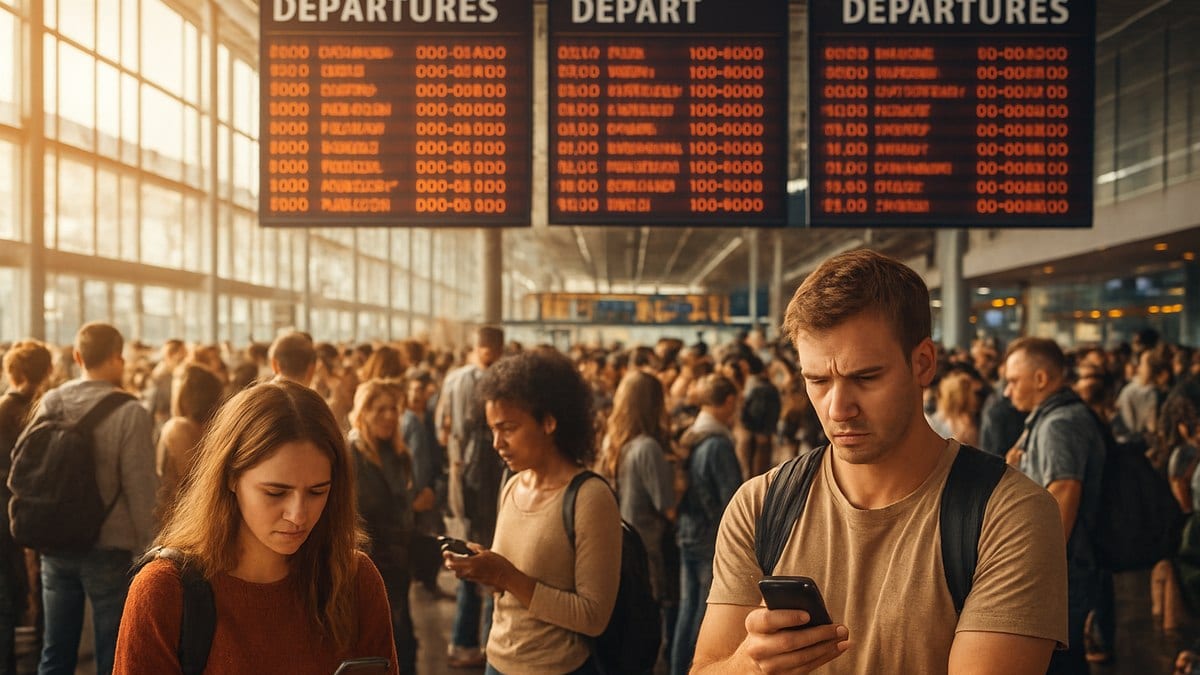
Fresh disruption at Newark Liberty International Airport in early April 2026 is rippling through the US air travel system, triggering rolling delays, cancellations and missed connections on routes from Florida to the West Coast.
Get the latest news straight to your inbox!
Wave of April Disruptions Centered on Newark
Publicly available flight tracking data and aviation reports indicate that Newark Liberty has logged repeated pockets of disruption in recent days, with elevated numbers of delayed and cancelled departures clustered around April 5 through April 7. Figures compiled by industry analysts and consumer-rights platforms show Newark recording around 90 delays and at least 10 cancellations on April 5 alone, followed by a fresh spike tied to the busy post-Easter travel period.
Consumer advocacy tools summarizing April 5 operations describe a “severe operational bottleneck” at the airport, as passenger volumes and aircraft movements temporarily outpaced available capacity on the airfield and in the terminal. Those conditions, combined with residual schedule pressure from March weather systems and continued infrastructure work in the New York area, left airlines with limited room to recover once flights began to fall behind schedule.
Coverage on specialist travel outlets notes that by April 6 and April 7, disruptions at Newark were again highly visible, particularly on domestic routes operated by large hub carriers and low-cost rivals. While the raw number of outright cancellations remained below the most extreme episodes of recent years, the density of delayed flights during peak bank times created a challenging operating environment and strained connection windows for thousands of passengers.
The April turbulence comes on top of longstanding congestion concerns at Newark, which remains one of the most delay-prone large hubs in the country despite ongoing efforts to cap movements and reconfigure operations. Federal orders limiting arrivals and departures, extended through late 2026, are intended to ease chronic pressure, but recent data suggests that even with these limits in place, the airport can still experience sharp spikes in disruption when conditions tighten.
Cascading Effects on Major US Hubs
Because Newark functions as a critical connecting node in several carriers’ domestic and transatlantic networks, operational issues there tend to propagate quickly across the United States. Nationwide statistics compiled on April 7 show more than 4,000 delays and over 200 cancellations across US airports in a single day, with Newark listed among the hubs contributing to the higher disruption totals.
Travel-industry coverage indicates that ripple effects were especially evident on trunk routes linking Newark with other large hubs such as Atlanta, Chicago, Houston, Orlando, Boston, Los Angeles and Seattle. When Newark departures ran late or were cut entirely, aircraft and crew intended to continue onward to these cities were also delayed or repositioned, tightening already busy schedules at those destinations.
According to published analyses, this knock-on impact was not confined to one airline or region. United, JetBlue and Spirit flights tied to Newark hubs have been particularly visible in flight-status boards and tracking apps in recent days, but data for other airports suggests that carriers across the network experienced secondary effects. In some cases, delays on Newark-bound legs stranded inbound aircraft overnight at outstations, compressing early-morning schedules and pushing irregular operations into the next day.
These patterns mirror earlier episodes in which a single chokepoint in the Northeast corridor, including previous radar equipment outages and staffing-related slowdowns at Newark, triggered a wave of rolling disruptions across multiple time zones. Analysts note that while the April 2026 issues have so far fallen short of those worst-case scenarios, they underline how tightly coupled US airline networks remain to performance at a handful of high-demand hubs.
Complex Mix of Weather, Infrastructure and System Strain
The recent Newark disruptions are unfolding against a backdrop of broader operational challenges in US aviation this spring. In March, a powerful storm system swept across large portions of the country, leading to thousands of delays and cancellations as thunderstorms, high winds and winter weather complicated airline and air traffic control operations. Even after the most severe weather passed, residual schedule imbalances and displaced aircraft continued to affect some routes into early April.
Within the New York region, Newark’s performance has also been shaped by ongoing efforts to manage runway capacity, modernize infrastructure and align schedules with available air traffic control staffing. Federal authorities have extended limits on the number of hourly arrivals and departures at the airport through October 2026, following several years marked by high congestion, intermittent equipment problems and notable radar and technology outages.
Industry reports emphasize that even with movement caps in place, Newark remains a constrained facility. Peak travel periods, such as the Easter return weekend, rapidly test the limits of what can be accomplished within those caps when demand surges and when other parts of the system, including connecting hubs in the Southeast and Midwest, are dealing with their own weather or staffing challenges.
At the same time, publicly available information from security agencies indicates that passenger screening operations at Newark have recently been kept relatively stable, with average wait times in early April fluctuating between just a few minutes and around half an hour despite a broader federal staffing squeeze. That has helped prevent security bottlenecks from adding a further layer of delay on top of the airside disruptions, even if overall journey times for many travelers have still been significantly extended.
Traveler Impact and Rights Amid Rolling Irregular Operations
The knock-on effects from Newark’s early-April disruptions have been acutely felt by passengers across the United States. Missed connections, last-minute rebookings and unplanned overnight stays have been reported on routes spanning from Florida to California, as itineraries built around tight connection windows in Newark proved vulnerable to even modest pushbacks in departure times.
Travel-rights organizations tracking the situation have been advising affected passengers to document their delays, monitor notifications from airlines and review policies relating to meal vouchers, hotel accommodations and refunds. Under US regulations, airlines are not required to compensate travelers for most weather-related delays, but publicly available guidance highlights that carriers may owe refunds when flights are cancelled or significantly changed and passengers choose not to travel.
Consumer advocates also stress that the cause of a disruption can matter. When irregular operations stem from issues within an airline’s control, such as crew scheduling problems or maintenance delays, some carriers commit to more extensive assistance, including hotel stays and rebooking on other flights. In cases where congestion or air traffic management constraints at Newark limit capacity, the boundary between controllable and uncontrollable factors can be more complex for travelers to interpret.
Observers note that passengers affected by Newark-linked delays often face a second challenge when disruptions cascade into other hubs. A traveler initially delayed on a Newark to Orlando leg, for example, may later find that the same irregular operations have rolled on to impact return flights, creating multi-day itinerary reshuffles and adding to costs for lodging and ground transport that are not always covered by airlines.
What April’s Problems Signal for the Summer Travel Season
The pattern of early April disruptions at Newark is drawing renewed attention to the resilience of the US air travel system ahead of the busy summer period. Analysts following the industry suggest that if a series of relatively contained operational shocks at a single constrained hub can generate noticeable nationwide disruption, extended heatwaves, severe convective weather or renewed technology outages later in the season could again test the limits of airline and airport preparedness.
Airlines with large Newark operations have spent the past year trimming schedules, increasing buffers between flights and investing in additional staffing to create more room for recovery when irregular operations occur. Federal efforts to limit hourly movements at Newark and other high-density airports are similarly intended to prevent the most severe gridlock. Even so, published performance data from recent months shows that the airport continues to post higher-than-average delay rates compared with many other large US facilities.
For travelers, the April upheaval serves as a reminder that itineraries built around tight connections at congested hubs carry elevated risk, particularly in peak travel windows and shoulder seasons prone to disruptive weather. Travel publications and consumer sites are once again recommending longer connection times through Newark, early-morning departures where possible, and flexible ticket options that make it easier to adjust plans if schedules begin to fray.
With operational limits at Newark set to remain in place through at least late 2026, aviation experts expect the airport’s performance to remain a key indicator of how well the wider US network can absorb shocks. The early signs from April 2026 suggest that even incremental disruptions at this critical node can still cascade widely, underscoring the importance of continued investment in infrastructure, staffing and scheduling discipline across the system.