

More news on this day
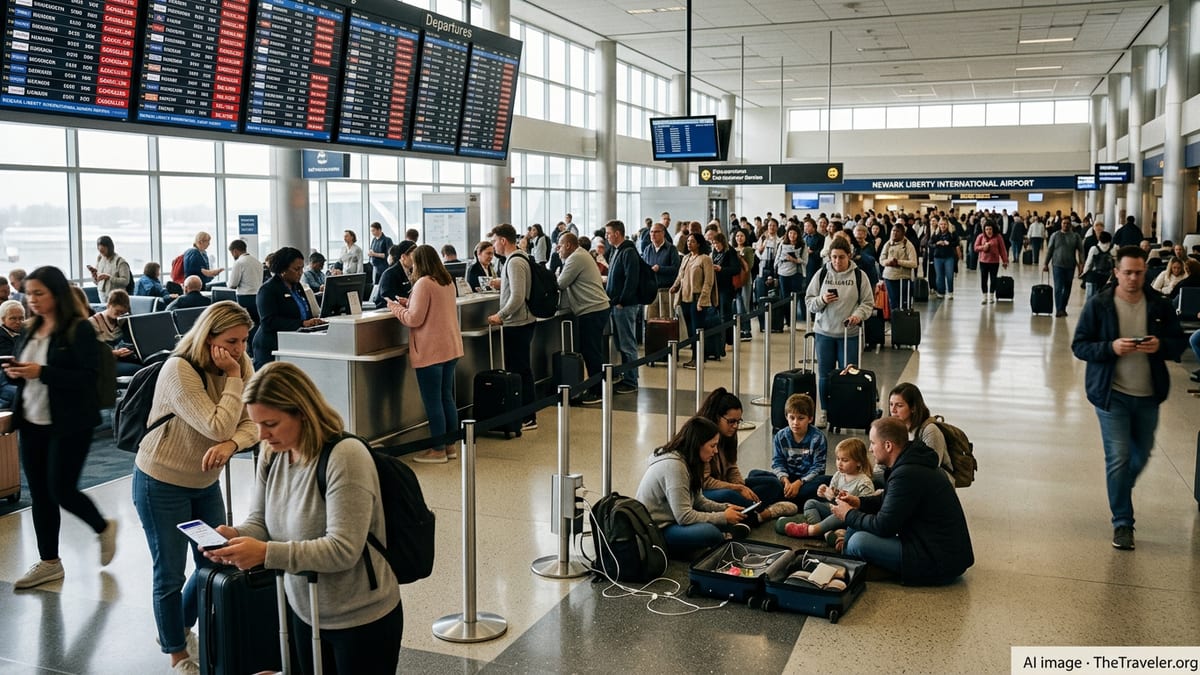
Thousands of travelers moving through Newark Liberty International Airport on March 16 and 17 faced cascading cancellations and severe delays as a powerful storm system collided with long-running congestion and capacity constraints, creating a fresh travel meltdown at one of the nation’s busiest hubs.
Get the latest news straight to your inbox!
Storm System Triggers New Wave of Disruptions
Publicly available flight-tracking data for March 16 and 17 indicates that hundreds of flights into and out of the New York region were canceled or heavily delayed as a broad storm system swept across the eastern half of the United States. Newark Liberty International Airport, a primary hub for both domestic and international connections, was among the hardest hit as carriers preemptively cut schedules and struggled to keep remaining operations running on time.
The latest storm is part of a mid-March weather pattern that has produced heavy snow, high winds and severe thunderstorms from the Midwest to the East Coast. National reporting shows that more than 5,000 flights across the country were canceled between March 15 and the morning of March 16, with Newark frequently appearing among the airports with the largest share of disrupted service.
While some airports recovered more quickly, Newark’s role as a tightly scheduled hub and its location in crowded Northeast airspace meant that early cancellations quickly rippled outward. As aircraft and crews fell out of position, later departures were pushed back or scrubbed entirely, compounding the impact for travelers who thought they were clear of the worst weather.
By early March 17, flight-status boards still showed lingering cancellations and rolling delays at Newark, particularly on routes along the East Coast and into the Midwest that remained under adverse weather or air traffic management programs.
Capacity Limits and a History of Congestion at Newark
Newark Liberty has long been known as an operationally challenging airport, with dense traffic, limited runway capacity and tight airspace shared with New York’s other major airports. Federal orders limiting arrivals and departures, extended through October 2026, are intended to ease chronic congestion, but they also leave the schedule more vulnerable when severe weather or staffing problems arise.
In recent years, published analyses from aviation authorities, local officials and airline executives have highlighted Newark’s high frequency of delays compared with other large hubs. A combination of construction, air traffic control complexity and strong demand in the New York metropolitan area has made any disruption more likely to cascade, particularly during peak travel periods such as spring break.
This week’s meltdown unfolded against that backdrop. When storm-related ground stops and flow controls were introduced across parts of the East Coast, the ceiling on how many flights Newark could process each hour meant airlines had little room to re-time operations. Many carriers opted to cancel in advance rather than risk extended tarmac waits and missed connections later in the day.
Travelers who frequently use Newark report that the latest disruption follows several years of periodic “meltdown” events, where a single weather or systems shock rapidly overwhelms the reduced schedule. The recurrence of such episodes has fueled ongoing debate over how much traffic the airport can reliably handle under current constraints.
Who Was Most Affected and How to Check Your Flight
The latest round of cancellations hit a wide cross-section of passengers, from families heading out on spring break to business travelers connecting through Newark to international destinations. Published coverage of the broader storm system notes particularly heavy disruption on routes linking the Northeast with the Upper Midwest, the Southeast and major hubs such as Chicago and Atlanta, which were also contending with adverse weather and congestion.
At Newark, travelers on early-morning and late-evening departures often bore the brunt of the turmoil. Early flights were vulnerable to overnight crew and aircraft repositioning issues, while later waves were exposed to knock-on delays from earlier disruptions. Connections through Newark were especially fragile; missed inbound flights left some passengers without same-day rebooking options as already-full subsequent departures reached capacity.
For anyone scheduled to travel through Newark Liberty between March 17 and the following several days, publicly available tools from airlines and flight-tracking services remain the most reliable way to confirm whether a specific flight is affected. Travelers are being urged in public advisories to monitor their airline’s app closely, watch for same-day schedule changes, and verify gate and departure times before leaving for the airport.
Many major carriers serving Newark have issued flexible travel policies tied to the mid-March East Coast storms. These waivers typically allow customers whose flights are canceled or significantly delayed to rebook within a defined date window without change fees, often including options to shift to nearby airports in the New York region when space is available.
Airlines Launch Waivers and Recovery Schedules
In response to the weather and capacity crunch, major airlines with hubs or significant operations at Newark have adjusted schedules and posted customer waivers. Publicly available information shows that at least one large carrier has issued a travel waiver specifically naming New York and Newark for flights on March 16 and 17, allowing affected passengers to move their trips to alternative dates through the following week.
Airlines are also deploying standard recovery measures designed to restore normal operations once the worst of the weather passes. These include repositioning aircraft to balance where planes and crews are needed, adding capacity on key routes where feasible, and in some cases upgauging aircraft to accommodate stranded passengers whose original flights were canceled.
However, even as the storm system moves away from the Northeast, recovery can take several days at a complex hub like Newark. Aircraft parked out of position, crew duty-time limits and the ongoing cap on daily operations can all slow the return to a full, reliable schedule. Travelers on shorter-haul flights may see more options for same-day rebooking, while those on transatlantic or long-haul services could face longer waits for open seats.
Observers of past disruption events at Newark note that the first full day of clear weather after a storm often remains choppy, with residual delays and occasional cancellations as airlines work through maintenance checks and repositioning. Passengers with fixed connections, such as cruises or international tours, are advised in public guidance to allow extra buffer time and build flexibility into their plans.
What This Meltdown Signals for Future Newark Travel
The latest Newark travel meltdown underscores how exposed the airport remains to shocks from severe weather, air traffic management and infrastructure strain, even as airlines and federal regulators attempt to smooth operations by limiting overall flight volumes. With the arrival and departure cap now extended through late 2026, the March disruption offers an early test of whether those measures can prevent the most extreme gridlock during peak travel seasons.
Planning documents and policy statements from transportation agencies and airport stakeholders describe a long-term vision that includes upgraded terminals, better surface access and modernized air traffic systems for the New York region. Yet many of these improvements will take years to fully materialize, leaving travelers dependent in the near term on incremental operational tweaks and more conservative scheduling.
For passengers, the recent events at Newark reinforce several practical lessons: build additional buffer time into itineraries that rely on tight connections through the airport, consider early-day departures when possible, and remain alert to forecasted storms that may prompt preemptive cuts to schedules. Public travel advisories frequently emphasize the value of keeping airline apps updated, enabling real-time alerts if a flight appears on the growing list of cancellations.
As airlines publish updated recovery schedules in the days following the storm, many Newark-bound and Newark-originating flights are expected to return to normal. Yet the experience of thousands of passengers stranded or extensively delayed on March 16 and 17 highlights how quickly a combination of severe weather and structural constraints can put an entire hub under strain, and why careful planning remains essential for anyone with Newark on their boarding pass.