

More news on this day
Fresh disruption at Newark Liberty International Airport has triggered 109 flight delays and 9 cancellations across key domestic and transatlantic routes, snarling Spirit, United and JetBlue operations and unsettling connections to Miami, Orlando, Fort Lauderdale and major European hubs including London, Amsterdam and Paris.
Get the latest news straight to your inbox!
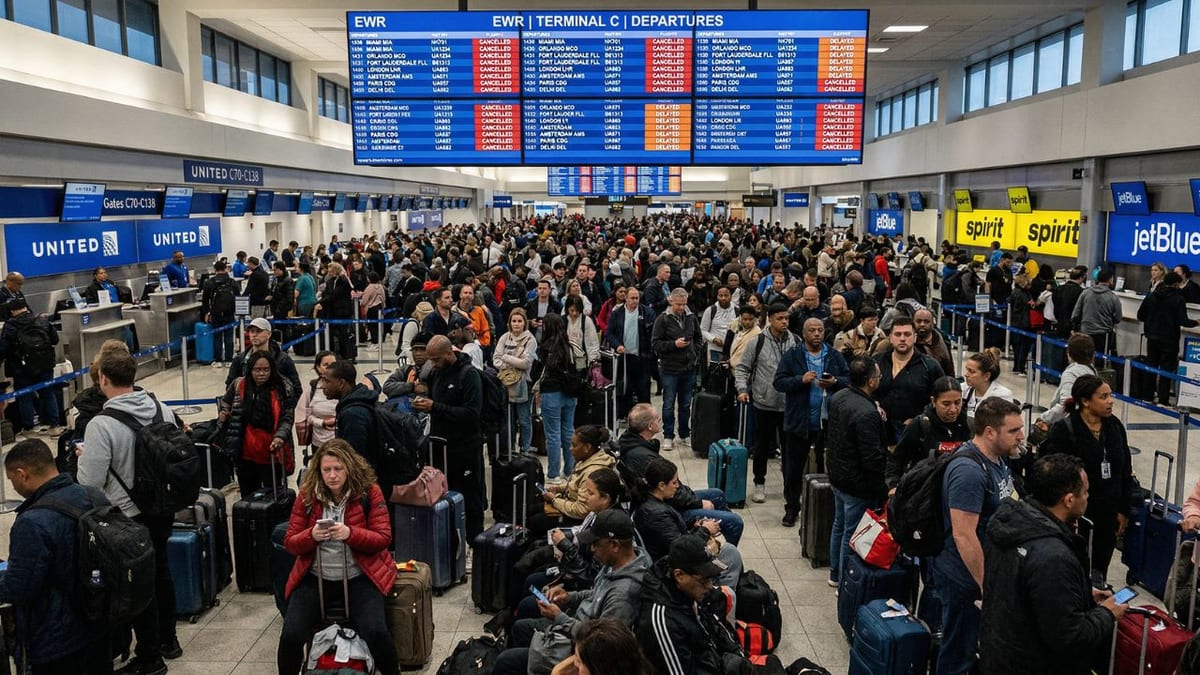
Newark Bottleneck Sends Shockwaves Through US–Europe Network
Publicly available flight-tracking dashboards for early April show Newark Liberty once again emerging as a pinch point in the North American air system, with 109 delayed departures and arrivals and 9 flight cancellations concentrated across a single operating window. These figures follow several days of elevated disruption at the New Jersey hub, underlining how quickly localized issues can cascade through domestic and long haul schedules.
Newark functions as one of the most important transfer points on the US East Coast for both North American and Europe bound itineraries. When departure waves are pushed back by even 30 to 60 minutes, onward banks of flights to Florida, the West Coast and major European capitals are forced to absorb late arriving aircraft, crews and passengers. According to published coverage that tracks airport performance in real time, carriers struggled to restore punctuality once the backlog built during peak travel hours.
The latest disruption comes on the heels of earlier April episodes in which Newark logged clusters of between 90 and more than 260 delays in a single day, alongside low double digit cancellations. Taken together, the pattern suggests sustained operational strain rather than an isolated anomaly, with the airport frequently ranking among the most delay prone in nationwide roundups.
Although federal regulators have extended a cap on flight volumes at Newark to help contain congestion, recent days illustrate that reduced schedules alone cannot fully shield travelers when staffing constraints, weather challenges in other regions and tight aircraft utilization converge.
Spirit, United and JetBlue Struggle to Maintain Core Schedules
Among individual airlines, United Airlines remains the most exposed when Newark falters. As the dominant carrier at the airport and a primary operator of transatlantic services, United relies on tightly timed departure banks to feed evening flights to London, Amsterdam and Paris. When early and mid day domestic services depart late, aircraft and crews that should be turning quickly to Europe bound flights can miss their targeted departure slots, causing knock on delays that stretch deep into the night.
Spirit Airlines, which focuses heavily on leisure travelers, faces a different but equally acute challenge. The carrier’s network from Newark is anchored around high volume routes to Florida, particularly Miami, Orlando and Fort Lauderdale. Reports indicate that Spirit has already featured among the US airlines with some of the highest combined disruption totals this spring, and the latest Newark episode adds another set of delays and cancellations to a network where spare capacity is limited.
JetBlue, a key player on Northeast to Florida and selected transatlantic routes, is also vulnerable when Newark schedules unravel. While JetBlue’s largest bases are at New York John F. Kennedy and Boston, Newark flights feed into the same broader network. Late departures to Florida can strand crews and aircraft away from their next day starting points, putting pressure on morning operations to London and Amsterdam and reducing the margin for recovery after any fresh disruption.
Operational data highlighted in recent industry coverage shows that across the United States, Spirit and United have both featured prominently in national tallies of delays and cancellations on multiple days this week, reinforcing the idea that Newark related issues are part of a wider web of strain affecting the largest carriers.
Florida Links Hit as Easter and Spring Break Demand Peaks
The timing of Newark’s latest wave of disruption coincides with the tail end of Easter and spring break travel, when demand for flights to Florida reaches some of the highest levels of the year. Airports such as Miami, Orlando and Fort Lauderdale have themselves recorded more than one hundred daily delays and a cluster of cancellations over the past several days, as weather systems, heavy passenger volumes and crew positioning challenges intersected.
When a Northeastern hub like Newark encounters disruption at the same time as Florida’s major gateways, travelers can find themselves caught in a double bind. Late arriving aircraft from Newark may land into already congested Miami or Orlando operations, where ground handling resources and available gates are stretched, further slowing turnarounds and pushing evening departures behind schedule.
For Spirit, United and JetBlue, the impact is particularly acute on routes that rely on fast aircraft turns and high load factors to remain profitable. According to publicly available scheduling data and prior airport performance reports, these Newark to Florida services often operate multiple times per day, meaning that one badly delayed sector can affect several subsequent rotations.
Passengers on complex itineraries that connect through Florida onward to Latin America or the Caribbean are especially exposed, as missed connections can trigger overnight stays and extended rebookings when remaining seats are scarce during peak holiday periods.
Transatlantic Waves to London, Amsterdam and Paris Disrupted
Beyond domestic leisure markets, the latest Newark bottleneck has serious implications for transatlantic travel. Evening departures to Europe are typically structured around tightly planned departure waves, with London, Amsterdam and Paris among the busiest and most strategically important destinations. When delays mount earlier in the day, aircraft scheduled to operate these overnight flights may be held up elsewhere in the network, compressing turnaround times or forcing airlines to swap equipment at short notice.
Industry resources that monitor long haul performance indicate that in recent days, Newark related disruption has contributed to late departures and extended arrival delays on multiple US to Europe routes, not only from Newark itself but also from other hubs attempting to absorb displaced passengers. This dynamic can create rolling pressure on European airports the following morning, as late arriving transatlantic flights occupy gates beyond their scheduled windows and strain immigration, baggage handling and connecting banks.
For travelers, the practical impact is felt in missed connections to secondary European cities, reduced options for same day onward travel and a higher likelihood of being rerouted through alternate hubs such as London or Amsterdam when non stop Newark services are delayed or canceled. Even when flights ultimately operate, the erosion of buffer times increases the risk that checked baggage will not make tight connections, adding another layer of disruption at journey’s end.
Travel analysts note that these transatlantic complications come at a time of strong demand for US to Europe travel ahead of the summer season, leaving airlines with limited spare capacity to re accommodate affected passengers quickly when multiple flights on the same corridor are disrupted.
Structural Strains at Newark Raise Questions About Resilience
Newark Liberty’s latest operational crisis is unfolding against a broader backdrop of structural strain at the airport. Federal notices issued in recent months confirm that regulators have extended temporary limits on hourly arrivals and departures at Newark through late 2026, a move designed to keep traffic volumes at a level that the surrounding airspace and air traffic control system can handle more reliably.
Past coverage of Newark’s performance has highlighted episodes where issues such as air traffic control staffing shortfalls, equipment problems at regional control centers and runway maintenance have combined to reduce the number of flights that can safely land and depart per hour. Even when no single dramatic event occurs, the cumulative effect of these constraints can leave the airport operating with little slack, so that minor schedule perturbations quickly snowball into large scale disruption.
Consumer focused air travel guides point out that Newark has repeatedly ranked among the most delay prone major airports in the United States over recent years, especially during peak travel periods or when storms affect the wider Northeast corridor. The current pattern of recurring waves of delays and cancellations in early April fits this longer term profile of vulnerability.
For now, there is little sign that demand for Newark’s services is easing, with airlines continuing to rely on the hub for both domestic connections and lucrative transatlantic flows. As a result, travel experts suggest that passengers using Newark, especially on multi segment itineraries involving Florida or major European hubs, should be prepared for the possibility of rolling disruptions and take extra precautions such as allowing longer connection times and monitoring flight status closely on the day of travel.