

More news on this day
Travelers moving through Newark Liberty International Airport faced a difficult day as publicly available data showed 151 flight delays and 12 cancellations, creating ripple effects across major North American routes.
Get the latest news straight to your inbox!
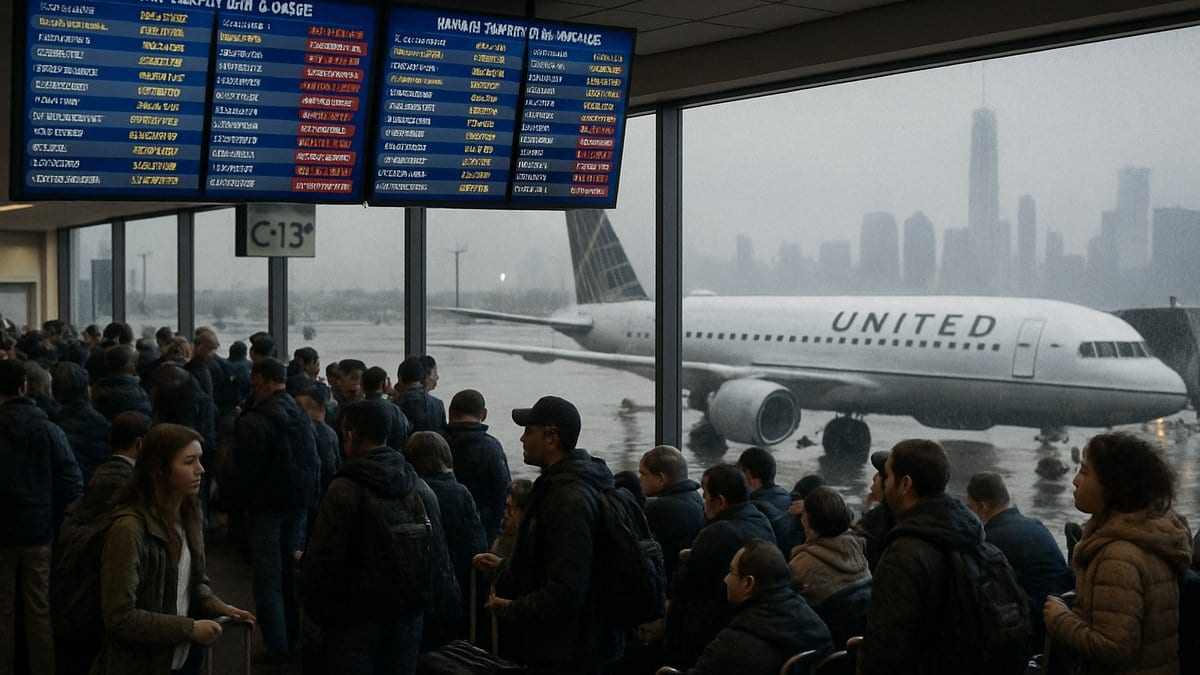
Image by Nomad Lawyer
Wide-Ranging Disruptions Across Major Carriers
The latest disruption at Newark Liberty International Airport involved a mix of domestic and international services, with reports indicating that both full-service and low-cost airlines were affected. Coverage from industry-focused travel outlets notes that Spirit Airlines, American Airlines, JetBlue and several other carriers all recorded delayed or cancelled departures linked to the New Jersey hub.
Published summaries of the day’s operations suggest that the majority of affected flights were delayed rather than cancelled, but the overall impact on passengers was still significant. With 151 delays compared with 12 outright cancellations, many travelers experienced extended waits at gates or on taxiways instead of rebookings. This pattern aligns with broader efforts across the industry to preserve schedules where possible, even when operational conditions deteriorate.
Routes connecting Newark with Chicago, Toronto, San Francisco, Fort Lauderdale and other busy markets were among those highlighted in public reporting. These city pairs are integral parts of airline networks, and disruption at a single hub can quickly cascade across multiple time zones, affecting passengers who may never pass through Newark itself.
Observers of US aviation note that days like this underscore the vulnerability of a tightly timed system. When one large hub encounters operational strain, delays often propagate along connecting banks of flights, turning a local issue into a nationwide challenge for airlines and travelers alike.
Recent Strain Follows Months of Operational Pressure
The latest wave of delays comes against a backdrop of sustained pressure on Newark Liberty’s operations. Publicly available analyses and aviation commentary over the past year have repeatedly cited the airport as one of the more delay-prone hubs in the United States, driven by a combination of heavy scheduling, air traffic constraints and weather-sensitive operations typical of the Northeast corridor.
Federal aviation documents and prior industry reporting describe continued efforts to manage congestion by capping arrivals and departures at Newark through 2026, part of a strategy to ease bottlenecks created by limited runway capacity and air traffic control staffing challenges. These structural limits are intended to reduce chronic gridlock, but they also mean that any disruption, even on a single day, can be harder to absorb because schedules have little spare slack.
In recent months, Newark Liberty has also contended with episodic events that highlight the fragility of airport operations. Earlier in March, for example, publicly available coverage described a temporary ground stop after air traffic controllers evacuated the airport’s tower due to a reported burning smell. Although traffic later resumed, the incident reinforced concerns among travelers and aviation watchers about resilience at one of the region’s primary gateways.
The accumulation of these pressures helps explain why a day featuring 151 delays and 12 cancellations can attract particular attention. For frequent flyers, the episode is part of a longer narrative in which Newark regularly appears as a hotspot for knock-on delays affecting journeys across the United States and beyond.
Knock-On Effects for Domestic and International Travelers
Disruptions of this scale at Newark rarely stay local. Travel-industry reporting indicates that the affected flights included links to key domestic hubs and Canadian cities, suggesting that the operational challenges extended beyond New Jersey’s borders. Passengers heading to or from Chicago, Toronto, San Francisco and Fort Lauderdale were among those facing potential missed connections, rebookings or extended layovers.
Because Newark Liberty functions as both a major domestic connecting point and a principal transatlantic gateway, schedule turbulence can have an outsized impact. Delayed inbound aircraft may arrive too late to operate subsequent legs, triggering rolling delays across an airline’s network. At the same time, tight turnaround times for long-haul flights make it more difficult to recover once the operation slips behind schedule.
According to publicly available flight-tracking and industry summaries, the pattern of disruption at Newark on the day in question mirrors wider stress in the US aviation system in early 2026, when severe weather, air traffic control limitations and infrastructure constraints have interacted to produce repeated pockets of congestion. Even when no single dramatic event is to blame, a combination of heavy demand and limited margins can quickly translate into lengthy waits for passengers.
For travelers, this environment increases the importance of flexible planning. Aviation commentators routinely recommend allowing longer connection times at busy hubs such as Newark, especially during peak travel seasons or unsettled weather periods, to reduce the risk of misconnecting when delays accumulate.
What Today’s Numbers Reveal About Newark’s Ongoing Challenges
The ratio of delays to cancellations in the latest disruption offers insight into how airlines are managing constrained conditions at Newark. With 151 delays and 12 cancellations reported, publicly accessible data suggests that carriers prioritized keeping flights on the schedule, even if many departed significantly behind plan. This approach can help ensure that aircraft and crews end up where they are needed later in the day, but it also means that passengers may endure prolonged periods in terminals or on board waiting for a takeoff slot.
Transportation research and academic studies on US aviation reliability have frequently cited Newark Liberty as a case study in how volume, geography and regulatory constraints intersect. The airport sits in one of the most congested pieces of airspace in the world, sharing traffic flows with New York’s John F. Kennedy International and LaGuardia airports. When weather or staffing reduces capacity in that shared airspace, Newark is especially exposed to ground delay programs and flow restrictions that ripple quickly through the day’s schedule.
Recent federal planning documents highlight ongoing measures aimed at limiting these impacts, including operational caps and efforts to re-balance schedules across the New York metropolitan area. Still, as the latest figures show, even incremental improvements cannot fully insulate travelers from days when conditions align against on-time performance.
For airlines, Newark’s constraints are a strategic concern, since it remains a lucrative and indispensable gateway to the New York region. For passengers, they translate into a heightened need to monitor flight status closely, consider earlier departures where possible and be prepared for last-minute changes when traveling through this busy hub.
Advice for Passengers Navigating Newark During Disruptions
As reports of 151 delays and 12 cancellations circulated, travel experts and consumer advocates reiterated familiar guidance for passengers transiting Newark Liberty. Common recommendations include booking longer connection windows through the airport, particularly during winter and early spring, when weather-related impacts are more frequent across the Northeast and Midwest.
Publicly available guidance from airlines and aviation agencies also emphasizes the value of real-time information. Most carriers now encourage travelers to rely on mobile apps and text alerts for the earliest notice of schedule changes, gate updates and rebooking options. At a hub where conditions can shift quickly, early awareness can help passengers secure scarce seats on alternative flights or adjust ground transportation and accommodation plans.
Analysts further suggest that travelers consider the time of day when scheduling departures from or through Newark. Historical performance data for major hubs often shows that delays build as the day progresses, as early disruptions compound across multiple rotations. When feasible, selecting morning flights and avoiding tight evening connections can reduce the risk of severe knock-on delays.
While the latest wave of disruption underscores Newark Liberty’s reputation as a challenging hub, it also reflects broader strains in the US aviation system. For now, passengers who pass through the airport on busy or weather-sensitive days are likely to benefit from cautious planning, flexible itineraries and close attention to operational updates.