

More news on this day
Travelers at Newark Liberty International Airport faced a difficult start to April as 151 flight delays and 12 cancellations rippled across domestic and international routes, snarling connections and straining already busy spring schedules.
Get the latest news straight to your inbox!
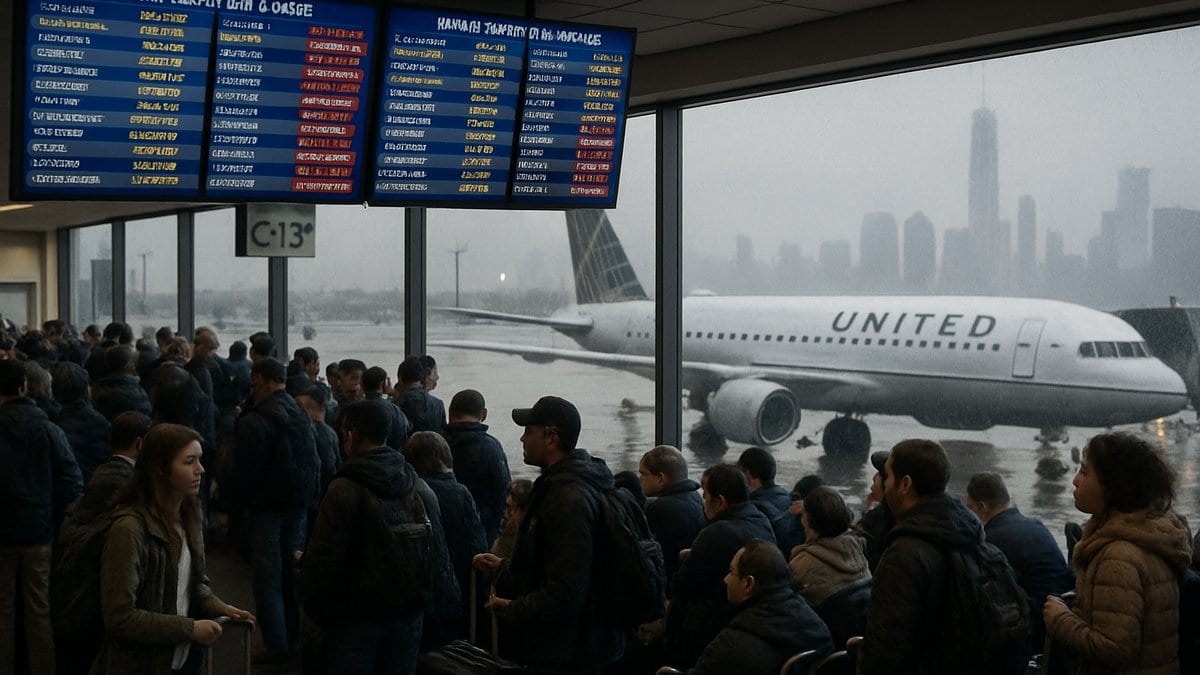
Image by Nomad Lawyer
Delays Dominate Operations at Key New York–Area Hub
Publicly available flight tracking data on April 1 indicates that Newark Liberty International Airport recorded 151 delayed departures and arrivals alongside 12 outright cancellations, placing the New Jersey hub among the more heavily disrupted airports in the United States for the day. The imbalance between delays and cancellations suggests airlines prioritized keeping most flights operating, even behind schedule, rather than pulling large numbers of services from the timetable.
Reports from aviation-focused outlets describe a delay-dominated pattern at Newark, with disruptions concentrated among large network carriers and low-cost operators. United Airlines, which maintains a major hub at Newark, appeared prominently in the day’s delay statistics, alongside Spirit Airlines, American Airlines, Delta Air Lines, JetBlue and British Airways. The knock-on impact reached a wide mix of domestic and transatlantic routes, magnifying the effect on passengers attempting to connect through the airport.
While delays at Newark are not unusual given its role as one of the primary gateways to the New York metropolitan area, the scale of the April 1 disruptions stands out against recent days in which the airport had seen fewer cancellations and more typical schedule variation. The volume of affected flights effectively turned routine travel days into extended, uncertain journeys for many passengers.
Ripple Effects Stretch From Chicago to Toronto and the West Coast
Coverage from travel industry news sources indicates that the disruption at Newark sent shockwaves across a broad route map. Flights linking the New Jersey hub with Chicago, Toronto, San Francisco and Fort Lauderdale were among those reporting schedule issues, underlining how a single congested hub can quickly influence service reliability across North America.
Routes into and out of major Midwest and Great Lakes cities, including Chicago and Toronto, experienced cascades of delays as aircraft and crews arrived late from Newark and other affected airports. In the case of longer-haul services to the U.S. West Coast, such as San Francisco, even modest upstream delays translated into significant schedule slippage by the time aircraft completed cross-country sectors.
Shorter segments to leisure-heavy destinations like Fort Lauderdale also reported disruption, complicating travel plans at the tail end of the spring break period. For many travelers, missed connections at Newark forced same-day rebooking, overnight stays or re-routing through alternative hubs, further straining airline customer service operations already working near capacity.
Recent Operational Strains Shape the Context at Newark
The latest wave of delays comes against a backdrop of continued operational challenges at Newark Liberty. In March, the airport experienced a temporary halt to arrivals and departures after air traffic controllers evacuated the control tower due to a reported burning smell in an elevator, according to broadcast and wire service coverage. Although that incident was short-lived, it drew renewed attention to the sensitivity of the airport’s operations to even brief interruptions.
Federal aviation documents and policy notices have also highlighted Newark’s long-standing congestion issues. Regulatory material made public over the past year describes the airport as one of the country’s more delay-prone facilities and details measures to limit scheduled operations in an effort to keep traffic at levels the system can reliably handle. These slot-like limits, extended into 2026, are intended to ease bottlenecks created by a combination of heavy demand, constrained airspace, and staffing and technology pressures in the New York region.
Industry analysis circulated in recent months shows that Newark’s performance has improved at times following operational adjustments by major carriers, including schedule reductions and fleet changes. However, the April 1 data illustrates that even with these measures in place, the margin for error remains narrow when weather, air traffic control constraints or other stresses converge on the airport’s tightly packed timetable.
Passenger Experience Marked by Long Waits and Missed Connections
For travelers on the ground, the statistical picture translated into hours spent in terminal queues, on tarmacs and in crowded gate areas. Accounts collected in public forums and social media point to long lines at rebooking counters and customer service desks as passengers attempted to salvage itineraries disrupted by rolling delays. Some travelers described being held on aircraft awaiting takeoff slots or gate availability as congestion built up on the airfield.
The predominance of delays over cancellations can be a mixed outcome for passengers. While a delayed flight preserves the chance of same-day arrival, extended and repeated hold times can prove more exhausting than a clear-cut cancellation that triggers rebooking. Families traveling with children, business travelers with tightly scheduled meetings and international passengers relying on onward connections all appeared particularly exposed to the schedule instability.
Published guidance from travel experts frequently recommends that passengers through Newark allow generous connection times and monitor flight status closely, especially on days with adverse weather or known air traffic constraints. The events of April 1 are likely to reinforce that advice, underscoring how quickly operations at the hub can shift from relatively smooth to severely congested when pressure builds on the system.
What the Disruptions Signal for Spring and Summer Travel
The scale of delays and cancellations at Newark Liberty on April 1 arrives just as airlines and regulators prepare for the peak spring and summer travel season. Aviation data released in recent months suggests that U.S. carriers have been working to fine-tune schedules and adjust capacity in the New York area in response to ongoing constraints on airspace and air traffic control resources.
Policy materials from federal transportation agencies indicate that limits on scheduled operations at Newark are set to remain in place through at least the 2026 travel seasons in an effort to moderate congestion. Industry watchers note that while such restrictions can reduce extreme gridlock, they also reflect a system operating near the edge of what current infrastructure and staffing levels can reliably sustain during busy periods.
The latest disruptions may prompt renewed scrutiny of how airlines allocate flights across the three major New York–area airports and how quickly they can recover from localized shocks such as thunderstorms, equipment outages or staffing issues. For passengers, the lesson from Newark’s 151 delays and 12 cancellations is likely to be a practical one: build flexibility into itineraries, consider earlier departures where possible, and prepare for the possibility that even a clear departure board in the morning can shift rapidly by midday at one of the country’s busiest and most complex hubs.