

More news on this day
Hundreds of flights at Newark Liberty International Airport were canceled or severely delayed this week as powerful storms and ongoing operational strains converged at one of the nation’s busiest hubs, disrupting travel plans for thousands of passengers at the height of the spring break rush.
Get the latest news straight to your inbox!
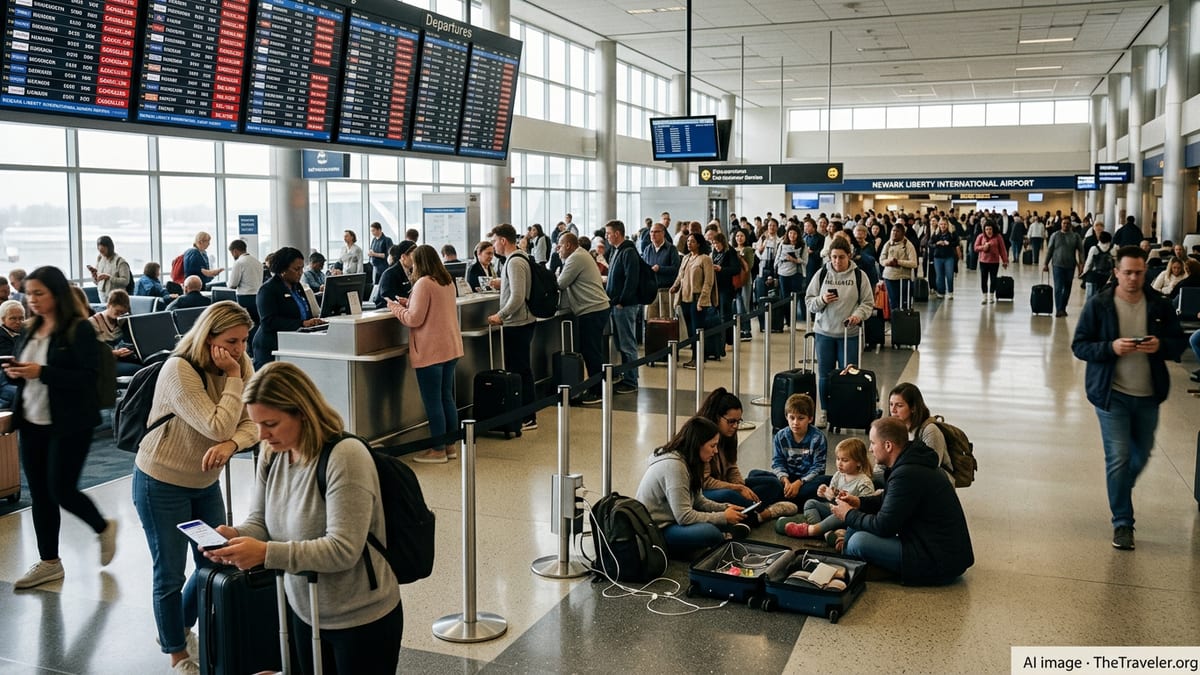
Storms, Shutdown and Spring Break Collide Over Newark
Newark Liberty has been one of the hardest hit airports in a broader disruption across the eastern United States after a potent storm system swept from the Midwest toward the Atlantic coast on March 16 and 17. Publicly available flight-tracking data shows that thousands of flights nationwide were canceled or delayed as snow, high winds and thunderstorms pushed through major aviation corridors, including the New York metropolitan area.
Reports indicate that the latest wave of cancellations is unfolding during an already tense period for air travel. A partial federal government shutdown that began in mid-February has strained staffing at airport security checkpoints, leading to longer lines and slower processing at many large airports. Newark’s heavy load of connecting traffic, combined with peak-season demand from spring break travelers and fans heading to NCAA basketball tournament games, has magnified the impact.
Within this national picture, Newark’s role as a major hub means even modest weather or staffing shocks can ripple far beyond New Jersey. When storms or traffic management programs constrict arrival and departure rates over the region, Newark-based aircraft and crews often fall out of position, triggering knock-on cancellations across the domestic and transatlantic network.
How Many Flights Are Affected and Where
According to published coverage of the disruptions, more than 750 flights into, out of or within the United States were canceled by early Tuesday, with roughly 1,300 delayed, in the wake of Monday’s severe weather. Newark Liberty ranks among the top airports affected, alongside major hubs in New York, Chicago and Atlanta, reflecting its dense schedule and exposure to East Coast storm tracks.
At Newark, the pattern of cancellations is hitting both short-haul and long-haul routes. Regional flights to nearby cities such as Boston, Washington and Toronto are particularly vulnerable when thunderstorms and low clouds trigger air-traffic control programs that limit arrivals. These shorter routes often see same-day schedule thinning to free up slots and keep a reduced number of flights moving.
Longer domestic and international routes are not immune. Newark’s role as a key transatlantic gateway means that equipment and crew imbalances can force airlines to scrub some departures to Europe and beyond when recovery windows shrink. Publicly available airline operations data and prior disruption patterns suggest that carriers tend to protect a core set of long-haul flights while trimming others, which can explain why some passengers find their specific departure canceled even when other international services still operate.
Why Newark Is So Prone to Meltdowns
Travelers familiar with Newark often describe the airport as fragile during periods of stress, and several structural factors help explain why. The facility operates in a tightly constrained airspace shared with New York’s other major airports, and published Federal Aviation Administration information shows that regulators have imposed limits on arrivals and departures through late 2026 to curb chronic congestion.
Runway and infrastructure projects in recent years have further reduced operational slack at key times. Construction on one of Newark’s main runways and associated taxiways has required adjusted traffic flows and, at times, lower arrival rates. Even as those projects progress, the combination of restricted runway capacity and a busy banked schedule leaves little room to absorb unexpected weather or traffic-control restrictions.
Airlines centered at Newark have already taken steps to cut back some flying in response to these constraints. Public communications from major carriers show reductions of dozens of roundtrip flights per day from recent peak schedules, framed as attempts to build more reliability into operations. Yet as the latest storm-driven meltdown illustrates, even trimmed schedules can unravel quickly when multiple stressors converge.
What Passengers Are Experiencing on the Ground
For travelers passing through Newark this week, the operational story translates into crowded terminals, long rebooking lines and uncertain arrival times. Social media posts and traveler forums describe passengers sleeping near gates, scrambling to secure scarce hotel rooms and hustling to alternative airports in New York and Philadelphia when Newark options evaporate.
Airlines have activated flexible travel waivers for affected dates that allow many passengers to change flights without additional fees. Publicly available advisories indicate that customers booked to or from Newark on March 16 and 17 can often move their trips within a several-day window, subject to seat availability and carrier-specific rules. Those who booked through online travel agencies may face extra steps to process changes.
Travelers whose flights fall on the growing cancellation lists are typically being rebooked automatically on the next available departure, but high demand means some replacement itineraries depart a day or more later than originally planned. For passengers with tight connections, especially on international journeys, a single cancellation or multi-hour delay at Newark can cause missed onward flights and complicated re-routing across multiple carriers.
How to Check If Your Newark Flight Is Affected
With schedules shifting rapidly, the most important step for passengers is to verify their flight status repeatedly before heading to the airport. Airlines frequently adjust operations hour by hour as weather bands move, air-traffic control programs change and crews reach duty limits, so a flight that appeared on time in the morning can slip into delay or cancellation later in the day.
Publicly available guidance from airlines and travel agencies consistently recommends checking flight status directly with the operating carrier, either through mobile apps, customer-service channels or airport departure boards. These sources are typically updated more quickly than printed itineraries or third-party confirmation emails.
For passengers already holding tickets to or from Newark over the next several days, monitoring travel alerts and waiver policies is also important. Many carriers allow proactive changes when a formal waiver is in place, meaning travelers can shift to earlier or later flights or, in some cases, to nearby airports such as New York’s JFK or LaGuardia without extra penalties.
Even for those whose flights remain scheduled, planning for longer lines at security and check-in is advisable while the government shutdown continues to affect screening resources and while airlines work through aircraft and crew backlogs. For now, the Newark travel meltdown serves as another reminder of how quickly conditions can deteriorate at a tightly scheduled hub when weather and system constraints collide.