

More news on this day
The City of Newcastle in New South Wales has introduced a new online City Insights tool designed to give tourism operators, local businesses and investors easy access to real-time data on how the city is changing, in a bid to support visitor growth and strengthen the local economy.
Get the latest news straight to your inbox!
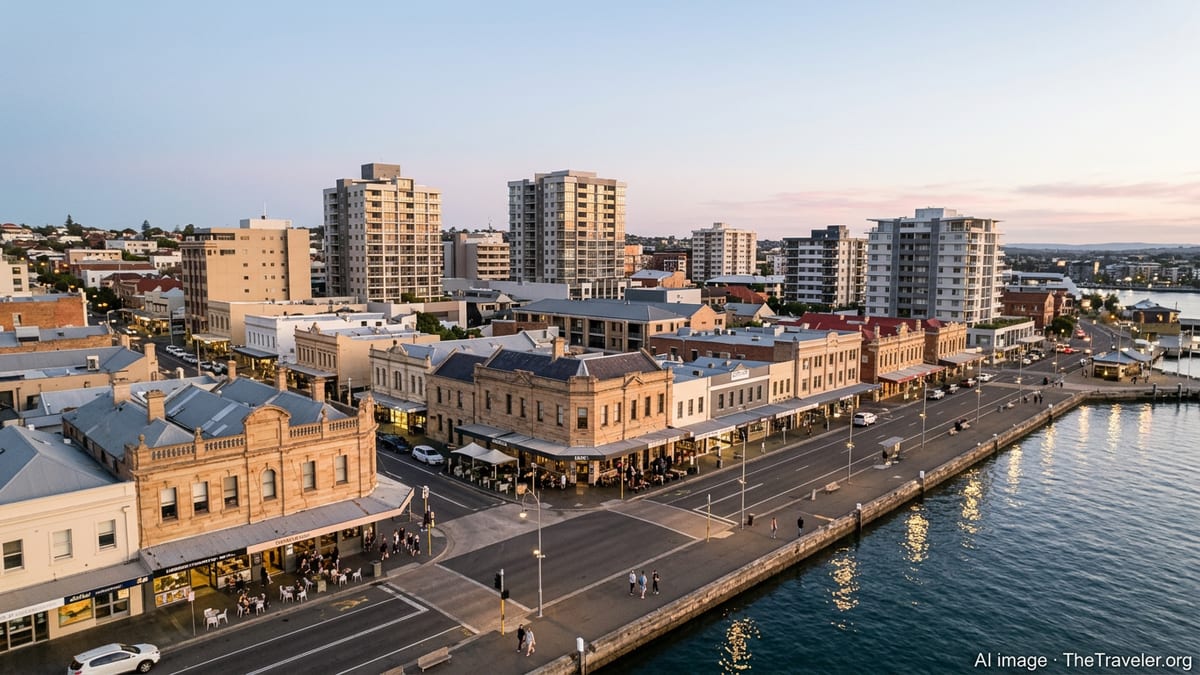
Free data platform aims to make city trends easier to read
Publicly available information shows that the City Insights platform is a free online tool built to bring together a wide range of local indicators, including population change, business activity, development trends and economic performance. The web-based dashboard is intended to help users quickly understand how Newcastle is growing, where investment is occurring and how different neighbourhoods are evolving over time.
According to recent regional investment materials, the tool has been created by the City of Newcastle as part of its broader push to position the metropolitan area as a modern, smart city within the Hunter region. It is framed as a practical resource for decision makers who need “real insight” into local conditions, from small business owners and tourism operators through to prospective investors assessing where to open or expand operations.
Reports indicate that the platform is structured to be accessible to users without specialist data skills. Visual charts, maps and summary indicators are used to present information that would traditionally sit across multiple government reports, allowing users to move between high-level trends and finer-grain suburb profiles within a single interface.
Local economic development commentary notes that tools of this type are increasingly seen as core infrastructure for cities seeking to compete for visitors, students and business investment. By releasing City Insights as a free public resource, Newcastle is aligning with this shift while signalling that data transparency is central to its development strategy.
Support for tourism operators and visitor economy growth
Destination planning documents for Newcastle highlight the visitor economy as one of the city’s key growth sectors, with particular emphasis on coastal tourism, events, culture and the night-time economy. The launch of the City Insights tool is being presented as a practical step to help tourism businesses understand patterns such as visitor concentrations, accommodation capacity and new development that may influence demand.
Publicly available material on Newcastle’s tourism strategy shows that the city has been working to diversify beyond its industrial heritage toward a more creative and experience-led offer. Recent years have seen continued investment in waterfront renewal, cultural infrastructure and major events, each contributing to an increase in domestic visitors and associated spending. Access to clearer data on city performance is expected to help operators refine their products and target markets more effectively.
Industry analysis suggests that the ability to track indicators such as retail performance, hospitality openings, public space upgrades and transport links can be particularly valuable for smaller tourism businesses. A single dashboard that combines these elements gives operators a clearer picture of where visitors are likely to spend time, which precincts are strengthening, and where there may be opportunities for new tours, attractions or accommodation offerings.
Regional tourism commentaries have also pointed to the role of data tools in supporting more sustainable growth. By identifying pressure points and spreading awareness of lesser-known areas, planners and businesses can encourage visitors to explore beyond traditional hotspots, easing congestion while broadening the economic benefits of tourism across the wider city.
Helping local retailers and hospitality venues respond to change
Economic development reports for Newcastle indicate that the city’s retail and hospitality sectors have been undergoing a period of adjustment, shaped by the recovery from the pandemic, changing consumer behaviour and new residential developments in and around the central business district. Against this backdrop, the City Insights tool is being positioned as a way for venue owners and retailers to better understand evolving patterns of activity.
Business-facing commentary on the city’s data capabilities describes how the dashboard can bring together information on factors such as population density, spending, development approvals and business mix at a local level. For café operators, restaurant owners or independent retailers, this type of insight can support decisions about where to open new outlets, how to tailor trading hours and which precincts might benefit from collaborative marketing or events.
Several analyses of Newcastle’s city centre transformation note that data on vacancies, new shopfronts and residential projects has been critical for demonstrating the impact of recent revitalisation efforts. By making similar datasets available in a user-friendly format, the City Insights tool allows small business owners to see how their immediate surroundings are changing and to plan ahead for future shifts in footfall and customer demographics.
Commentary from regional investment agencies suggests that clear, locally specific data can also help landlords and property managers to better support a diverse tenant mix. When property owners understand the broader economic story of a street or precinct, they are more likely to back new concepts, pop-up uses and events that contribute to a lively visitor experience.
Data-driven backing for events, culture and the night-time economy
Newcastle’s strategic documents emphasise events, culture and the night-time economy as central pillars of its visitor proposition. The city has pursued a program of festivals and large-scale gatherings aimed at drawing visitors from across New South Wales and interstate, with economic impact assessments showing that such events can deliver significant short-term boosts for accommodation, hospitality and retail businesses.
Reports on Newcastle’s performance highlight the role of evidence-based planning in shaping this program, from tracking visitor numbers and spending to assessing the distribution of benefits across different neighbourhoods. The City Insights platform is expected to complement this work by making broader urban data more accessible, helping both council and private organisers to identify suitable locations, understand community profiles and plan supporting services.
Night-time economy guidance from the New South Wales government has previously cited Newcastle as a case study in using strategic planning to shift perceptions and improve safety after dark. By layering new data tools on top of that strategy, the city aims to keep refining how it balances entertainment, residential amenity and transport, with potential benefits for both residents and visitors.
Cultural sector observers note that data on demographics, venue locations and transport connections can help institutions and event producers design programming that speaks to local communities while remaining attractive to visitors. With City Insights offering a clearer view of where audiences live and how precincts are changing, cultural organisations may be better placed to plan outreach, schedule performances and coordinate with surrounding businesses.
Positioning Newcastle as a competitive smart city destination
Investment promotion material for the Hunter region increasingly presents Newcastle as a “smart” and connected city, pointing to its universities, technology companies and innovation precincts as evidence of long-term transformation. The introduction of City Insights sits alongside this narrative, adding a practical data resource that can be used by investors, start-ups and established firms considering the city as a base.
Regional economic profiles describe Newcastle as benefiting from comparatively low start-up costs, a collaborative business community and growing strength in sectors such as digital technology, health, energy and creative industries. For companies in these fields, the availability of granular local data can assist with site selection, workforce planning and future growth strategies, making the overall investment proposition more concrete.
Urban policy analysts often point to data platforms as a way for mid-sized cities to compete with larger capitals by offering clarity about their assets and future pipeline of projects. In Newcastle’s case, the City Insights tool gives potential investors and partners a structured overview of trends that might otherwise require extensive research across multiple sources, reducing friction for businesses considering expansion into the region.
As more destinations adopt similar approaches, observers note that the quality and usability of local data will play a growing role in how cities are perceived. With City Insights now available to the public, Newcastle is seeking to demonstrate that it can offer not only beaches, heritage and culture, but also the transparency and analytical tools that modern tourism operators and businesses expect when choosing where to commit their time, money and attention.