

More news on this day
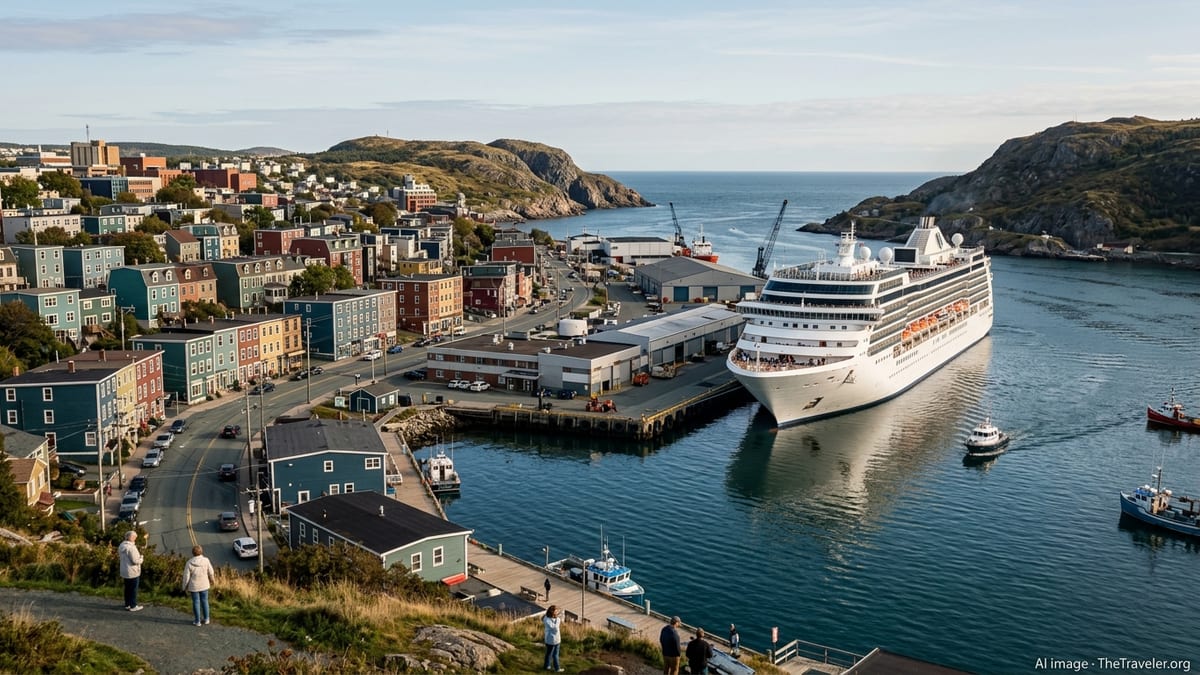
Newfoundland and Labrador is preparing for a busier cruise season in 2026, with published forecasts pointing to more ship calls, well over one hundred thousand passenger visits across the province, and a growing role for St. John’s as a marquee Atlantic Canada port of call.
Get the latest news straight to your inbox!
Momentum Builds After Record 2025 Season
Publicly available data on recent seasons indicate that Newfoundland and Labrador enters 2026 with considerable momentum. The province recorded its longest cruise season on record in 2025, stretching from mid-winter to late October, and hosting in excess of 100,000 cruise visitors across multiple ports. Industry coverage notes that this performance followed several years of post-pandemic recovery in Canadian cruising, with Atlantic ports collectively seeing sustained growth in ship calls and passenger volumes.
Provincial and regional tourism updates show that cruise tourism has become an important contributor to Newfoundland and Labrador’s visitor economy, complementing air and ferry arrivals. Studies published by industry associations describe cruise spending as a relatively small share of total tourism expenditure in the province, but one that delivers concentrated economic activity in port communities. The strong 2025 performance has set a higher baseline for 2026, with expectations that the province can consolidate its status as a distinctive northern and Canada New England destination.
Industry forecasts referenced by trade publications suggest that Newfoundland and Labrador’s cruise calendar for 2026 will benefit from advance bookings made during the recovery years. Cruise Newfoundland and Labrador has previously reported confirmed and prospective calls extending into 2026, 2027 and 2028, reflecting steady interest from major cruise brands in itineraries that include the province’s fjords, coastal communities and historic towns.
St. John’s Emerges as a Strategic Atlantic Gateway
St. John’s is expected to play a central role in the province’s 2026 cruise story. The capital already functions as both a turnaround and in-transit port, with the city’s published cruise schedules highlighting regular calls on transatlantic, Canada New England and expedition-style itineraries. In 2025, publicly available information from the city showed dozens of ship visits and a steady flow of passengers and crew between April and October, underscoring the harbour’s growing prominence among Atlantic Canada ports.
Looking ahead to 2026, the City of St. John’s cruise schedule lists a mix of large ocean vessels and smaller expedition ships calling at the port. The schedule includes ships on northbound and southbound repositioning cruises, Canada New England voyages that link Quebec, Prince Edward Island and Newfoundland, and adventure-focused sailings that use St. John’s as a gateway to more remote parts of the province and the North Atlantic. This breadth of itineraries is positioning the city as a flexible hub for cruise lines seeking variety beyond traditional coastal routes.
Trade press coverage has pointed to St. John’s strong 2025 performance, highlighting inaugural calls, overnight stays and a handful of turnarounds that bring added overnight demand for local accommodation and hospitality businesses. With those foundations in place, the 2026 season is being framed as an opportunity to deepen the city’s role as a marquee Atlantic Canada stop, while spreading cruise-related spending into neighbourhoods beyond the waterfront.
More Ships and Passengers Across the Province
While St. John’s is a focal point, forecasts for the 2026 cruise season indicate that growth is expected across multiple Newfoundland and Labrador ports. Corner Brook has reported consecutive record seasons in recent years, supported by a mix of large-capacity ships and smaller vessels. Local port releases for past seasons reference strong year-over-year gains in ship arrivals and passenger counts, along with efforts to lengthen the operating window into shoulder months. These trends suggest that Corner Brook is likely to remain a key beneficiary of the province’s rising cruise profile in 2026.
Other communities, including ports on the island’s east and south coasts, have also been working to attract or expand cruise calls. Industry summaries and feasibility studies published over the past two years describe new or returning ports welcoming niche expedition ships and smaller luxury vessels. These calls typically bring lower passenger counts than the largest ocean ships, but they often target higher-spending travellers interested in culture, nature and small-town experiences, helping to extend the benefits of cruise tourism beyond the largest centres.
Aggregated across all calling ports, current projections circulated in trade publications and regional tourism materials point to Newfoundland and Labrador hosting comfortably more than one hundred thousand cruise passengers in 2026. That figure would build on recent records while remaining manageable for infrastructure that has been scaled up gradually, allowing communities to refine crowd management, transportation and visitor services.
Economic Impact and Community Readiness
The economic footprint of cruise activity in Newfoundland and Labrador extends beyond direct passenger spending. Reports from national and international cruise industry bodies estimate that cruise calls in the province support local employment in port operations, ground transportation, retail, food and beverage, shore excursions and cultural attractions. A recent assessment of cruise tourism’s economic contribution to Canada indicated that Newfoundland and Labrador benefits from tens of millions of dollars in cruise-related expenditure, supporting hundreds of jobs across the province.
Community-level planning has become increasingly important as volumes grow. Local development organizations and municipalities have commissioned studies to better understand how cruise visitors move through their towns, where they spend money and what kinds of experiences they seek. Recent feasibility work for smaller ports in eastern Newfoundland, for example, has examined infrastructure requirements, environmental considerations and strategies to ensure that cruise tourism complements, rather than displaces, existing community life and traditional industries.
These efforts are unfolding alongside broader provincial tourism strategies that promote cultural authenticity, environmental stewardship and year-round visitation. By integrating cruise planning into those frameworks, Newfoundland and Labrador aims to ensure that the anticipated increase in ship calls and passengers in 2026 contributes to long-term, sustainable growth rather than short-lived spikes in traffic.
Outlook for 2026 and Beyond
Looking beyond the coming season, available booking information and commentary from cruise operators suggest that Newfoundland and Labrador’s appeal is unlikely to wane. The province’s mix of rugged coastline, iceberg and wildlife viewing opportunities, historic urban cores and French and Indigenous cultural experiences provides differentiation in a crowded global cruise market. As larger ships debut on North Atlantic and transatlantic routes in 2026 and 2027, itineraries that include St. John’s and other Newfoundland ports may gain further visibility among international travelers.
At the same time, the province’s ports are operating in a global context where questions about sustainability, emissions and the impact of cruise traffic on small communities are increasingly prominent. Canadian and provincial regulations, along with voluntary industry measures, are expected to shape how future growth unfolds, from shore power adoption and waste management to passenger dispersal strategies. Newfoundland and Labrador’s relatively early-stage but growing cruise sector may offer room to integrate such measures as volumes climb.
For 2026, the focus remains on consolidating the gains of recent record seasons, welcoming a diverse roster of ships and itineraries, and ensuring that well over one hundred thousand cruise visitors leave with a strong impression of the province. With St. John’s emerging as a key Atlantic gateway and a network of ports across the island and Labrador preparing for another busy year, Newfoundland and Labrador’s cruise tourism growth trajectory appears set to continue.