

Niagara Falls is one of those rare places that exceeds its reputation. Even with only one day, you can feel the thunder of the water beneath your feet, ride into the mist at the base of Horseshoe Falls, and still have time for quiet moments along the river. With a little planning and an early start, this one day itinerary will help you experience the best of both the American and Canadian sides of Niagara, without feeling rushed.
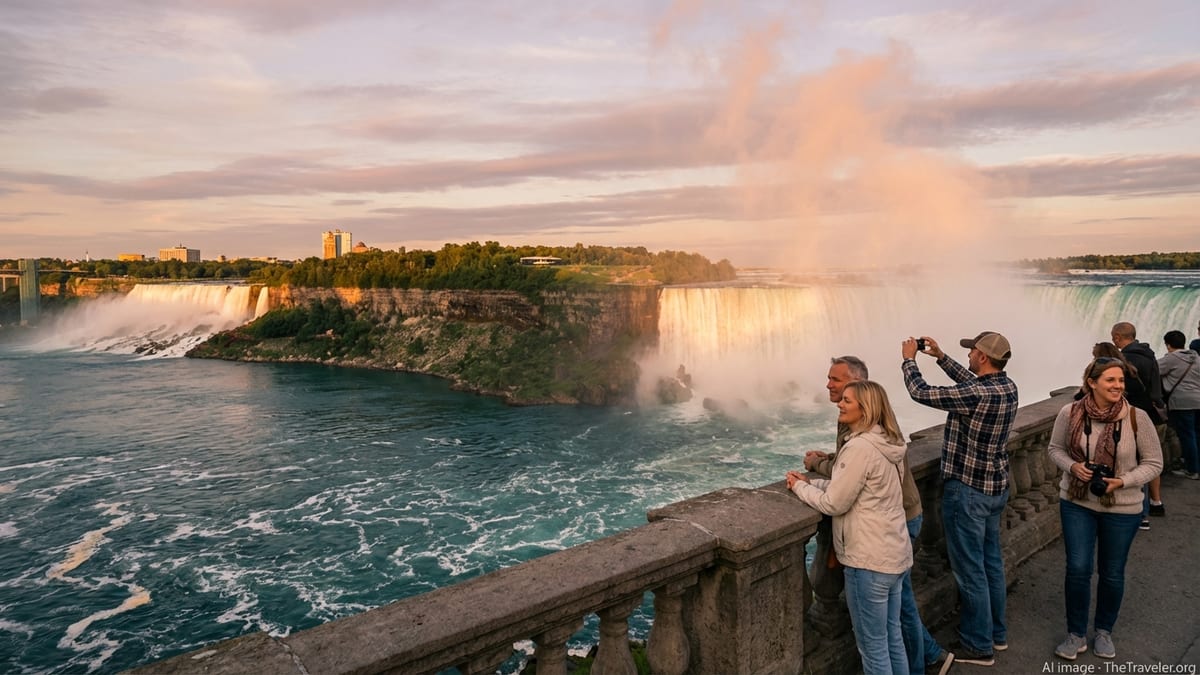
Planning Your One Perfect Day at Niagara Falls
Before you arrive, decide whether you will visit only one side of the border or both. The American side in New York offers intimate, close-up viewpoints inside Niagara Falls State Park, while the Canadian side in Ontario delivers the classic wide panoramas of all three falls at once. If you hold a valid passport and can cross the border, combining both sides in a single day will give you the most complete experience. If not, you can still have a full and satisfying day focusing on one side.
Timing matters. Crowds are lighter early in the morning and again later in the evening, especially outside the height of summer. Arriving by 8:00 a.m. helps you get into popular attractions like the boat tours before lineups build. Boat excursions typically operate from spring through late fall, with reduced hours in the shoulder seasons. Winter can be beautiful but icy, with some experiences operating on limited schedules, so check current opening times in advance.
Transportation is straightforward. On the American side, most key viewpoints sit within pedestrian-friendly Niagara Falls State Park, and a paid trolley service loops between main stops in season. On the Canadian side, you can walk the promenade along the Niagara Parkway, use a local shuttle that connects major attractions in peak periods, or rely on rideshares and taxis. Parking fills quickly close to the falls in high season, so consider using one central lot and walking between viewpoints wherever possible.
Finally, think about your comfort. The mist from the falls can leave you damp even on a sunny day, and the boat decks are regularly soaked. Quick-drying layers, a light waterproof shell, comfortable walking shoes with good grip, and a small daypack for your camera and essentials will make the day far more enjoyable. Disposable ponchos are often provided at key attractions, but having your own lightweight rain layer is wise.
Morning on the American Side: First Views and Into the Mist
Start your day on the American side at Niagara Falls State Park, the oldest state park in the United States. An early walk out toward Prospect Point lets you hear the deep rumble of the American Falls before you even see them. As the sun rises, the mist often glows with soft color and there are fewer people vying for the railings. Taking a few quiet minutes here sets the tone for the rest of the day and gives you your first sweeping view down the gorge.
From Prospect Point, make your way to the Niagara Falls Observation Tower. Projecting out over the river, this platform provides one of the best panoramic views on the U.S. side, with the American and Bridal Veil Falls directly in front of you and Horseshoe Falls curving in the distance. On clear mornings you can see rainbows arcing through the spray. It is an ideal spot for wide-angle photographs and for orienting yourself to the geography of the falls and the opposite Canadian skyline.
Take the elevator from the base of the Observation Tower down to the boarding area for the classic boat cruise on the river. On the U.S. side, the Maid of the Mist has been carrying visitors into the spray for generations. The short voyage takes you past the American and Bridal Veil Falls and then deep into the basin beneath Horseshoe Falls, where the sound becomes a roar and the mist can be as heavy as rain. You will be given a poncho, but assume that shoes and the lower part of your clothing may still get wet, especially if you stand on the open deck.
After you return to the dock, follow the pathways back up into the park or take the elevator to the Observation Tower again. If you have the energy and the conditions are dry enough, consider walking to Goat Island, which separates the American Falls from Horseshoe Falls. Trails and viewpoints here allow you to peer right over the edge of the cascades, looking down into the churning white water. Plan to wrap up your American side explorations by late morning so you have ample time for lunch and border crossing formalities.
Midday Transition: Crossing the Border and Finding Lunch
Late morning is a natural time to head toward the Rainbow Bridge, the main crossing between Niagara Falls, New York and Niagara Falls, Ontario. If you are driving, follow signs for the bridge and keep identification and any required documents at hand. If you are on foot, there is a pedestrian walkway with sweeping views over the gorge. Walking the bridge can be a memorable part of the day in itself, giving you one more vantage point of the river, the American Falls, and the skyline of the Canadian side.
Border wait times vary by season and day of the week. Weekends and holiday periods generally see heavier traffic, while weekday late mornings can be somewhat quieter. Build at least 30 to 60 minutes into your itinerary for crossing in each direction if you plan to return the same day. Travelers who are not able to cross can instead use this midday slot for a relaxed sit-down lunch on the American side or an extra viewpoint such as Luna Island before continuing their afternoon with additional state park attractions.
Once you reach the Canadian side, make your way toward the main promenade along the Niagara Parkway. This is where you will find many of the classic postcard views of the falls. Before diving back into sightseeing, pause for lunch. Options range from simple takeaway counters with views of the river to full-service restaurants in hotels and towers. For a one-day visit, it often makes sense to choose something casual but scenic, allowing you to keep one eye on the falls as you eat while still conserving time for afternoon activities.
After lunch, take a short stroll along the promenade to re-energize. The contrast between the manicured gardens of Queen Victoria Park and the raw power of the water below is striking. Flower beds and mature trees frame viewpoints along the edge of the gorge, and in spring and summer the lawns fill with visitors picnicking and taking photos. Even if your focus is the major attractions, give yourself a few unhurried minutes here to simply watch the constant movement of water and mist.
Afternoon on the Canadian Side: Up Close and Panoramic
The Canadian side offers some of the closest ground-level views of Horseshoe Falls. A popular first stop in the afternoon is the boat tour that departs from the base of the gorge on the Ontario side. The experience is broadly similar to the U.S. boat ride, bringing you into the same swirling basin, but approaching from the Canadian docks gives a slightly different angle on the curve of the falls. If you took a boat earlier in the day on the American side and are short on time, you might choose instead to focus on land-based experiences here.
One of the most distinctive Canadian attractions is the tunnel network and viewing platforms that take you behind and beside Horseshoe Falls. After an elevator descent, you walk through rock-cut passages to observation points where sheets of water thunder past just a short distance away. Outside platforms along the cliff offer a low, side-on view of the curtain of water. This is another situation where the spray can be intense, so use the provided protective gear and consider a waterproof case for your phone or camera.
Back up at street level, follow the Niagara Parkway promenade to a series of lookout spots. As you move farther downstream, your vantage point widens, revealing more of the curve of Horseshoe Falls and the full profile of the American and Bridal Veil Falls across the river. Benches line the walkway, and informal stone walls act as popular perches for photos. This stretch can be busy in peak months but it is also where some of the most iconic panoramas can be found, especially when the midday haze begins to clear in the later afternoon light.
For an elevated perspective, consider a visit to one of the tall observation towers on the Canadian side. From high above the river, you see the falls set into the larger landscape: the upstream river, the mist clouds rising from the gorge, the grid of streets, and on a clear day, glimpses of the distant horizon. It is a striking reminder of how the natural and built environments meet here, and a strong complement to the close-range experience you had in the morning.
Late Afternoon Detours: Nature, History, and Quiet Corners
By mid to late afternoon, crowds around the main viewpoints are at their peak. This is a good time to explore a little farther along the river where the pace slows and you can catch your breath. A scenic walk or short drive north along the Niagara Parkway brings you to a series of lookouts over the Whirlpool Rapids and the dramatic bend of the gorge. The turquoise water here churns through narrow rock walls, creating standing waves and swirling currents that are impressive in their own right.
If you prefer to stay closer to the main falls area, wander more deeply into Queen Victoria Park. Away from the edge of the gorge, the mood becomes calmer, with tree-shaded paths, ornamental plantings, and quieter lawns. Seasonal flower displays are a highlight, especially in late spring and early summer. The park is also dotted with monuments and viewpoints that hint at the long history of tourism around Niagara, from early pleasure gardens to the modern park commission that manages the riverfront today.
Travelers interested in history can seek out interpretive panels and small museums on both sides of the border that explain how Niagara Falls shaped regional development. The harnessing of hydropower here influenced industry and settlement throughout the Great Lakes region. Understanding that story adds depth to what you are seeing: not just scenic cascades, but a landscape that has been central to engineering, conservation, and cross-border cooperation for over a century.
This part of the day is also useful for practical errands. Pick up any souvenirs you want to bring home, recharge your phone or camera batteries, refill water bottles, and change into dry layers if the mist soaked through earlier. If you plan to stay out for the nightly illumination and any seasonal light shows or fireworks, a short rest now will help you enjoy the evening more fully.
Evening: Illuminations, Fireworks, and Final Views
As daylight fades, the atmosphere around Niagara Falls shifts. Day-trippers begin to leave, and the focus moves from natural light to the vivid nightly illuminations that bathe the waterfalls in color. On most evenings throughout the year, powerful projectors light the American and Horseshoe Falls after dark, cycling through palettes of blues, purples, reds, and whites. The play of colored light on the moving water gives the falls a different character than in daytime, more theatrical but still undeniably beautiful.
On selected nights, seasonal fireworks displays add another layer to the spectacle. When scheduled, these short shows are typically timed for after twilight, lasting just long enough to capture attention without dominating the evening. If fireworks are important to your plans, confirm current schedules shortly before your trip, as they vary by season, weather, and special events. Even without fireworks, lingering along the railings or finding a quieter bench slightly away from the main clusters of onlookers can be a memorable way to end your day.
For your final views, choose one last favorite vantage point. Some visitors like to return to the same spot they began at, comparing the scene in the soft light of morning with its nighttime counterpart. Others prefer to shift perspective, perhaps watching from farther downstream where you can see the glowing mist rising above the dark silhouette of the gorge. Take a few unhurried minutes to listen to the constant roar and feel the cool air drifting off the river.
When you are ready to leave, build in time for the practicalities of returning across the border if necessary, collecting your car, and navigating back to your accommodation. Night driving around the falls area is straightforward but can be busy directly after fireworks or during peak summer weekends. If your schedule allows, spending the night nearby and waking up to a second, more relaxed morning at the falls can be a rewarding extension, but even if this was a quick trip, one full day is enough to leave a strong impression.
The Takeaway
Spending one perfect day at Niagara Falls is all about balance. You want to feel the raw physical power of the water at close range, but you also want to step back and appreciate the broader landscape of the gorge, the river, and the cross-border twin cities that grew up around this natural wonder. By dividing your time between ground-level experiences, panoramic viewpoints, and quieter interludes in parks and along the river, you can create a day that feels full yet not frantic.
The keys are an early start, realistic expectations, and a bit of flexibility. Lines, weather, and border waits can all change your timing, so it helps to think in broad blocks of morning, midday, afternoon, and evening rather than minute-by-minute schedules. Have a few must-do experiences in mind, such as a boat ride into the mist or a behind-the-falls walk, and then allow the rest of the day to unfold around them.
Whether you come for the classic views, the engineering history, or simply to feel very small next to an immense force of nature, Niagara Falls rewards both first-time visitors and those returning after many years. In a single well-planned day, you can collect a set of vivid memories: the sound of the river before sunrise, the shock of cold spray on your face, the shifting colors of the illuminated water after dark. Those sensations are what stay with you long after the itinerary has faded.
FAQ
Q1. Is it realistic to see both the American and Canadian sides of Niagara Falls in one day?
Yes, it is possible if you start early, travel light, and factor in border crossing times, but you will need to prioritize a few key attractions on each side.
Q2. Do I need a passport to cross between the U.S. and Canadian sides?
Yes, most visitors require a valid passport or equivalent approved document to cross the border, whether by car or on foot. Check current entry rules before you travel.
Q3. Which side of Niagara Falls is better for views?
The American side offers very close, immersive viewpoints at the edge of the falls, while the Canadian side provides broader panoramas. Many travelers enjoy both for a complete experience.
Q4. What is the best time of year for a one day visit?
Late spring through early fall offers the widest range of open attractions and generally pleasant weather. Winter can be beautiful but some experiences may operate on reduced schedules.
Q5. How early should I arrive to avoid the biggest crowds?
Arriving around 8:00 a.m. or earlier typically helps you enjoy main viewpoints and boat tours with fewer people, especially on weekends and during school holidays.
Q6. Will I get wet on the boat tours and behind the falls experiences?
Yes, expect to get at least partially wet from mist and spray despite provided ponchos. Quick-drying clothing and waterproof protection for electronics are recommended.
Q7. Is one day enough for travelers with children or older adults?
Yes, but plan a slower pace, use shuttles where available, and choose a few highlights rather than trying to do everything. Built-in rest breaks make the day more enjoyable.
Q8. Can I visit without a car?
Yes, both sides of the falls are walkable near the main viewpoints, and seasonal shuttles or local transit connect many attractions. Taxis and rideshares are also widely available.
Q9. Are there good food options near the falls for a quick lunch?
Yes, you will find cafes, takeaway counters, and casual restaurants within walking distance of the main promenades, many with partial or full views of the river and falls.
Q10. Is it worth staying for the nighttime illumination if I only have one day?
For many visitors, the colored lights and occasional fireworks are a highlight. If your schedule allows, staying until after dark adds a memorable final chapter to your day.