

More news on this day
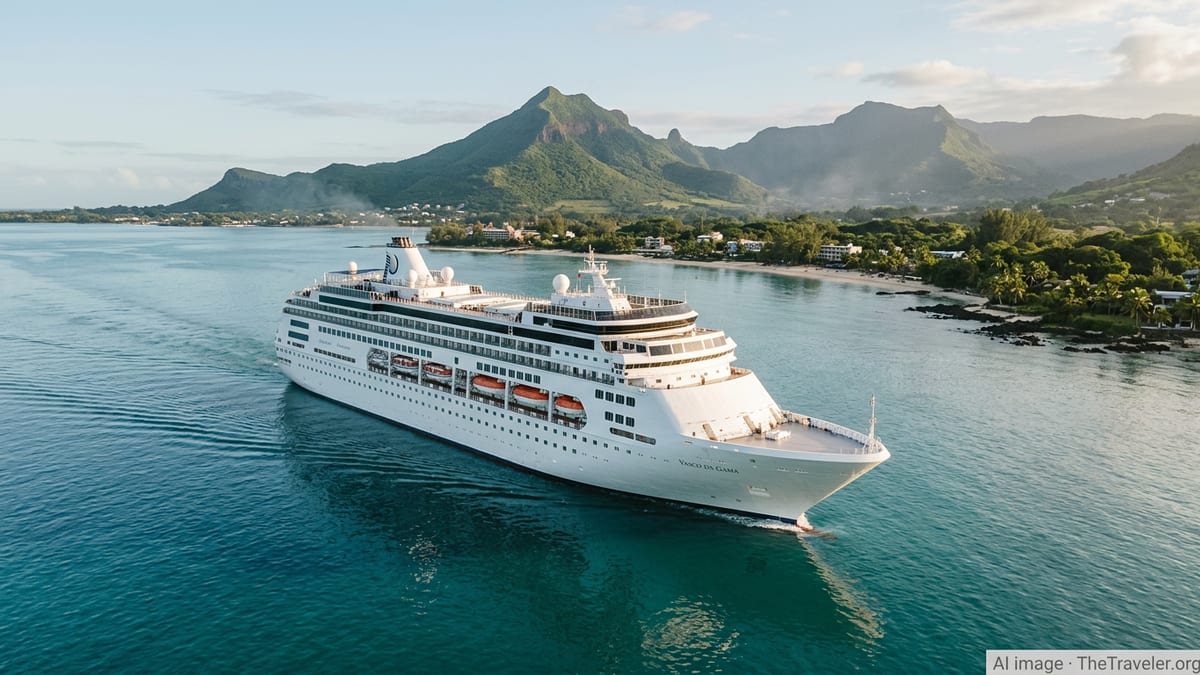
Nicko Cruises has adjusted the itinerary of its 2025–2026 Vasco da Gama world cruise in response to escalating conflict in the Middle East, rerouting the ship to end in Mauritius and prompting wider questions about the line’s ambitions for global cruise tourism growth.
Get the latest news straight to your inbox!
World Cruise Itinerary Diverted Away From the Middle East
According to recent industry coverage, Nicko Cruises has chosen to steer the Vasco da Gama away from calls in the Middle East on the current 2025–2026 world voyage, citing security risks along traditional routes through the region. Instead of continuing toward the Arabian Gulf, the ship is now being routed from the Indian Ocean to conclude the affected segment in Mauritius, a move that avoids transiting the Red Sea and nearby conflict areas.
The decision follows a period of heightened tensions involving Iran and neighboring states, with ripple effects across key maritime corridors used by cruise and cargo operators. Publicly available information on the revised routing indicates that the complex world-cruise schedule, initially designed to showcase a blend of Europe, the Indian Ocean and the Middle East, is being reshaped to prioritize safe and reliable port calls.
For guests already on board, the change replaces a high-profile sequence of Middle Eastern destinations with an extended focus on the Indian Ocean and the waters surrounding Mauritius. While many travelers may welcome the added time in tropical waters, others lose the chance to visit Gulf ports that were a central draw of the original marketing for the voyage.
Reports also indicate that onward segments that had depended on a Gulf or eastern Mediterranean turnaround have been adjusted or canceled, underscoring the knock-on effects when a single regional flashpoint disrupts long-haul itineraries planned years in advance.
Operational Challenges of a Late-Stage Route Change
Adjusting a world cruise once it is already underway presents substantial logistical challenges. Cruise lines must renegotiate port slots, pilotage and berthing in alternative destinations, while coordinating fuel, provisions and crew rotations along a modified route. In this case, shifting to an end point in Mauritius requires replanning the Vasco da Gama’s onward path around Africa, adding distance and altering timings across multiple legs.
Travel industry analyses note that such changes also affect contracted shore-excursion providers, local tour operators and port authorities, many of whom rely on forecast cruise calls for staffing and inventory. When a call is dropped or replaced, those partners can lose significant seasonal income, particularly in smaller ports where a single mid-sized ship like Vasco da Gama represents a meaningful share of visitor numbers.
For Nicko Cruises, the reroute demands rapid adjustments to guest communications, onboard programming and air arrangements. Passengers who were due to embark or disembark in Middle Eastern ports must now be rebooked through hubs that connect with Mauritius or later African and European ports. This can add complexity and cost for both the cruise line and its customers, although many travelers accept that geopolitical risks are an inherent uncertainty of long-distance itineraries.
Insurance, regulatory compliance and risk assessments also come into sharper focus. Cruise operators must demonstrate that they are actively monitoring regional developments and modifying itineraries when necessary, which can help limit exposure while still preserving the core world-cruise experience.
Impact on Cruise Tourism Growth Strategies
The Vasco da Gama adjustment illustrates how quickly growth strategies built around emerging cruise destinations can be tested by instability. In recent years, Nicko Cruises has positioned its sole ocean-going ship as a way to expand beyond its river-cruise base, with world voyages marketed as a showcase of global itineraries, including the Middle East and Red Sea region.
By diverting away from the Gulf and ending the relevant segment in Mauritius, the company temporarily reduces its presence in a region that has been promoted across the industry as a growth market for winter sun cruises and cultural itineraries. Analysts note that repeated disruptions can make it harder for smaller or mid-sized brands to sustain momentum in new markets, especially when larger global competitors can redeploy fleets more easily.
However, the decision may also highlight a strategic pivot back toward destinations viewed as more stable in the medium term, such as Indian Ocean islands, southern Africa and classic European routes. Publicly available brochures for upcoming seasons already emphasize the appeal of itineraries featuring remote islands, African coastal cities and Atlantic crossings, suggesting a diversification of long-haul offerings rather than reliance on a single high-risk region.
For tourism stakeholders in the Middle East, the Vasco da Gama change is another signal that cruise demand remains sensitive to security perceptions. While infrastructure investments in new terminals and shore experiences continue, attracting consistent deployments from European lines may depend on a sustained improvement in the regional security outlook.
Opportunities for Mauritius and Indian Ocean Destinations
The revised itinerary creates new opportunities for Mauritius and neighboring Indian Ocean destinations to capture additional cruise spending. As the voyage now concludes in Mauritius instead of a Gulf port, guests are likely to spend more time and money on hotels, local transportation and post-cruise tours on the island, supporting its broader tourism economy.
Regional observers point out that Mauritius has been steadily building its profile as a boutique cruise hub, complemented by its well-established air links, beach resorts and nature-based attractions. Hosting a symbolic world-cruise segment finale from a European brand reinforces that positioning and may encourage other operators to consider alternative routings that use the island as a gateway between the Indian Ocean and Africa.
Beyond Mauritius, ports across the southwest Indian Ocean could also benefit if rerouted ships seek new calls in places perceived as safe and logistically feasible. Additional overnight stays and sea days in relatively calm waters may appeal to guests who value relaxed, resort-style cruising as much as marquee city visits.
For Nicko Cruises, positive feedback on Indian Ocean segments could inform future world-cruise design, potentially anchoring more itineraries in this region even after tensions in the Middle East ease. That could gradually rebalance the company’s global deployment, with a stronger emphasis on island and coastal experiences that align with its smaller-ship profile.
Passenger Experience and Industry-Wide Implications
For passengers, the abrupt loss of long-anticipated Middle East ports can be disappointing, especially for those who chose the world cruise specifically for its Gulf and Red Sea highlights. Yet many seasoned cruisers recognize that safety considerations can override published schedules, and that itineraries are often marketed with provisions for change.
Reports from similar itinerary shifts across the cruise sector suggest that how a company manages expectations and offers alternatives plays a crucial role in guest satisfaction. Extended time in attractive substitute destinations, added onboard programming and flexible options for future bookings can help offset frustration over missed ports.
Industry observers see the Vasco da Gama reroute as part of a broader pattern in which operators build more contingency planning into world-cruise design. Alternative routings around Africa, expanded use of Indian Ocean islands and more conservative Red Sea deployment are increasingly discussed as practical responses to geopolitical volatility along traditional routes between Europe and Asia.
The situation underscores the fine balance cruise lines must strike between ambitious global itineraries and the need to protect guests, crews and long-term brand reputation. For Nicko Cruises, the decision to end the affected segment in Mauritius instead of the Middle East may curb short-term growth in a high-profile region, but it also reflects an adaptive strategy that could shape the future geography of its world cruises.