

More news on this day
Nicko Cruises is reshaping its upcoming Vasco da Gama world voyage by steering clear of the conflict-affected Middle East and repositioning the ship via Africa instead, reflecting a wider industry shift away from the Red Sea and Suez Canal as security concerns and insurance costs rise.
Get the latest news straight to your inbox!
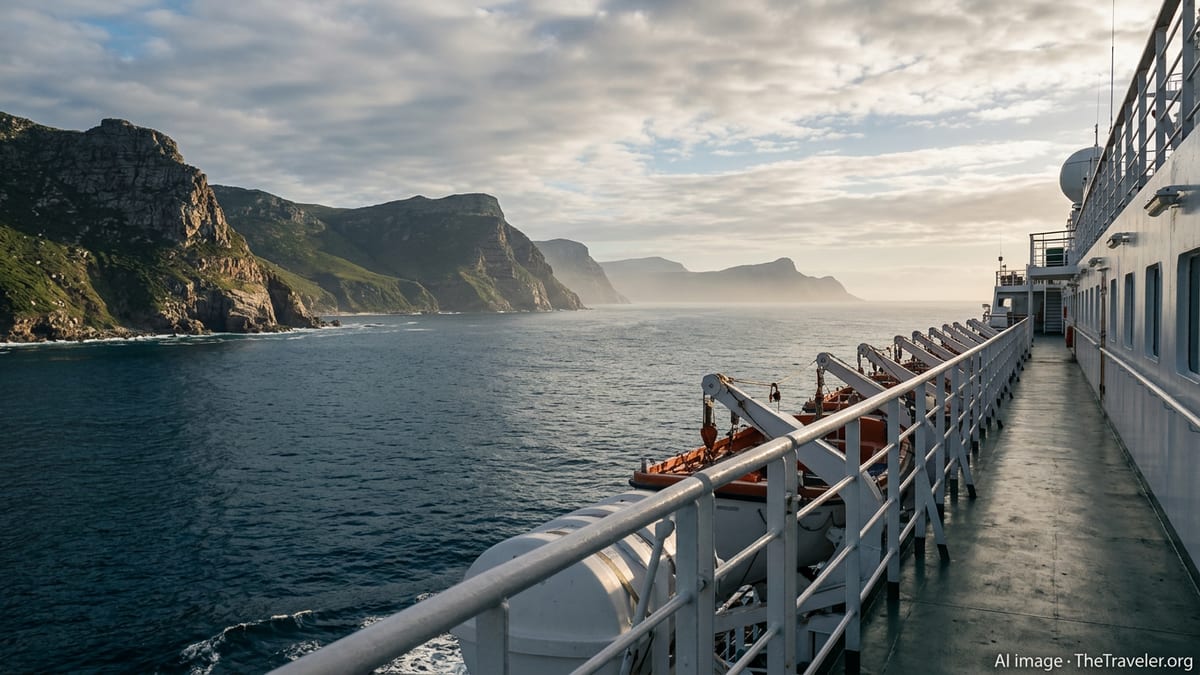
Why Nicko’s World Voyage Is Skipping the Middle East
Recent tensions around the Red Sea and Gulf of Aden have prompted several major cruise lines to abandon traditional repositioning routes through the Suez Canal in favor of longer, more southerly passages around Africa. Publicly available itineraries and trade coverage indicate that Nicko Cruises has followed this pattern for its Vasco da Gama world voyage, removing a sequence of Middle East calls in favor of ports along the African coastline and adjacent islands.
The change aligns Nicko with decisions already taken by brands such as Virgin Voyages and Royal Caribbean, which have rerouted ships around Africa or substantially altered Middle East programs in response to instability and disruption to commercial shipping. Reports indicate that cruise operators are weighing a combination of military activity, higher war-risk premiums, and potential restrictions on transit timing when deciding whether to sail through the region.
For Nicko, the result is a world cruise that still circles the globe but now does so without transiting the Suez Canal or calling at marquee Middle Eastern ports such as Jeddah, Dubai, or Muscat. Instead, the Vasco da Gama spends more time in the South Atlantic and Indian Ocean, picking up a different mix of cultures and landscapes while maintaining the overall structure and length of the voyage.
Passengers booked on the affected segments are being offered revised itineraries that emphasize African and island ports rather than desert cities and Gulf skylines. While specific compensation policies vary by cabin category and booking terms, publicly shared information suggests that Nicko, like its peers, is focusing on delivering an alternative route that feels like a distinct but still premium experience rather than a reduced product.
How the New Africa Route Is Expected to Look
Although the precise call list can vary by departure date and segment, the reworked world voyage broadly follows the classic “around the Cape” pattern that global cruise fans will recognize from past large-ship repositionings. The Vasco da Gama sails down the western side of Africa or across from South America toward southern Africa, rounds the Cape of Good Hope, then works its way up the eastern coastline and across the Indian Ocean.
Publicly available schedules for comparable rerouted cruises show stops in destinations such as Cape Town and Durban in South Africa, Walvis Bay in Namibia, and island nations like Cape Verde, Mauritius, and Réunion. In some cases, cruise lines have added calls in Ghana or Senegal to replace time originally set aside for the Red Sea or Arabian Gulf. While Nicko’s exact port lineup is subject to operational adjustments, travelers can expect a similar blend of Atlantic, African, and Indian Ocean destinations.
The altered routing typically increases the number of sea days compared with a Suez transit, which can appeal to guests who enjoy the onboard experience as much as the ports. At the same time, longer coastal stretches along Africa offer opportunities for wildlife viewing, from seabirds and dolphins to, in some regions, whales, particularly on days approaching or leaving the Cape.
As with any long-haul itinerary, port timings and overnights may still evolve closer to sailing as the line coordinates berthing slots, bunkering, and provisioning in less frequently visited ports. Travelers are being advised in public communications to monitor their booking portals and pre-cruise documentation for any final refinements to call times and excursion options.
What This Means for Safety, Security, and Insurance
The decision to avoid the Middle East on a world voyage is rooted primarily in risk management rather than in any specific incident involving cruise passengers. Shipping reports describe a volatile environment in parts of the Red Sea, with missile and drone activity affecting commercial vessels and prompting some cargo operators to divert around the Cape of Good Hope. That context feeds directly into cruise-line assessments of acceptable risk for passenger ships.
Insurers have reportedly raised war-risk premiums for transits through designated high-risk zones, adding substantial cost to each passage through the Suez Canal. For a long world cruise operating on tight deployment windows, those costs and uncertainties can outweigh the commercial benefits of offering iconic Middle Eastern ports, particularly when an Africa routing, though longer, is well understood from an operational standpoint.
From a guest perspective, the Africa detour does not eliminate all forms of risk, as sections of the route traverse areas that have historically raised concerns about piracy or coastal instability. However, the cruise industry has long-established security protocols for these waters, including adjusted routing, speed management, and onboard procedures that largely take place behind the scenes. Publicly available guidance from cruise and maritime bodies emphasizes that such measures are routine and not a cause for alarm.
Travelers considering the voyage are encouraged by consumer advocates to review their travel insurance policies carefully, paying close attention to language around itinerary changes, force majeure, and coverage for political or security-related disruptions. Comprehensive policies that allow for some flexibility tend to be favored for complex, multi-month itineraries such as a world cruise.
Impact on Passengers: Experience, Excursions, and Value
For many passengers, Nicko’s rerouted world voyage will feel less like a compromise and more like a substantial shift in emphasis, trading Middle Eastern cityscapes for an itinerary rich in African and island experiences. Safari-style excursions from South African ports, desert and dune landscapes in Namibia, and cultural tours in West African or Indian Ocean destinations offer a markedly different flavor from mosque visits, souks, and Gulf skylines.
Because Africa-intensive world-cruise segments are relatively rare compared with Mediterranean or Asia stretches, some travelers view the change as an unexpected opportunity. Cruise forums and social media discussions about similar rerouted voyages on other lines show a mix of disappointment over missed Middle East highlights and excitement at the chance to visit ports that are harder to reach on typical seven- to fourteen-night cruises.
Onboard, the shift in geography often shapes programming, with enrichment lectures, food offerings, and entertainment themed around African history, wildlife, and coastal cultures. While Nicko’s exact onboard plans for Vasco da Gama have not been fully detailed in public materials, comparable world cruises have used sea days on the Africa leg to deepen passengers’ understanding of the regions they are sailing past or about to visit.
In pricing terms, there is no broad indication that rerouted world voyages are becoming cheaper; in some cases, longer sailing distances and higher fuel usage around the Cape can actually increase operating costs. For that reason, analysts describe the shift as a safety- and logistics-driven adjustment rather than a discount opportunity, with value instead delivered through distinctive port calls and extended time at sea.
What Travelers Should Do If They Are Booked or Considering Booking
Passengers already booked on Nicko’s Vasco da Gama world voyage or its affected segments are being urged by travel advisors to review the latest itineraries carefully and compare them with the original plans they purchased. In many cases, key departure and arrival dates remain unchanged, but the sequence and nature of intermediate ports may differ substantially.
Travelers who chose the cruise specifically for Middle East destinations may wish to reassess whether the Africa-rich routing still matches their priorities. Some may opt to keep their bookings and treat the itinerary as an unexpected chance to explore a less-visited region, while others may look at rebooking on future seasons once Red Sea and Suez patterns normalize. Decisions will likely depend on individual tolerance for uncertainty, interest in African travel, and flexibility around vacation timing.
Those considering booking the rerouted voyage now will want to pay particular attention to cabin availability on the most in-demand segments, such as those including South Africa, Namibia, or Mauritius. With other cruise lines also diverting around Africa, there is increased attention on these ports among experienced cruisers chasing unusual routes and longer itineraries.
Given the fluid global environment, observers suggest that travelers build some flexibility into their shore plans, avoid committing too early to nonrefundable private tours on the fringes of higher-risk zones, and budget for potential flight changes if ports are swapped or adjusted. For many prospective guests, however, the allure of circumnavigating the globe on a smaller ship like Vasco da Gama, now with an Africa-focused twist, remains strong enough to justify the added complexity.