

More news on this day
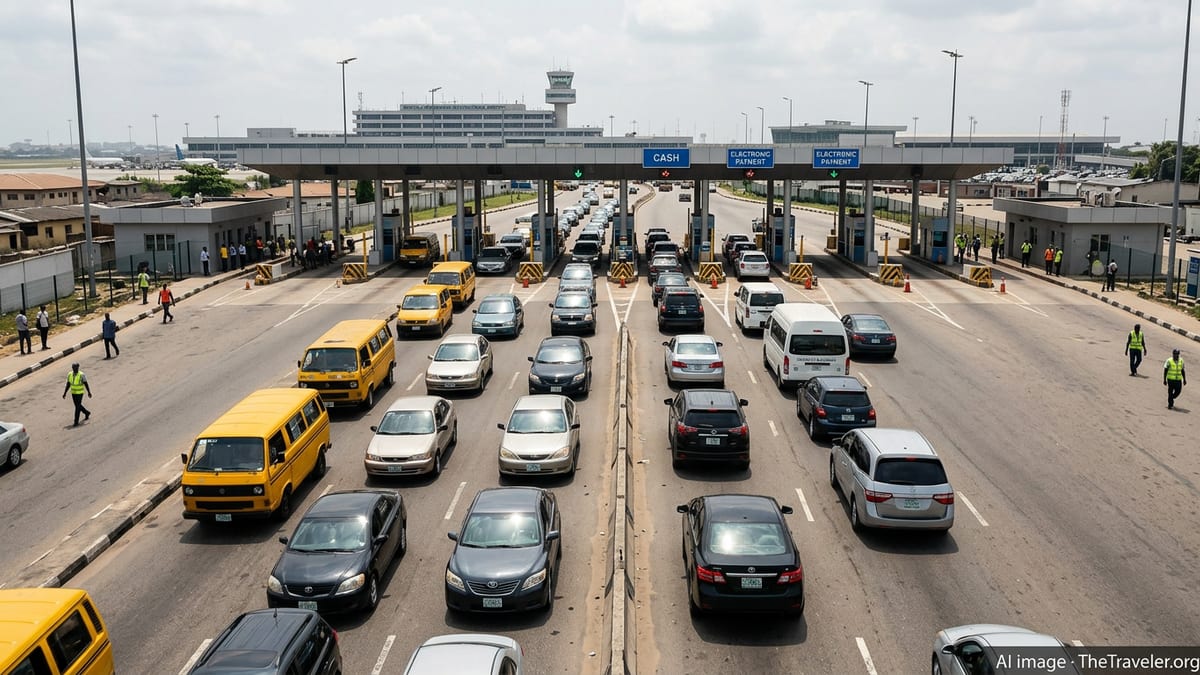
Nigeria has introduced a new hybrid tollgate system at Lagos and Abuja airports, scaling back a cashless-only rollout that triggered heavy gridlock and raised concerns over passenger delays at two of the country’s busiest gateways.
Get the latest news straight to your inbox!
From Cashless Ambition to Hybrid Reality
The Federal Airports Authority of Nigeria recently began implementing a cashless payment policy at airport toll plazas nationwide, including Murtala Muhammed International Airport in Lagos and Nnamdi Azikiwe International Airport in Abuja. The initiative is part of a wider effort to tighten revenue collection and align airport operations with global trends toward digital payments.
Reports indicate that the full cashless switch took effect from March 1, 2026, requiring motorists to pay with prepaid access cards, bank cards, or other approved electronic channels at airport access gates. The plan followed earlier announcements that cash payments would be phased out at the country’s main airports by March 2026, with FAAN contactless cards promoted as a key payment tool.
Within days of the rollout, however, the cashless system exposed operational bottlenecks. Coverage from national outlets described lengthy queues of vehicles around the Lagos airport tollgate and slower moving lines at Abuja’s access points, as motorists grappled with registration, card activation, and network reliability issues.
Publicly available information shows that the government responded by directing FAAN to introduce a hybrid payment model, reintroducing cash alongside digital options in a bid to ease congestion while still advancing long term digitalisation goals.
How the Hybrid Tollgate System Works
Under the hybrid approach, airport users can once again pay cash at the toll plazas while also having the option to use electronic channels. Reports indicate that the system is being treated as a temporary adjustment to stabilise traffic while authorities refine the underlying digital infrastructure.
According to published coverage, the hybrid setup allows motorists to choose between FAAN’s contactless card, regular bank cards, and other electronic methods on one hand, and traditional cash payments on the other. In practice, this mix is intended to keep vehicles moving while still familiarising frequent users with digital channels.
Information from recent briefings suggests that FAAN has already enrolled tens of thousands of users on its cashless platform across the country’s airports since late 2025. The hybrid arrangement is therefore not a step back from digitalisation but a calibration that acknowledges current user readiness and the realities of connectivity and financial inclusion.
At Lagos and Abuja, where traffic volumes are highest, the new system is expected to be supported by additional signage and more payment booths to separate cash and electronic lanes more clearly. Observers note that the effectiveness of the hybrid model will depend on how quickly toll operators can direct vehicles to the most appropriate lanes and maintain functioning payment terminals.
Impact on Passenger Flow and Airport Access
The initial cashless rollout at the beginning of March led to delays that rippled into wider airport operations. Local media reported motorists spending extended periods in gridlock at the Lagos airport road, raising the risk of missed flights and putting pressure on airlines and security screening points as passengers rushed to meet departure times.
In Abuja, reports indicate that congestion around the airport tollgate was also noticeable in the early days of the policy, though conditions there appeared to stabilise more quickly than in Lagos. Analysts attribute the difference partly to road design and traffic patterns, with Lagos handling a larger mix of airport bound travellers, commercial traffic, and local commuters passing through the same corridor.
By reverting to a hybrid system, authorities aim to smooth vehicle movements into terminal drop off zones and car parks, reducing the time it takes for passengers to move from the main access road to check in counters. More predictable access times are particularly critical for early morning and evening peaks, when domestic and international banks of flights coincide.
Travel industry observers note that consistent flows at tollgates can have an outsized effect on the overall airport experience. When access roads are blocked, taxis, ride hailing drivers, staff buses, and service vehicles all face delays, potentially affecting everything from turnaround times to on time departures.
Balancing Revenue Goals with User Readiness
FAAN’s move toward cashless tolls is closely linked to efforts to seal revenue leakages and improve transparency in airport finances. Public documents and recent commentary describe the digital payment framework as a tool to ensure that toll revenue and other charges are fully recorded and remitted to government accounts.
Cashless systems at airport access gates are not unique to Nigeria. Many hubs worldwide have adopted automated and card based tolling to cut queues and reduce the handling of cash. However, experiences at Lagos and Abuja underline the challenges of rapid transitions in environments where a significant share of users may still rely on cash or have limited familiarity with prepaid or contactless products.
Published analysis of the rollout indicates that user education, advance registration, and robust customer support are critical to the long term success of any digital tolling regime. Without adequate preparation, the learning curve can translate directly into longer processing times at gates, especially when motorists encounter new interfaces or face connectivity gaps.
By retaining cash as an option for now, the hybrid system is viewed as a compromise that keeps revenue digitisation on track while reducing friction for occasional users, visiting drivers, or those who have yet to obtain the FAAN card. Over time, observers expect authorities to continue nudging travellers toward electronic channels, potentially through pricing incentives or dedicated fast moving lanes.
What Travelers Should Expect at Lagos and Abuja Airports
For passengers planning trips through Lagos and Abuja, the shift to a hybrid tollgate system means a more flexible but still evolving access experience. Motorists can currently expect to find a combination of cash and card lanes at the airport entrances, alongside personnel guiding traffic and assisting with payments.
Travel reports from the past two weeks suggest that congestion has eased compared with the early days of the cashless only phase, though periodic slowdowns remain possible during peak hours or if payment terminals experience outages. Travelers are being advised in public forums and media coverage to allow extra time for the airport approach while the system beds in.
Frequent users, including airport staff and regular business travelers, may benefit from registering for the contactless FAAN card or setting up reliable electronic payment options to reduce waiting times in the medium term. At the same time, those who rely on cash should be able to pass through using the reinstated manual booths, provided they join the appropriate queues.
As Nigeria continues to modernise its aviation infrastructure, Lagos and Abuja are likely to serve as test beds for how far and how fast airport tolling can move toward fully digital operations. The performance of the new hybrid tollgate system in managing traffic and maintaining passenger flow in the coming months will be closely watched by the wider travel and transport community.