

More news on this day
Nigeria is stepping up efforts to position aviation at the heart of its economic strategy, joining regional frontrunners such as Ethiopia, Rwanda, South Africa and Egypt that are investing heavily in airports, airlines and open-skies reforms to boost tourism, trade and national revenue.
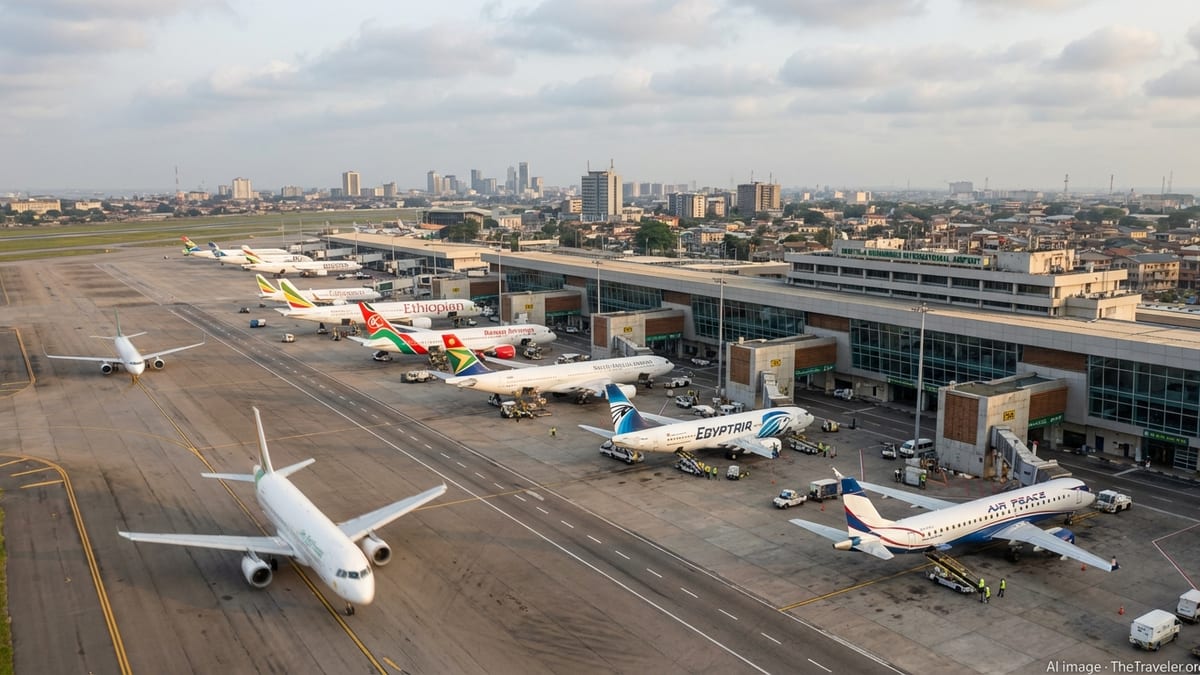
Nigeria’s Aviation Market at a Turning Point
Recent data showing Nigeria as Africa’s fifth-largest airline market underline both the scale of its opportunity and the urgency of reform. Industry figures for December 2025 put the country behind Egypt, South Africa, Morocco and Ethiopia in scheduled seat capacity, with around 1.16 million seats across domestic and international routes. While that reflects a slight year on year contraction, analysts say it also highlights how much headroom Nigeria has to grow if it can tackle structural bottlenecks and create a more investment friendly environment for carriers and airport operators.
Domestic air travel remains a core pillar of Nigeria’s market. The country ranked as the continent’s second-largest domestic aviation market by seats in late 2025, despite a decline in capacity tied to currency volatility, high fuel costs and fleet shortages. Demand for air links between major commercial centres such as Lagos, Abuja, Port Harcourt and Kano remains resilient, driven by business travel, government traffic and a growing middle class that increasingly chooses to fly rather than endure long overland journeys.
Federal policymakers now frame aviation as a strategic enabler of broader economic diversification. Nigeria’s latest policy pronouncements stress the sector’s potential to support non-oil exports, attract foreign visitors and tighten regional integration across West Africa. Regulators have moved to streamline charges at some airports and suspend certain access fees temporarily during major construction works, in a bid to ease congestion and improve the passenger experience. Officials say the goal is to turn airports into efficient gateways that support tourism and trade rather than choke points that add cost and delay.
The arrival of new and returning African carriers is also reshaping Nigeria’s connectivity. The launch of services such as Air Sierra Leone’s route to Lagos, backed by technical collaboration with local partners, illustrates how regional airlines see the Nigerian market as central to their growth ambitions. Aviation executives argue that if regulatory reforms continue and infrastructure upgrades are delivered on schedule, Nigeria could rapidly reclaim lost capacity and climb the continental rankings.
Learning from Africa’s Aviation Pacesetters
As Nigeria recalibrates its aviation strategy, officials and industry players are looking closely at the success of countries that have already turned air transport into a powerful engine of growth. Ethiopia, Rwanda, South Africa and Egypt offer contrasting but complementary models, each anchored in a clear national vision that treats aviation as part of a wider development architecture encompassing tourism, logistics and services.
In Ethiopia, the flagship carrier has spent more than a decade executing long term growth plans that transformed Addis Ababa into a continental hub linking Africa with Europe, Asia, the Middle East and North America. The airline has consistently expanded its network, added modern aircraft and invested in training, cargo and maintenance facilities, helping to position the country as both a passenger and freight gateway. This integrated approach has not only lifted aviation revenues but also spurred investment in hotels, conference venues and tourism infrastructure across the country.
Rwanda has followed a different path, focusing on building a nimble national carrier and a streamlined hub in Kigali that prioritise reliability, safety and connectivity rather than sheer scale. By cultivating a reputation for efficiency and by supporting a strong meetings and events sector, Rwanda has used aviation to underpin a national brand as a secure, forward looking destination for conferences, tech investment and high value tourism. Its new airport development outside Kigali aims to reinforce that positioning.
South Africa and Egypt, historically the continent’s largest aviation markets, are meanwhile working to modernise their infrastructure and renew their fleets. Major airports in Johannesburg, Cape Town and Cairo serve as gateways for intercontinental traffic and as bases for growing low cost and regional carriers. Both countries are investing in terminal upgrades, digital systems and route expansion that tie directly into ambitions to attract more long haul tourists, diversify export markets and deepen links with the rest of the continent.
Mega Hubs and the New Geography of African Travel
The decision by Ethiopia to move ahead with a new multi billion dollar mega airport near Bishoftu marks one of the most ambitious aviation projects currently under way anywhere in the developing world. Ground was formally broken on the site in early 2026, with the project backed by the national airline and regional development financiers. When completed around the end of the decade, the airport is expected to handle tens of millions of passengers annually, with scope to scale to over 100 million, supported by up to four or five runways and extensive cargo facilities.
Planners say the new airport will not simply replace Addis Ababa’s existing international gateway but transform Ethiopia into a global hub able to compete with established transit centres in the Gulf, Europe and Asia. The project includes an airport city concept with hotels, shopping, logistics parks and maintenance centres intended to generate jobs and keep more value within the domestic economy. For the wider region, more long haul connections through Ethiopia are expected to drive visitor numbers to East Africa’s heritage sites and national parks, offering spillover benefits for neighbouring countries.
Other African states are pursuing similar, if smaller scale, hub strategies. Rwanda’s new airport, South Africa’s ongoing terminal upgrades and Egypt’s drive to expand capacity around Cairo, the Red Sea and the Mediterranean coastline all share a common objective: to make air travel into and within Africa more seamless and competitive. By reducing the reliance on non African hubs for intra continental journeys, these projects aim to lower fares, cut travel times and make multi destination itineraries across the continent more attractive to international tourists.
For Nigeria, which currently relies heavily on foreign hubs for intercontinental connections, such developments raise strategic questions. Aviation experts argue that the country risks ceding high value connecting traffic unless it accelerates its own airport modernisation plans and redefines Lagos and Abuja as efficient regional hubs. There is growing debate within industry circles over whether to revive a national carrier project, deepen support for private airlines, or pursue hybrid partnerships that link Nigerian airports into the wider network of emerging African mega hubs.
Tourism, Trade and the Revenue Multiplier
The most powerful argument for aggressive aviation reform in Nigeria and across Africa lies in the sector’s multiplier effect on jobs, tax revenues and foreign currency earnings. Each new international route typically brings in not only ticket sales but hotel bookings, restaurant spending, ground transport income and excursion revenue. Tourism boards in countries such as Ethiopia and Rwanda report that improvements in air access have coincided with record visitor arrivals, higher occupancy rates and a wave of new investment in hospitality projects.
In Ethiopia, ministry figures indicate that international arrivals in 2025 have already surpassed pre pandemic levels, with strong demand for cultural and eco tourism centred on UNESCO World Heritage sites and newly developed nature destinations. Tour operators cite the expansion of airline networks and more competitive fares as key drivers of this rebound. The effect is visible in bustling hotels in Addis Ababa, growing interest in highland trekking and renewed foreign investment in lodges around national parks.
Egypt and South Africa have long served as the continent’s tourism anchors, leveraging their aviation networks to attract millions of visitors to coastal resorts, wine regions, wildlife reserves and historic monuments. Recent capacity increases to and from major European, Gulf and Asian cities have supported the recovery of long haul tourism and encouraged airlines to experiment with seasonal and niche routes. In both markets, governments are courting transit passengers as well as traditional tourists, encouraging stopover stays that extend visitor spending.
Nigeria, whose beaches, cultural festivals, film and music industries are increasingly recognised worldwide, has yet to fully convert its soft power into tourism arrivals. Industry stakeholders argue that more direct international flights to Lagos, Abuja and emerging leisure destinations, supported by simplified visas and better marketing, could unlock significant new revenue. Aviation is seen as the critical first step, enabling the development of integrated tourism corridors that link major cities with coastal, cultural and eco tourism assets across the country.
Sustainability and the Future of African Skies
Alongside growth ambitions, African governments and airlines are under pressure to ensure that aviation expansion aligns with global sustainability goals. While the continent currently accounts for a relatively small share of global air traffic, its markets are projected to grow faster than the world average over the next two decades. This raises questions about fuel efficiency, carbon emissions, noise, land use and the resilience of new infrastructure to climate impacts.
Leading African carriers are responding by investing in newer, more fuel efficient fleets and by exploring sustainable aviation fuel supply chains in partnership with energy companies and multilateral lenders. Airlines in Ethiopia, Rwanda, South Africa and Egypt are progressively phasing out older aircraft in favour of widebodies and narrowbodies that offer lower emissions per seat and reduced operating costs. Several have also signed up to international emissions reduction schemes and are testing operational measures such as more efficient routing and ground handling.
Airport projects across the continent, including Ethiopia’s mega hub and terminal upgrades in South Africa and Egypt, now routinely include plans for solar power systems, water recycling, smart building management and public transport links intended to limit environmental footprints. Planners insist that such design choices are not only about climate responsibility but also about long term cost savings and resilience, given the rising price of energy and the increasing frequency of extreme weather events that can disrupt operations.
Nigeria is at an earlier stage of this sustainability conversation but is beginning to incorporate green principles into airport rehabilitation and expansion plans. Industry advocates say there is an opportunity to leapfrog some of the less efficient legacy infrastructure seen elsewhere by adopting energy efficient terminal designs, modern air traffic management systems and policies that encourage airlines to deploy their cleanest aircraft on Nigerian routes. If matched by broader investment in rail and road connectivity to airports, these steps could help ensure that growth in air travel supports, rather than undermines, the country’s climate commitments.
Policy Reform, Open Skies and Regional Integration
Regulatory reform is emerging as a decisive factor in the race to build competitive aviation markets in Africa. The Single African Air Transport Market initiative seeks to liberalise air services across participating countries, allowing eligible African carriers to operate freely between states without restrictive bilateral caps. Supporters argue that fully implementing this framework would unlock new point to point routes, lower fares and encourage more airlines to invest in cross border operations.
Countries such as Ethiopia, Rwanda and South Africa have positioned themselves as champions of liberalisation, signing up to the initiative and adjusting national legislation to support it. Their airlines have responded by launching new intra African services, forging partnerships with regional carriers and developing multi hub strategies that rely on more flexible traffic rights. As more neighbours join, they stand to benefit from a denser route network that makes it easier for tourists and business travellers to combine multiple African destinations in a single trip.
Nigeria has endorsed the broad objectives of open skies within Africa but has moved more cautiously on implementation, citing concerns about the competitiveness of its domestic airlines and the potential loss of control over strategic routes. Industry groups are urging the government to accelerate reforms, arguing that protectionist policies ultimately raise costs for consumers, discourage investment and shift traffic to foreign hubs. They contend that carefully managed liberalisation, combined with targeted support for local carriers and infrastructure, would leave Nigeria better placed to capture value from rising intra African travel.
Customs, immigration and security procedures form another critical piece of the integration puzzle. Airports across the continent are investing in digital systems, e gates and risk based screening to reduce queues and make transfers smoother, recognising that the passenger experience now directly influences route viability. Nigeria has begun trials of such technologies at its busiest airports and is under pressure from airlines and tourism operators to accelerate roll out so that visitors face fewer hurdles on arrival and departure.
Can Nigeria Convert Aviation Potential into Prosperity?
For Nigeria, the central question is whether its current wave of policy attention and incremental reforms will be sufficient to transform aviation into a true engine of sustainable growth. Advocates argue that the fundamentals are strong: a large and youthful population, a strategic geographical position between West and Central Africa, substantial business travel demand and a cultural sector that already attracts global interest. With the right mix of regulation, infrastructure and private investment, they say, the country could develop hubs capable of channelling millions of additional passengers each year.
Challenges remain significant. Airlines operating in Nigeria face high operating costs, currency constraints, infrastructure limitations and periodic regulatory uncertainty. Airport projects have often been delayed or scaled back, and efforts to establish or revive a national carrier have struggled to gain lasting traction. Many Nigerians still find air travel expensive and unreliable compared with expectations in other major emerging markets.
Yet regional developments offer a powerful reminder of what is possible. Ethiopia’s mega hub, Rwanda’s streamlined model, South Africa’s diversified market and Egypt’s tourism focused strategy all show that with consistent policy, long term planning and collaboration between public and private actors, aviation can reshape a country’s economic trajectory. Nigeria’s decision makers are increasingly framing these examples not as competition to be feared, but as benchmarks to learn from as they chart the country’s next chapter in the skies.
As African governments and airlines continue to expand fleets, open new routes and modernise airports, the continent’s aviation map is being redrawn. If Nigeria can align its reforms with this broader shift, it stands to join its peers in using aviation not only to move people but to unlock new streams of tourism income, support trade and create jobs in sectors from hospitality to high tech services. The choices made in the coming years will determine whether the country remains a passenger in this transformation or takes its place among the region’s aviation leaders.