

More news on this day
Nigeria’s flagship Abuja–Kaduna rail corridor is gearing up for a major expansion in 2026, as the Nigerian Railway Corporation moves to add more trips and restore near pre-disruption capacity in response to relentless passenger demand on one of the country’s busiest intercity routes.
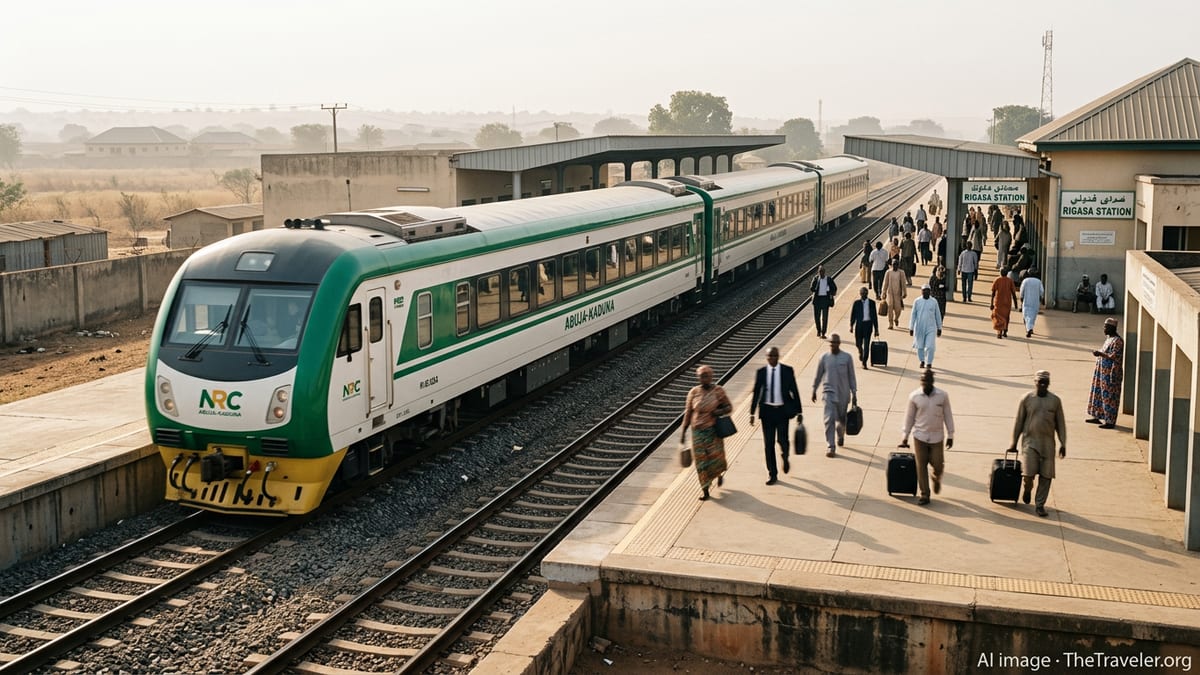
Extra Trips Roll Out as New Timetable Takes Effect
The Nigerian Railway Corporation has confirmed that additional Abuja–Kaduna trips will begin operating from March 6, 2026, marking the most significant increase in frequency on the corridor since a series of disruptions curtailed services over the past four years. The move is framed by officials as both a response to mounting demand and a signal that the corridor is entering a new phase of stability and growth.
Under the revised schedule, the Idu–Rigasa service will run three trips on peak travel days including Fridays, Saturdays, Sundays and Mondays, and two trips on Tuesdays and Thursdays. All services will continue to call at Kubwa, a key suburban stop serving the Abuja metropolis. By concentrating extra capacity around weekends and commuter-heavy days, the corporation aims to ease crowding and give passengers more flexibility in planning journeys.
Rail managers say the new timetable is designed to be scalable, allowing more trips to be layered on as additional locomotives and coaches come into service. Internal projections seen by industry watchers suggest that, if equipment and safety checks stay on track, the corridor could move back toward its former six-trip daily pattern later in the year, effectively “exploding” available seats compared with the lean schedules that followed derailments and security incidents.
From Disruptions to Recovery on a Critical Corridor
The Abuja–Kaduna line has come to epitomise both the promise and fragility of Nigeria’s rail renaissance. Launched as part of the broader railway modernisation programme, it rapidly became the preferred option for thousands of commuters, civil servants, and business travellers shuttling between the federal capital and the commercial hub of Kaduna. That early success was severely tested by a March 2022 attack on a passenger train and subsequent derailments, episodes that forced extensive repairs, security upgrades and a rethink of operations.
In August 2025 a derailment near Asham damaged key rolling stock and track infrastructure, triggering weeks of suspension while engineers re-railed coaches, repaired the main line and assessed the integrity of the corridor. Passenger services resumed in October 2025 with a slimmed-down timetable and a heavy emphasis on safety, including dedicated weekly maintenance windows and tighter speed restrictions along vulnerable sections.
Those measures, while reassuring from a safety standpoint, drastically reduced the number of available daily trips. Passengers complained of sold-out trains, ticket scarcity and overcrowded coaches as demand quickly outstripped capacity. The new 2026 timetable seeks to unwind that bottleneck by putting more trains back on the rails, while keeping in place procedures that were introduced in the wake of the incidents.
Safety, Security and Passenger Confidence in Focus
Officials at the Nigerian Railway Corporation are keen to stress that the push for more trips will not come at the expense of safety. Following the Asham derailment and other incidents, comprehensive infrastructure inspections and internal investigations highlighted a mix of human error, asset fatigue and management lapses. The corporation has since pledged to tighten training, refresh operating rules and improve oversight of critical assets such as track switches, braking systems and onboard power units.
Security has also remained a central concern on the corridor, given its history. The resumption of full passenger services in late 2025 was closely coordinated with security agencies, and that collaboration is expected to deepen as footfall rises again in 2026. Officials say patrols, surveillance and rapid-response protocols have been strengthened, with the goal of making the route feel as safe as its road alternatives, if not safer.
Passengers, for their part, have been vocal about the need for better communication and more reliable onboard conditions. Reports of carriages temporarily losing lighting or air conditioning and of extended delays have dented confidence at times. The corporation has responded with more public briefings, on-train announcements and a promise to treat disruptions with transparency, arguing that open communication is essential as it asks commuters to embrace a busier, more complex timetable.
Demand Surges as Travelers Bet on Rail
Despite setbacks, demand on the Abuja–Kaduna line has continued to climb, underscoring how deeply the service has embedded itself in Nigeria’s domestic travel patterns. Rising fuel prices, road congestion and lingering concerns about highway security have all nudged more passengers toward the rails, particularly on Fridays and Sundays when migration between Abuja and the north-west peaks.
Travelers who once viewed the train as a convenient alternative now increasingly see it as a necessity. Business owners plan meetings around train times, families use the service for school terms and religious gatherings, and civil servants depend on it for commuting and official transfers. When services were scaled back after the August 2025 derailment, hotels and transport companies along the corridor reported knock-on effects as travellers scrambled for scarce seats or shifted to less predictable road options.
The 2026 expansion aims to recapture that lost momentum and channel it into more sustainable growth. By broadening capacity and smoothing out bottlenecks at peak hours, the NRC hopes to bring back passengers who drifted away during the disruption period while retaining new users who tried the train for the first time over the past two years. Rail analysts say the corridor’s performance this year will be a key barometer for the viability of other planned intercity lines within Nigeria’s broader transport strategy.
What the Abuja–Kaduna Push Signals for Nigeria’s Rail Future
The ramp-up on the Abuja–Kaduna route is being closely watched as a test case for how Nigeria may manage future rail expansions, from Lagos–Ibadan to longer proposed links toward Kano and the eastern seaboard. If the corporation can successfully blend higher frequency with credible safety and customer service, advocates argue it will strengthen the case for continued federal investment in both standard-gauge and rehabilitated narrow-gauge lines.
Transport officials have framed 2026 as a “reset year” for rail operations, one in which lessons from past accidents and disruptions are applied to new timetables, maintenance regimes and passenger engagement. That philosophy is evident in the Abuja–Kaduna plan: build up capacity gradually, keep a tight grip on safety, and use real-world feedback to refine services rather than chase headline numbers of trips at any cost.
For passengers, the impact will be felt not in policy statements but in everyday details such as the ability to find a seat on a preferred departure, the punctuality of arrivals and the consistency of online and station ticketing. If the extra Abuja–Kaduna trips deliver on those basics, the corridor’s 2026 “explosion” in service could become a defining success story for Nigeria’s evolving rail network and a template for corridors yet to come.