

More news on this day
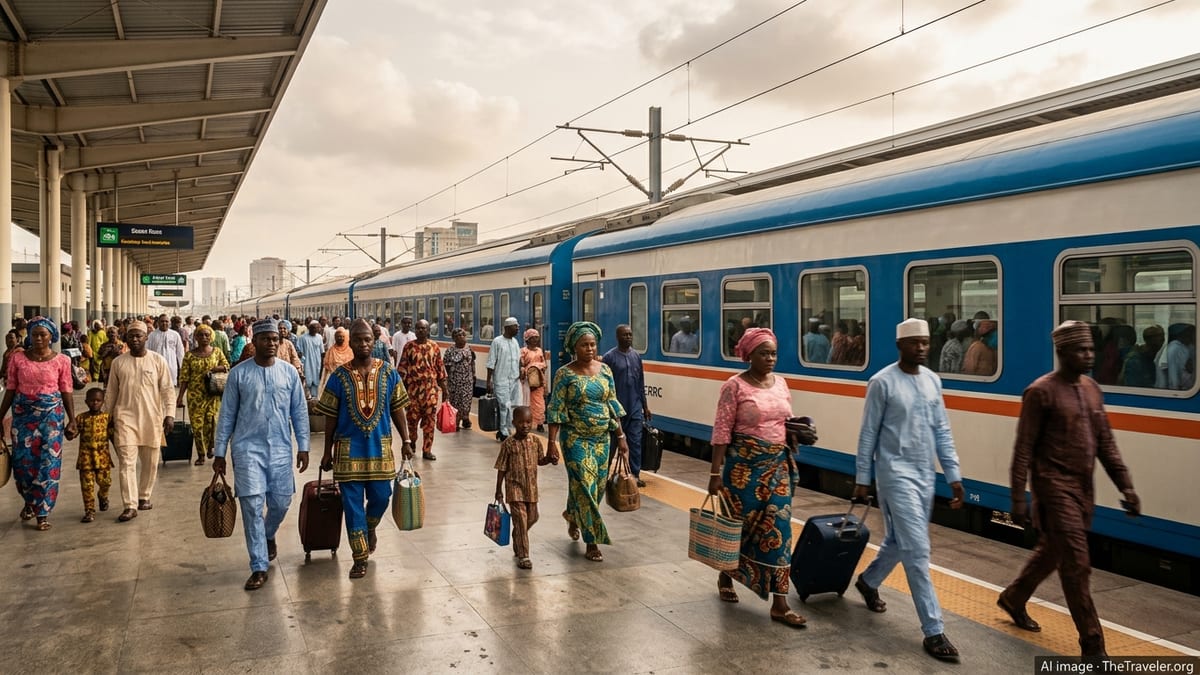
Nigeria is rolling out an expanded network of train services ahead of the Sallah holidays, with additional trips, longer train formations and upgraded safety measures designed to absorb an unprecedented surge in passenger demand and provide a more secure alternative to the country’s congested highways.
Get the latest news straight to your inbox!
Special Sallah Services Added Across Key Corridors
Publicly available information shows that the Nigerian Railway Corporation is adding special Sallah services and extra trips on its busiest standard-gauge corridors, notably Lagos–Ibadan, Abuja–Kaduna and Warri–Itakpe. The move responds to sharp spikes in advance bookings and station crowds as travelers seek safer and more predictable journeys during the Eid period.
Reports from recent festive operations indicate that extra Thursday and weekend trains on these routes have quickly sold out, with some departures experiencing over-subscription within hours of tickets being released. On the Abuja–Kaduna line in particular, additional coaches are being attached to regular services to increase capacity without disrupting existing timetables.
On the Lagos–Ibadan corridor, extra Sallah trips are being slotted into already busy schedules, taking advantage of the line’s relatively modern infrastructure and signaling to run more frequencies per day. Rail managers are using historical load data from previous Eid and year-end peaks to fine-tune departure times that align with prayer schedules and onward bus connections.
At the same time, narrow-gauge routes that still serve large sections of the country are being primed for additional Sallah operations where track conditions allow. In some locations, infrastructure work is being fast-tracked to ensure that seasonal trains can run safely over previously vulnerable sections.
Infrastructure Repairs and Safety Upgrades Before the Holiday Rush
To prepare for this year’s Sallah surge, the national rail operator has focused on repairing weather-damaged sections and reinforcing vulnerable infrastructure ahead of peak travel dates. Published coverage from Osun State, for example, describes how engineers were deployed to fix a flood-threatened narrow-gauge track near Osogbo in advance of planned Sallah trains, underscoring the emphasis on pre-emptive maintenance rather than last-minute closures.
Across the broader network, publicly available documents highlight a pipeline of investments aimed at adding new rolling stock, modern signaling and improved station facilities. Budget allocations for fresh train sets and rehabilitation of key corridors are intended to give operators more flexibility to lengthen consists and add seasonal services without straining already limited fleets.
Security has been another priority as the railways position themselves as a safer option than long-distance road travel. According to recent festive-period briefings, additional security personnel, surveillance systems and passenger checks are being deployed at major stations and on board trains during high-demand windows. The measures are designed to reassure travelers concerned about crime and to discourage vandalism on newly built assets.
These efforts mirror broader national transport strategies that aim to shift a portion of holiday travel from highways to rails. The Sallah-focused safety upgrades are being framed as part of a long-term campaign to normalize rail use for intercity journeys rather than as one-off emergency responses.
Lagos Urban Rail Strengthens Its Role During Festive Peaks
Lagos, Nigeria’s largest metropolitan area, is seeing its emerging urban rail network play a growing role in managing Sallah travel. The Lagos Rail Mass Transit Blue Line, which began operations with an initial phase of stations in 2023, provides an electric rapid transit spine across the city, reducing travel times along its corridor from hours in traffic to under half an hour.
More recently, the Red Line heavy rail service from Marina to Agbado has begun ramping up frequency, with local transport reports noting increased train intervals from early 2025. These metro-style services connect directly or indirectly with intercity rail at hubs used by Sallah travelers heading to the southwest, north-central and beyond.
During holiday peaks, the urban rail lines help decongest road approaches to major motor parks and intercity rail stations by offering commuters a high-capacity, frequent alternative. Their electrified operations reduce emissions compared with diesel buses idling in gridlock, aligning festive mobility with the city’s longer-term environmental goals.
Travel observers note that the synergy between Lagos’s urban rail and the federal intercity network is becoming more visible during Sallah, as passengers combine metro segments with long-distance trains instead of relying solely on road coaches. As more stations and extensions open, that integration is expected to deepen, further easing pressure on the city’s overstretched road system.
Fare Incentives and Customer-Focused Measures for Holiday Travelers
To make rail travel more attractive during peak periods, the Nigerian Railway Corporation has also experimented with fare incentives and passenger-friendly policies. Recent festive seasons have seen initiatives such as temporary fare reductions on selected routes and corridors, which encouraged bookings and shifted some traffic away from informal road transport.
Business and transport media report that during the last major Yuletide period, the operator implemented a 50 percent fare slash on certain standard-gauge services, triggering a rush of bookings and higher coach occupancies. While Sallah-specific pricing is calibrated differently, those experiences are informing how discounts and promotional offers are structured to balance revenue needs with affordability.
Alongside pricing strategies, the corporation has publicized efforts to improve comfort and reliability during festival operations. Enhanced cleaning regimes, better seat allocation systems and refined e-ticketing platforms are intended to reduce boarding chaos and cut down on queues at ticket counters, particularly in the days immediately before Sallah.
Rail managers are also adjusting boarding procedures and platform management to cope with larger crowds, emphasizing orderly boarding, clearer signage and more staff presence at chokepoints. These relatively low-cost measures can have significant impact on perceived service quality, especially when combined with on-time departures and transparent communication about schedule changes.
Long-Term Rail Expansion Aims to Lock In Safety and Capacity Gains
The Sallah travel surge is exposing both the potential and the limits of Nigeria’s current rail network. While additional Sallah trains and seasonal repairs offer short-term relief, transport policy analyses emphasize that sustained investment in new lines, double-tracking and electrification is essential to accommodate future holiday peaks without compromising safety or comfort.
Medium-term plans outlined in sector publications include expanding standard-gauge coverage beyond the existing flagship routes and gradually electrifying more corridors to improve performance and reduce operating costs. Such upgrades are expected to enable higher frequencies, longer trains and more flexible scheduling around religious and school holidays, when demand patterns are most volatile.
As these projects advance, each Sallah period is functioning as an informal stress test of Nigeria’s evolving rail system. Passenger response during recent festive seasons suggests strong appetite for safe, predictable train travel, even when services sell out quickly. That demand is being closely watched by planners as evidence that rail can capture a larger share of long-distance travel if capacity continues to grow.
For millions of Nigerians planning Sallah journeys in the coming years, the combination of expanded services, targeted safety improvements and ambitious long-term projects points toward a holiday travel landscape in which the country’s railways, rather than its highways, increasingly set the pace.