

More news on this day
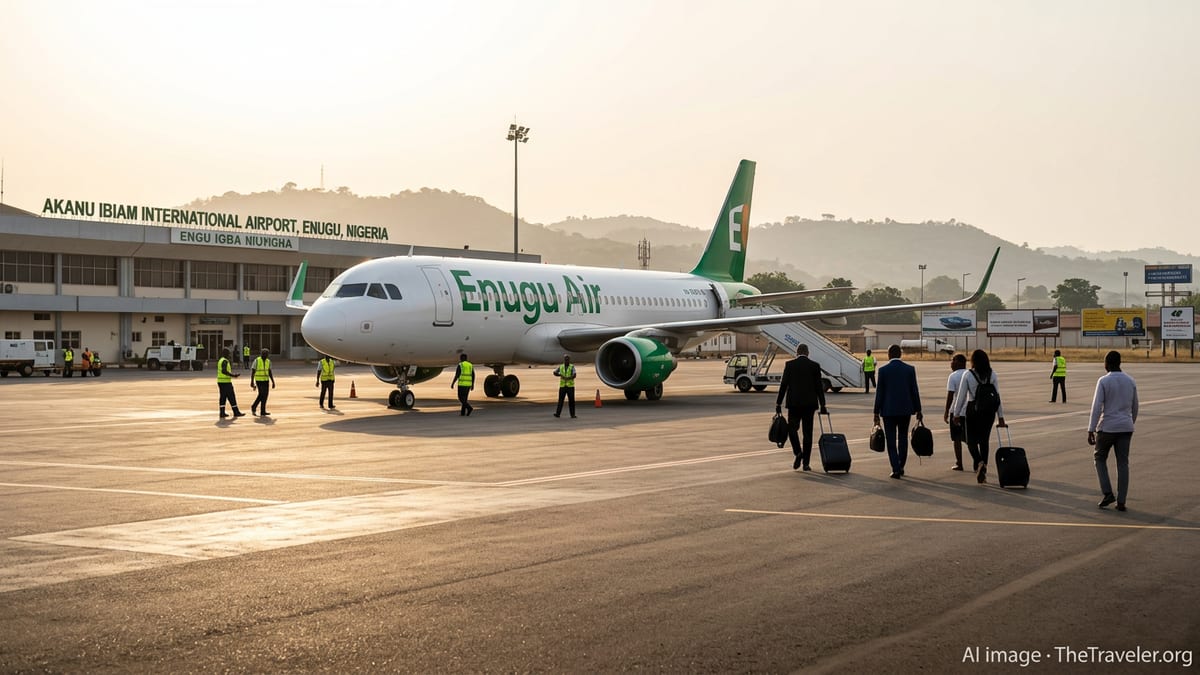
Nigeria’s aviation sector has recorded a fresh milestone as Enugu Air, the state-owned carrier backed by the Enugu State Government, received its Air Operator Certificate from the Nigeria Civil Aviation Authority, clearing the new airline to launch commercial services and pursue wider regional connectivity goals.
Get the latest news straight to your inbox!
Record-Time Certification Strengthens Nigeria’s Aviation Landscape
The Air Operator Certificate, presented this week at the Nigeria Civil Aviation Authority headquarters in Abuja, formally authorises Enugu Air to begin scheduled passenger operations within Nigeria. The approval follows months of regulatory inspections, test flights and documentation reviews by NCAA technical teams, which oversee safety and operational standards for all commercial airlines in the country.
Aviation regulators described the certification as a notable boost for the domestic market, adding a new scheduled carrier to Nigeria’s roster at a time of rising passenger demand across key business and leisure corridors. Industry data from the authority show that Nigeria already hosts more than a dozen scheduled operators, and officials have repeatedly signalled support for new entrants that can demonstrate strong financial backing and adherence to safety rules.
Officials close to the process highlighted the pace of Enugu Air’s journey to full certification as particularly significant. The airline completed the multi-phase AOC process in under six months, a shorter timeframe than is typical in the Nigerian market, where new carriers often spend more than a year navigating the regulatory pipeline. NCAA executives framed this as evidence that targeted reforms to streamline approvals are working without weakening oversight.
For Enugu State, which owns the airline, the successful licensing confirms the viability of its aviation investment strategy and provides a template for other subnational governments exploring similar ventures. The carrier becomes one of a small group of state-backed airlines in Nigeria positioned to operate regular commercial flights under their own brand.
Enugu’s Bid to Become a Regional Aviation and Trade Hub
Enugu Air is central to Governor Peter Mbah’s vision of transforming Enugu into a logistics and commerce hub for West and Central Africa. Operating out of Akanu Ibiam International Airport in Enugu, the airline is expected to anchor new passenger and cargo flows into the southeast, complementing upgrades to roads, industrial parks and inland logistics facilities across the state.
State officials say the new carrier is designed to address long-standing connectivity gaps faced by travellers and businesses in the region, who frequently route through Lagos or Abuja to access domestic and international destinations. By basing a full-service airline in Enugu, the government hopes to shorten travel times, lower transaction costs and make the city more attractive to investors.
The AOC is seen as a first step in a longer plan that envisages Enugu Air serving as a bridge between Nigeria’s southeast and neighbouring countries. While the initial focus will be on domestic routes, policymakers have made clear that the ultimate objective is to unlock regional markets and integrate Enugu more deeply into continental trade and tourism networks.
Local tourism stakeholders are already positioning to tap into improved air access. Hoteliers and tour operators in the state capital and surrounding destinations point to coal city heritage, cultural festivals and nearby highland landscapes as assets that could benefit from more direct flight options, particularly from other West African cities.
Fleet Plans and Route Strategy Target Regional Connectivity
With certification now secured, Enugu Air is preparing to transition from earlier partnership arrangements to fully branded scheduled operations across Nigeria. The airline is launching with a modest fleet that management plans to scale up steadily, citing a target of up to 20 aircraft as operations mature and demand strengthens.
Executives have signalled that early routes will prioritise high-traffic domestic city pairs linking Enugu to Lagos, Abuja, Port Harcourt and other commercial centres. Over time, the network is expected to expand into secondary cities that currently have fewer direct services, potentially improving access for under-served communities and easing pressure on Nigeria’s busiest hubs.
Regional expansion across West and Central Africa is embedded in the airline’s medium-term strategy. Officials have pointed to planned services to select ECOWAS and Central African destinations by the end of 2026, subject to securing the necessary bilateral approvals and meeting additional regulatory conditions for cross-border operations. Such routes would position Enugu as a transfer point for passengers and shippers moving between landlocked areas of the interior and coastal markets.
Aviation analysts note that the timing could be favourable if Enugu Air can coordinate its growth with broader initiatives such as the African Continental Free Trade Area, which aims to reduce trade barriers across the continent. Efficient regional air links from secondary hubs are often cited as a missing piece in unlocking intra-African commerce at scale.
Safety Oversight and Public Confidence in a Crowded Market
Securing an Air Operator Certificate in Nigeria requires operators to pass through a structured, multi-step process that includes pre-application engagement, document evaluation, demonstration flights and rigorous inspections of maintenance and safety systems. The NCAA maintains that this framework, updated under recent civil aviation regulations, is designed to align with global best practices while reflecting local operational realities.
During the Enugu Air certification, regulators emphasised that efforts to speed up approvals did not involve relaxing safety thresholds. Technical teams assessed flight operations manuals, crew training programs, maintenance arrangements and risk management systems before recommending the airline for approval. The authority has also reminded all new carriers that the AOC is a living document subject to ongoing compliance checks.
For passengers, the entrance of another carrier into Nigeria’s market raises familiar questions about reliability, schedule integrity and customer experience. Recent years have seen a mix of expansion and consolidation across the sector, with some airlines growing rapidly and others suspending operations amid financial or operational challenges.
Enugu Air’s backers argue that state ownership, a clearly defined regional mandate and partnerships with experienced aviation operators will help the airline avoid pitfalls that have hampered previous start ups. The real test will come as the carrier begins daily operations across Nigeria’s congested airspace, contends with infrastructure constraints and competes on fares and service quality against more established brands.
Economic Ripple Effects for Enugu and the Wider Southeast
Beyond the aviation industry itself, the arrival of a fully certificated state-backed airline is expected to have wider economic implications for Enugu and the surrounding region. Improved air access typically supports growth in sectors such as hospitality, conferences, export-oriented agriculture and light manufacturing, all of which depend on reliable connectivity for staff, clients and cargo.
Officials in Enugu have framed the airline as a catalyst for job creation both directly and indirectly. In addition to pilots, cabin crew and ground staff, the operation of a home-based carrier is likely to spur demand for airport services, catering, maintenance support and training facilities. This could in turn attract specialised aviation businesses to set up shop around Akanu Ibiam International Airport.
There is also an expectation that better connectivity will strengthen links between the diaspora and the southeast, making it easier for Nigerians abroad to travel directly to Enugu for family visits, investment projects and cultural events. In the longer term, regular regional flights could encourage cross-border business travel and tourism flows into the city, further diversifying local revenue sources.
As Enugu Air prepares for its first commercial departures under its own certificate, attention will now shift from regulatory milestones to operational delivery. Flight schedules, on time performance and passenger feedback will ultimately determine whether the new carrier can translate its promising start into a durable role in Nigeria’s evolving aviation and travel landscape.