

More news on this day
Nigeria’s aviation regulator has intensified scrutiny of leading carrier Air Peace, moving to enforce consumer protection rules after a spate of delays, cancellations and operational disruptions left passengers stranded across domestic and regional routes.
Get the latest news straight to your inbox!
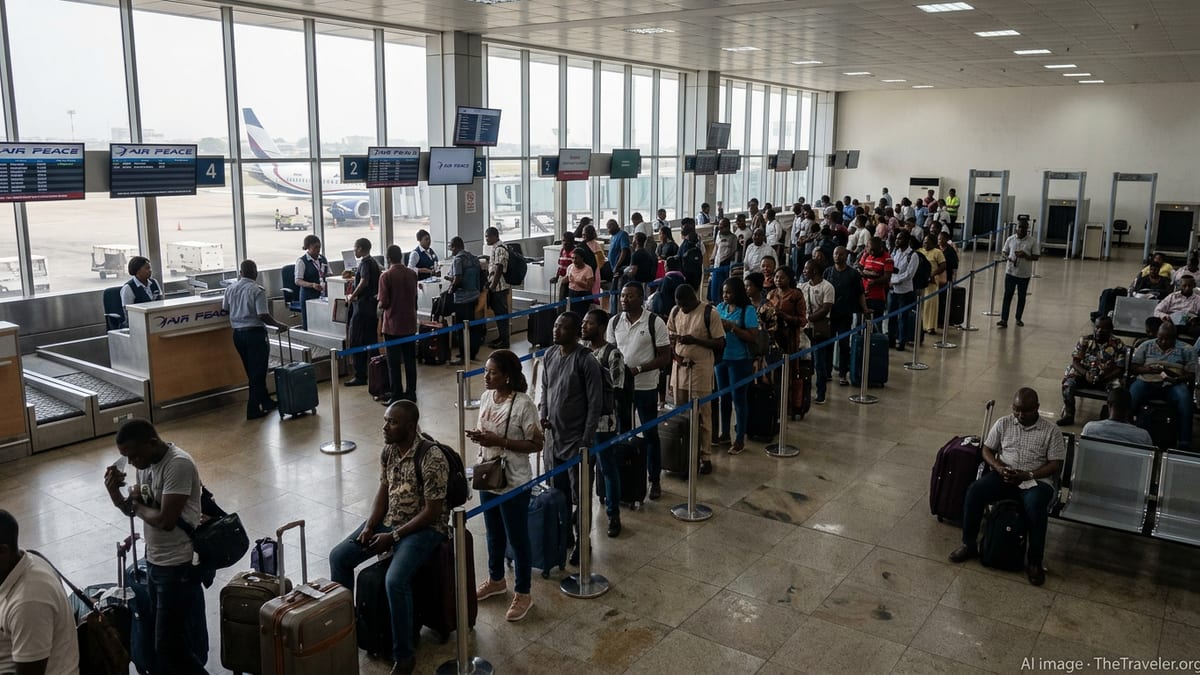
Regulator Steps Up Enforcement After Wave of Complaints
Publicly available information from Nigeria’s Civil Aviation Authority indicates that Air Peace has come under heightened regulatory attention following a series of flight disruptions that triggered passenger complaints at major airports including Lagos, Abuja and regional gateways. Reports over recent months describe missed connections, late-night cancellations and long ground holds that have strained already congested terminals.
The regulator’s consumer protection directorate has been increasingly visible in cases involving Air Peace, particularly where passengers allege inadequate information, delayed refunds or limited care such as hotel accommodation and meal vouchers. The move reflects a broader pledge by the authority to apply its consumer rights framework more assertively whenever flight operations significantly disrupt travel plans.
Industry observers note that Air Peace, as Nigeria’s largest carrier by passenger numbers, also records some of the country’s highest volumes of reported delays, meaning regulatory interventions around the airline have an outsized impact on overall traveler experience. Officials have previously released data showing Air Peace at or near the top of delay statistics, even as the airline has grown its network across West and Central Africa.
According to published coverage, the latest regulatory steps focus on ensuring that the airline fully complies with compensation, rerouting and information requirements when disruptions occur, rather than on any single safety lapse or isolated incident.
Passenger Disruptions Highlight Strain on Busy Network
Recent operational snags involving Air Peace have highlighted the vulnerabilities of a tightly scheduled network serving busy domestic trunk routes such as Lagos to Abuja, Port Harcourt, Owerri and Enugu, as well as regional links to Accra and other West African capitals. When one aircraft goes out of rotation because of a technical inspection, ramp incident or weather diversion, multiple downstream flights can be affected.
Coverage of disruptions in late 2025 and early 2026 describes passengers facing rolling delays stretching into the night, sometimes followed by last minute cancellations. In several cases, travelers reported uncertainty over whether flights would eventually depart, with limited real-time updates at departure gates or via digital channels.
Air Peace has previously stated in public comments that some cancellations and delays are tied to safety-driven decisions, including precautionary maintenance and adverse weather, as well as infrastructure issues at airports that lie outside the airline’s control. Even so, regulators have signaled that the way disruptions are managed remains the airline’s responsibility under Nigerian consumer regulations.
These recurring issues have made Air Peace a focal point in a wider national debate about reliability in Nigeria’s aviation sector and the need for better communication when flights do not run as scheduled.
Consumer Protection Rules Put to the Test
Nigeria’s aviation framework provides a detailed rulebook for how airlines must treat passengers during disruptions, covering delays, cancellations, denial of boarding and missed connections. The rules set out obligations for care, including refreshments, accommodation where necessary, and financial compensation or refunds in defined circumstances.
Recent statements and published documents from the regulator suggest it is now more actively auditing whether Air Peace is meeting these obligations, particularly around timely refunds, transparent rebooking options and prompt communication when schedules unravel. This reflects a shift from broad warnings to more targeted enforcement.
According to sector reports, the authority has already required several domestic carriers to compensate travelers or process overdue refunds after verified breaches of the rules. In earlier enforcement actions, Air Peace was listed among airlines directed to offer fare discounts or reimbursements following large-scale delays in key holiday travel periods.
Analysts say the current focus on Air Peace indicates that consumer protection rules, once seen as largely aspirational, are increasingly shaping day-to-day operations. Airlines now face the prospect of financial penalties and reputational damage if they fall short of the regulator’s expectations.
Air Peace Balances Growth Ambitions With Reliability Pressures
Air Peace has expanded aggressively over the past decade, transforming from a domestic start up into Nigeria’s dominant carrier with ambitions to serve more regional and intercontinental destinations. The airline has invested in larger aircraft and a wider route map, positioning itself as a flagship for Nigerian commercial aviation.
That growth, however, has brought new operational pressures. Maintaining schedule reliability across a busy fleet that hops between short domestic sectors and longer regional flights has proven challenging, particularly in an environment of limited spare aircraft, congested airports and periodic infrastructure constraints.
Travel industry analysts note that operational resilience is now a core test for Air Peace as it seeks to maintain market share against regional competitors. Frequent disruptions risk eroding customer loyalty, especially among business travelers who depend on predictable schedules. The intensified regulatory focus amplifies that pressure, tying future expansion prospects to demonstrable improvements in on time performance and disruption management.
Air Peace has used public statements and promotional campaigns to emphasize its role in connecting underserved Nigerian cities and supporting economic growth. The latest regulatory actions suggest that maintaining that role will increasingly depend on how effectively the airline can combine ambitious expansion with consistent service levels.
Implications for Travelers and Nigeria’s Aviation Future
For passengers, the regulator’s tougher stance on Air Peace signals a potentially more assertive defense of traveler rights in Nigeria’s skies. If enforcement is sustained, travelers affected by delays or cancellations could see faster access to refunds, clearer communication and more consistent provision of care such as hotel stays when overnight disruptions occur.
The development also sends a message to other domestic and regional carriers that the consumer protection rulebook is no longer optional. Airlines that handle disruptions poorly may face closer oversight, financial penalties or reputational fallout, particularly as social media posts about stranded travelers attract rapid public attention.
At the same time, aviation experts caution that lasting improvements will require more than enforcement actions against individual airlines. Nigeria’s broader aviation ecosystem, including airport infrastructure, ground handling providers and air traffic management, all influence how quickly operations can recover when things go wrong.
As Nigeria seeks to strengthen its position as a West African air transport hub, the current regulatory push involving Air Peace illustrates the balancing act between promoting airline growth and protecting passengers. How this latest enforcement chapter unfolds is likely to shape traveler confidence and the broader narrative around flying in and out of Nigeria in the months ahead.