

More news on this day
Nigeria’s largest private airline, Air Peace, is facing heightened regulatory scrutiny after an Abuja–London Heathrow flight reportedly made an emergency return to the capital, focusing fresh attention on safety standards and oversight in the country’s fast-expanding long-haul market.
Get the latest news straight to your inbox!
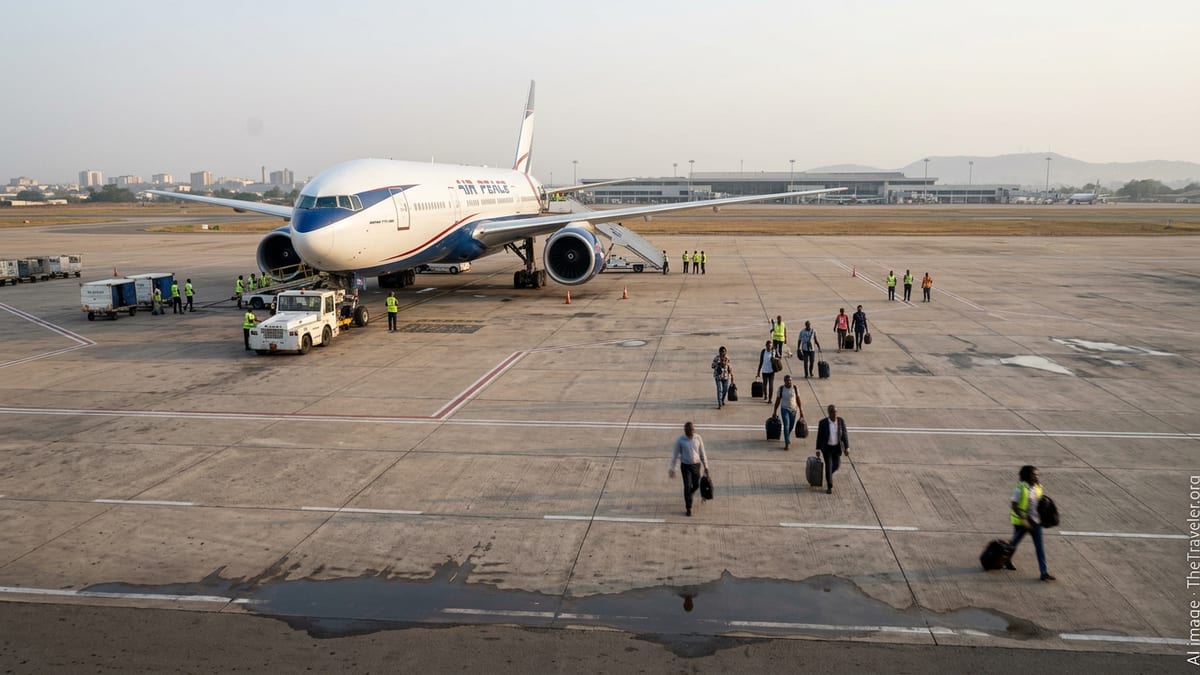
Emergency Return Raises Questions on Flagship Route
Initial reports circulating in Nigerian and diaspora aviation circles indicate that a recent Air Peace service from Abuja’s Nnamdi Azikiwe International Airport to London Heathrow experienced a technical issue shortly after take-off, prompting the crew to return the aircraft to Abuja rather than continue the six-hour journey. The flight is understood to be part of the airline’s new Abuja–London operation, a high-profile route launched after securing long-sought UK approvals.
Publicly available flight-tracking and scheduling data show that Air Peace currently operates multiple weekly non-stop Abuja–London services, primarily with widebody Boeing 777 aircraft. These flights have become a key pillar of the carrier’s international network, linking the Nigerian capital directly to one of the world’s busiest hubs and offering competitive fares against long-established European and Middle Eastern rivals.
While detailed technical information on the incident remains limited, aviation observers note that a return to the departure airport shortly after take-off is a standard precaution when crews detect a fault that could affect performance or safety. Such returns can stem from issues ranging from engine parameters and pressurisation concerns to cockpit indications that require maintenance checks on the ground.
The episode has nonetheless sharpened attention on how Nigeria’s aviation authorities and the airline itself handle communication, disruption management and subsequent investigations on a route that carries significant economic and symbolic weight for the country.
NCAA Steps In With Safety and Compliance Review
The Nigeria Civil Aviation Authority (NCAA), which regulates airline operations under the Civil Aviation Act and Nigeria Civil Aviation Regulations, is now the focus of public interest as it examines the circumstances surrounding the emergency return. According to published coverage on recent enforcement actions in the sector, the authority has shown an increased willingness to summon operators and crews, request technical reports and, where necessary, impose corrective measures.
Industry analysts expect the NCAA’s review of the Abuja–London incident to cover aircraft maintenance records, technical logs, crew decision-making and adherence to standard operating procedures. The regulator typically requires airlines to file detailed occurrence reports after any event classified as an incident, and may mandate additional inspections or line checks before the aircraft is returned to full service on international sectors.
The scrutiny comes as Nigeria seeks to demonstrate regulatory robustness to international partners, including the United Kingdom, which granted Air Peace access to Heathrow slots only after prolonged negotiations under the bilateral air services framework. Any perception of weak oversight on a flagship route could complicate future market access talks for Nigerian carriers and may attract closer monitoring from foreign aviation authorities.
For Air Peace, a cooperative and transparent posture toward the NCAA’s process is seen by commentators as essential to reassuring passengers and preserving hard-won credibility in the premium long-haul space.
Strategic Importance of the Abuja–London Corridor
The Abuja–London market has grown into a strategic lifeline for government, business and diaspora travel between Nigeria and the United Kingdom. After pioneering daily Lagos–London services in 2024, Air Peace extended its reach from Abuja in late 2025, adding direct Heathrow and later Gatwick links that significantly increased non-stop capacity from Nigeria’s political capital.
Economic assessments published around the launch highlighted the route’s potential to ease long-standing fare pressure on Nigerian travellers, many of whom had relied on foreign carriers and indirect routings through hubs such as Doha, Addis Ababa or Istanbul. By basing long-haul operations out of Abuja, Air Peace also positioned the city as a connecting hub for passengers from other Nigerian destinations seeking a single-ticket journey to London.
The emergency return has therefore resonated beyond the immediate cohort of passengers on the affected flight. Trade groups in the travel and tourism sector are closely watching how quickly the operation stabilises and how effectively schedules and connections are maintained in the days following the disruption, given the role of reliable long-haul links in supporting conferences, investment missions and leisure travel.
Travel agents and corporate travel managers note that any prolonged uncertainty on a key route can push high-yield passengers toward rival airlines, even if the initial incident is successfully managed and poses no long-term safety concerns. Maintaining on-time performance and operational resilience will be critical for Air Peace as investigations progress.
Passenger Confidence and Communication Under the Microscope
Discussions on social media and aviation forums suggest that passenger reactions to the emergency return were mixed, with many expressing relief at the precautionary decision while others voiced frustration over delays and onward connection risks. For an airline competing in a market dominated by global brands, the way it communicates during and after such events can be as important to reputation as the technical handling itself.
Publicly available guidance from international aviation bodies stresses the value of clear, timely updates to passengers, including explanations of delays, rebooking options and care provisions during extended waits. Nigerian consumer advocates often point to gaps in communication and service recovery as recurring pain points across the domestic aviation sector, particularly when incidents affect high-profile international services.
Analysts note that Air Peace has staked much of its brand identity on positioning itself as a champion of Nigerian travellers, frequently highlighting lower fares and generous baggage allowances compared with foreign competitors. Incidents like an emergency return on the Abuja–London route test that positioning by exposing how the airline balances commercial pressures with the cost of diversions, hotel accommodation, meal vouchers and re-accommodation on later flights or partner carriers.
How effectively the carrier manages these expectations in the current case may influence long-term loyalty among business travellers and members of the large Nigerian community in the United Kingdom, many of whom have only recently begun shifting from legacy European airlines to indigenous operators.
Implications for Nigeria’s Aviation Ambitions
The NCAA’s scrutiny of Air Peace comes at a time when Nigeria is seeking to expand its aviation footprint and position local carriers as serious contenders on intercontinental routes. Policy papers and business commentary over the past year have presented the success of private airlines on corridors such as Abuja–London as a practical alternative to long-delayed plans for a new national carrier.
However, the incident underscores how quickly confidence can be tested in an industry where safety is paramount and operational margins are thin. Even when no injuries occur and aircraft return safely, repeated disruptions or high-profile returns can reinforce lingering concerns among some travellers about reliability and maintenance standards in parts of the African aviation market.
For regulators, the episode is another opportunity to demonstrate adherence to international norms, including thorough incident reporting, data-driven oversight and, where needed, transparent publication of safety recommendations. For Air Peace, it is a reminder that the privileges of access to prime foreign airports such as Heathrow carry equally significant responsibilities in terms of fleet upkeep, crew training and contingency planning.
As the investigation unfolds, the Abuja–London corridor will remain in the spotlight, serving as a barometer for how Nigeria’s aviation sector manages the growing pains that come with rapid expansion into some of the world’s most competitive skies.