

More news on this day
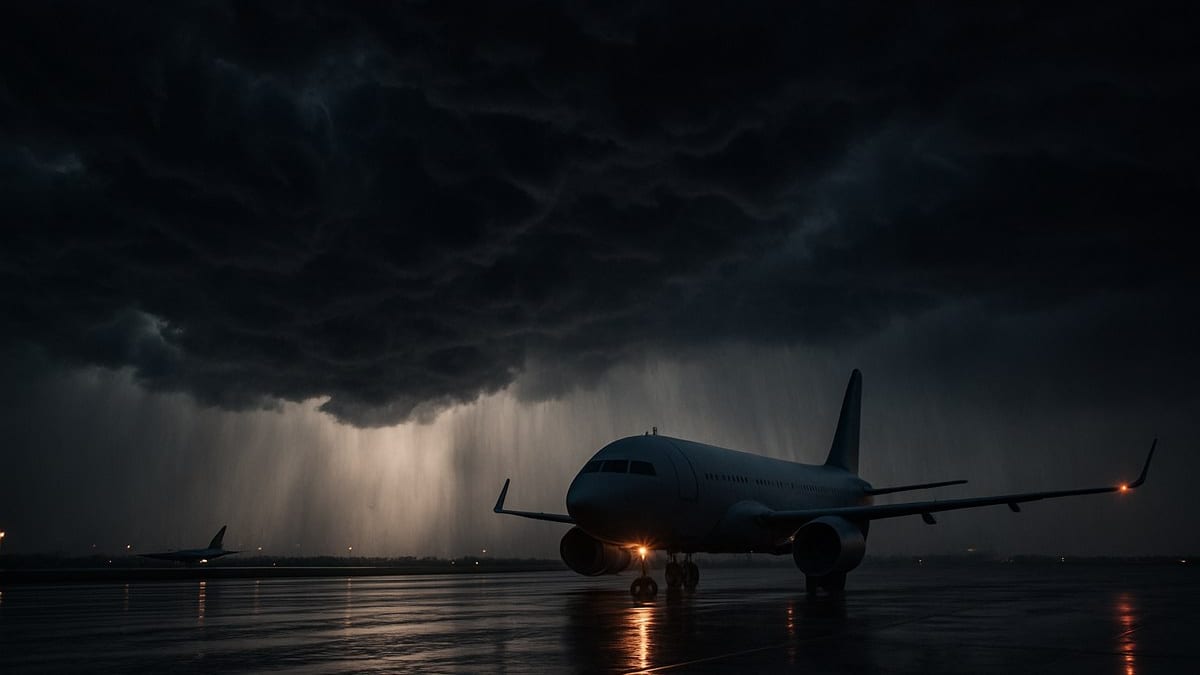
Nigeria’s domestic air travellers are being advised to brace for a bumpy few months as the approaching rainy season raises the likelihood of delays, diversions and cancellations across one of Africa’s busiest domestic aviation markets.
Get the latest news straight to your inbox!
Regulator warns as wet season nears
The Nigeria Civil Aviation Authority has issued a fresh advisory highlighting an increased risk of schedule disruptions as the country moves into its main rainy season. According to recent coverage, the regulator is drawing attention to the operational impact of thunderstorms, heavy rainfall and sudden drops in visibility on flight schedules at key hubs such as Lagos, Abuja and Port Harcourt.
Publicly available information indicates that the guidance comes on the back of several weather-related disruptions in recent months, including diversions and extended holding patterns when storms have built up around major airports. The message to passengers is to expect more frequent delays and possible cancellations as convective weather becomes a daily feature over much of the country.
The advisory underscores that safety margins will take precedence over punctuality whenever adverse conditions develop. That is likely to translate into longer turnaround times on the ground, more conservative flight planning and occasional airport closures when thunderstorms, wind shear or microbursts are detected near the runway environment.
NiMet forecasts volatile rainfall patterns
The Nigerian Meteorological Agency’s latest Seasonal Climate Prediction for 2026 points to a rainy season that may be less predictable than historical averages. The agency’s outlook, released in February and further analysed in recent business and weather reports, highlights uneven rainfall distribution, possible prolonged dry spells and intense downpours concentrated into shorter windows.
Recent rainfall in typically dry northern cities such as Kano in March has already drawn attention to shifting climate patterns. Reports on this early-season rain note that such events, once considered unusual, are becoming more common, complicating planning for both agriculture and transport.
For aviation, the concern is not only how much rain will fall, but how quickly conditions can deteriorate. Strong convective cells can produce low cloud ceilings, rapidly changing winds and lightning close to approach paths, forcing crews to abandon landings or divert to alternates at short notice. NiMet’s guidance encourages airlines and airports to rely on more granular, airport-specific forecasts to manage this heightened volatility.
Domestic networks already stretched by disruptions
Recent data on Nigerian domestic aviation show that airlines were contending with significant disruption even before the onset of this year’s rainy season. Half-year figures for 2024 presented to lawmakers, alongside subsequent compilations by industry watchers, indicate that tens of thousands of flights experienced delays, with some carriers recording disruption rates above 60 percent on their domestic operations.
In a separate briefing late in 2024, the civil aviation authority disclosed that more than 5,000 domestic flights were delayed and nearly 200 cancelled in just two months as weather and operational challenges combined. That period coincided with the transition from the wet season to the dusty harmattan, underscoring how sensitive Nigerian aviation is to seasonal shifts.
Academic analyses of delay patterns in Nigeria point to weather as a central factor, but also highlight how environmental shocks can quickly expose structural weaknesses such as tight aircraft utilisation, limited spare capacity and congested terminal infrastructure. When a thunderstorm closes a major airport for even an hour, knock-on delays can ripple across the domestic network for the rest of the day.
Passenger rights and airline responses under scrutiny
The rising probability of rainy-season disruption is drawing renewed focus to how airlines handle delayed and stranded passengers. A recent review of proceedings in the House of Representatives reiterated that domestic passengers are entitled to specific forms of compensation when cancellations occur without sufficient notice, and called attention to carriers with the highest tally of delays and cancellations in 2024.
Consumer advocates note that weather-related disruptions can sometimes blur the line between force majeure and preventable operational shortcomings. While heavy rain or low visibility can make flying temporarily impossible, poor communication, inadequate contingency planning or over-optimistic scheduling can exacerbate the experience for travellers stuck in departure halls.
Some carriers have begun to publicly explain individual disruption events in greater detail, particularly when social media criticism has escalated. In early April, for example, one leading domestic airline issued a statement attributing a protracted delay on a regional route to weather conditions that prevented safe landing at the destination, while also correcting misreported passenger numbers.
Regulatory guidance and recent parliamentary debates suggest that both punctuality metrics and passenger care standards will be watched closely over the coming months, especially if repeated storms make schedule adjustments unavoidable.
Safety, technology and climate adaptation in focus
Industry specialists stress that accepting weather-related delays is an integral part of maintaining safety in a tropical climate. Nigerian and international studies on flight operations note that heavy rain, poor visibility and wind shear demand strict adherence to approach and take-off minima, as well as robust decision-making when conditions deteriorate.
The rainy season risk is also sharpening interest in better use of meteorological data and forecasting tools. NiMet’s recent communications emphasize the agency’s role in providing tailored aviation weather products, while broader African climate forums are promoting collaborative approaches to seasonal prediction and early warning for the transport sector.
At the same time, domestic airlines are navigating a difficult financial environment characterised by currency constraints and high fuel costs. These pressures can limit investment in additional aircraft or redundancy that would help absorb weather shocks. The expectation from analysts is that any gains from new aircraft deliveries in 2026 will need to be matched by improved schedule resilience and more transparent disruption management.
For now, travellers planning trips between April and October are being encouraged by travel advisers and media reports to build flexibility into their itineraries, monitor airline communications closely and be prepared for changing departure times as Nigeria’s rainy season settles in over the country’s dense network of domestic air routes.