

More news on this day
Egypt’s flagship Nile River cruise industry has been thrown into sudden turmoil as major international operators suspend sailings and global travel warnings proliferate in response to the escalating conflict in the Gulf, raising urgent questions about safety, refunds and the wider impact on one of the country’s most vital tourism lifelines.
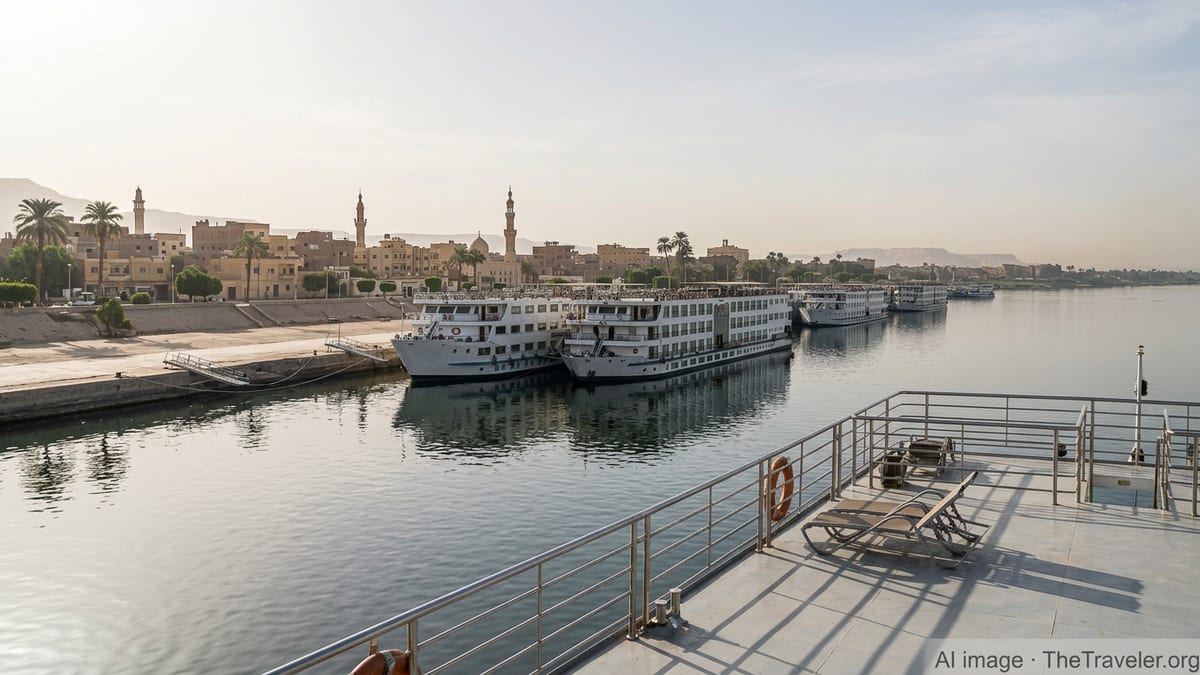
Major River Brands Hit Pause on Egypt Itineraries
Viking became the highest profile operator to halt Nile River cruises this week, announcing the suspension of its Egypt river program through at least March 31, 2026, as tensions linked to the Iran war ripple across the wider Middle East. The decision affects departures on its Nile vessels based in Luxor and Aswan and follows days of mounting concern over airspace closures and shifting risk assessments for travel in the region.
Other premium river cruise brands including Avalon Waterways and Tauck have also suspended operations in Egypt and Jordan “out of an abundance of caution,” cancelling upcoming Nile sailings and related land tours. Travel trade publications report that affected guests are being offered rebooking options or future travel credits, but policies vary by line, leaving many travelers scrambling to understand whether they qualify for cash refunds or must accept alternative itineraries.
The wave of cancellations marks a stark reversal for Egypt’s river sector, which had been enjoying a strong rebound following the pandemic and previous regional shocks. Industry analysts say the March period is normally peak season for Nile cruises, when high winter demand from Europe and North America supports hundreds of sailings between Luxor and Aswan.
Gulf Conflict Sends Shockwaves Through Travel and Insurance
The immediate trigger for the disruption lies more than 1,000 kilometers away, in the Gulf and surrounding airspace. The widening confrontation involving Iran, Israel and a United States led coalition has closed or constricted key aviation corridors across multiple Gulf states, forcing thousands of flights to be cancelled, rerouted or heavily delayed. Cruise executives say the instability has made it difficult to guarantee safe, reliable access for guests flying into Cairo, Luxor and Aswan to join Nile itineraries.
At the same time, the conflict has been formally labelled a known event by many travel insurers, sharply limiting coverage for newly booked trips that might later be cancelled due to security concerns. Travelers who reserved Nile cruises months ago are discovering that standard policies often do not cover fear based cancellations, putting added pressure on cruise lines to show flexibility even when Egypt itself remains open to tourism.
Maritime disruptions in the Red Sea and the Strait of Hormuz have further heightened uncertainty. While Egypt’s Nile cruises operate entirely within inland waters, the global cruise industry has already been battered by the rerouting and cancellation of itineraries that once threaded through Gulf ports and the Suez Canal. Companies with significant Middle East programs are now reassessing their entire regional deployment, from big ocean ships to boutique riverboats on the Nile.
Egypt Pushes Back as Travel Warnings Expand
The United States and several European governments have issued broader alerts advising citizens to reconsider or, in some cases, depart from a swath of Middle Eastern countries, including Egypt, citing the potential for rapid escalation and disruption. Officials emphasize that the advisories are precautionary and point out that airports and major tourist hubs in Egypt remain operational, with scheduled commercial flights still available.
Cairo has reacted sharply to being grouped with active war zones, insisting that Egypt remains safe for visitors and that security at archaeological sites, airports and Nile embarkation points has been reinforced. Tourism is a cornerstone of the Egyptian economy, accounting for roughly a tenth of gross domestic product, and officials are acutely aware of how quickly warnings can cascade into large scale cancellations.
On the ground, Red Sea resorts such as Hurghada and Sharm el Sheikh continue to operate near normal levels, according to local tourism and diving operators, even as Gulf based diving and cruise trips are effectively frozen. The contrast underscores the unusual nature of the current shock to Nile cruising: Egypt’s internal security picture has not dramatically changed in recent weeks, yet global risk perceptions and logistical constraints are reshaping demand.
Travelers Caught Between Safety Fears and Bucket List Dreams
For travelers, the sudden suspension of Nile sailings is as much an emotional blow as a logistical one. The classic cruise between Luxor and Aswan, taking in the Valley of the Kings, Karnak and the temples of Kom Ombo and Edfu, is a once in a lifetime trip for many. Travel advisors report clients torn between long planned itineraries and safety worries fueled by footage of missile strikes, air raid sirens and packed departure lounges across the region.
Some passengers scheduled to sail in March say they received reassurances only days ago that cruises were proceeding, only to be notified later that departures were cancelled. Advisors describe a rush to rebook clients into alternative destinations such as the Danube or Western Mediterranean, while others choose to postpone to late 2026 in the hope that tensions will ease and travel advisories will soften.
Those determined to continue with Egypt travel are increasingly shifting to land based itineraries focused on Cairo and the Red Sea coast, or booking smaller locally operated Nile boats that remain in service. However, experts warn that independent travelers need to monitor advisories closely and be prepared for last minute changes to flights, internal connections and security procedures at key sites.
Uncertain Outlook for a Strategic Tourism Lifeline
How long the disruption to Nile cruising will last now depends largely on developments far from the river’s banks. Cruise lines have so far framed their cancellations as short term, with most committing only through the end of March and promising to “continue monitoring the situation” before making decisions about April and beyond.
Industry economists note that even a brief interruption during peak season can have outsized consequences in Egypt, where river cruises support thousands of jobs aboard ships and in the broader supply chain of tour guides, hoteliers, transport companies and craft vendors from Cairo to Upper Egypt. For local communities that rely heavily on cruise traffic, several weeks of empty docks and quiet bazaars can mean a painful hit to incomes already squeezed by inflation and currency pressures.
If airspace restrictions ease and the conflict in the Gulf stabilizes, operators could move quickly to restart Nile sailings later in the spring. Yet with government alerts still in force and insurers treating the Iran war as an ongoing, high risk backdrop, a clean reset may prove difficult. For now, Egypt’s most iconic river is once again at the mercy of forces far beyond its shores, its cruise ships waiting idly as the global security map is redrawn in real time.