

More news on this day
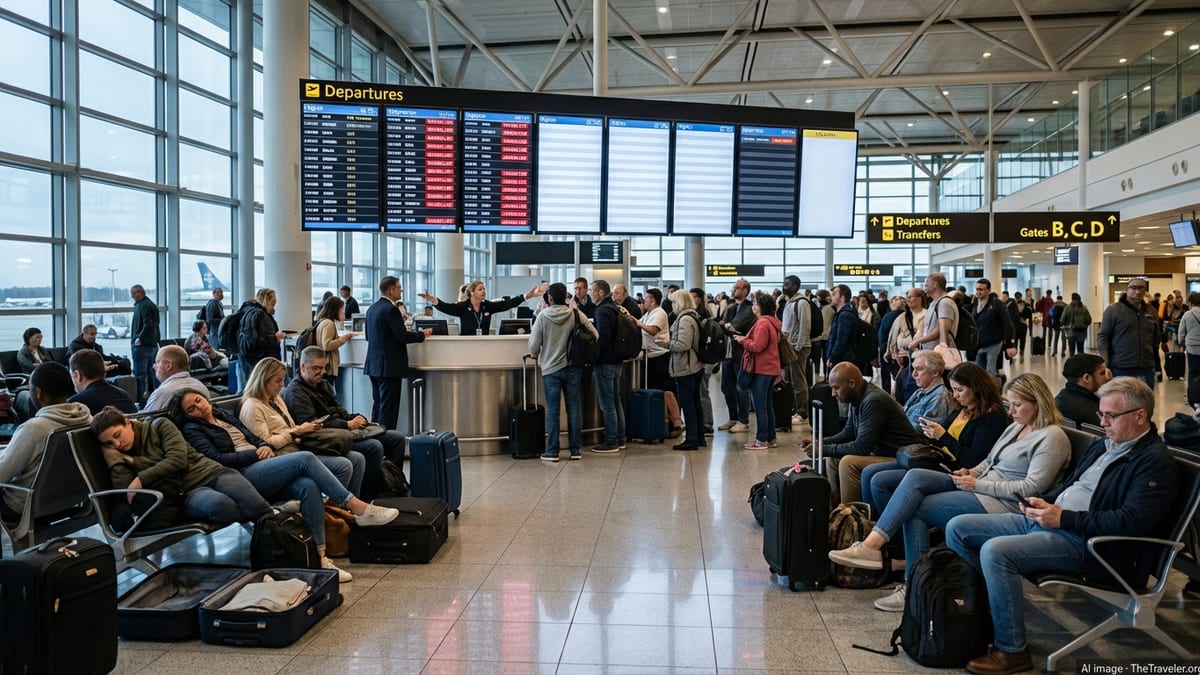
Passengers at Kuwait International Airport faced fresh disruption this week as nine commercial flights were canceled on key routes to Dubai, Riyadh, Doha and London amid ongoing regional airspace closures and sharply reduced schedules for Kuwait Airways, Jazeera Airways and other carriers.
Get the latest news straight to your inbox!
Targeted Cancellations Hit Key Regional and Long-Haul Routes
Published flight-status information and regional operations bulletins indicate that at least nine departures and arrivals at Kuwait International Airport were scrubbed over a short window, affecting connections to major Gulf hubs and London. The cancellations are part of a wider pattern of disrupted services as airlines continue to navigate airspace restrictions across West Asia following the outbreak of conflict in late February 2026.
The affected Kuwait City flights include services to Dubai, Riyadh and Doha, which are normally among the busiest regional routes for both Kuwait Airways and low-cost carrier Jazeera Airways. London flights, typically operated by Kuwait Airways and international partners, have also appeared as canceled on recent schedules, reducing options for travelers connecting between the Gulf and Europe.
Operational updates from industry advisories show that Kuwait Airways has suspended regular inbound and outbound services for several weeks, while Jazeera Airways has limited options by rerouting some operations through alternative airports in Saudi Arabia. These changes have translated into a smaller number of scheduled departures from Kuwait City, making each cancellation more visible to passengers who rely on the hub for business and family travel.
International carriers serving Kuwait have also adjusted their timetables, trimming frequencies or temporarily suspending certain rotations. As a result, travelers booked on multi-leg journeys that start or end in Kuwait City have encountered last-minute changes and extended layovers when connections via Dubai, Doha, Riyadh or London fall within restricted airspace corridors.
Airspace Closures Keep Kuwait International Airport Largely Grounded
A series of aviation security advisories and airline notices describe Kuwaiti airspace as effectively closed to routine civilian traffic since late February, following regional military escalation and increased risk along key flight paths. Industry alerts covering West Asia state that Kuwait’s airspace remains subject to a total or near-total closure, with only limited, specially authorized movements permitted.
Publicly available information on airport status pages shows that Kuwait International Airport has recorded days with no regular commercial departures or arrivals, illustrating the depth of the disruption. Recent coverage notes that the airport remained without scheduled commercial flights as of April 8, 2026, underscoring that the nine latest cancellations form part of a longer-running shutdown rather than an isolated weather or technical episode.
Travel and aviation trackers report that cumulative flight cancellations across Gulf and Levant hubs now number in the tens of thousands since airspace restrictions first came into force. While some neighboring countries have seen a gradual reopening of limited corridors, Kuwait’s proximity to sensitive areas and its smaller aviation market have translated into a more conservative approach, with continued tight limits on traffic above and around the country.
The closure has knock-on effects beyond passenger travel. Cargo movements, aircraft positioning flights and crew rotations are all constrained, further complicating airlines’ efforts to rebuild coherent schedules. As carriers prioritize larger hubs with more alternative routing options, Kuwait’s airport remains on a reduced footing, dependent on incremental easing of restrictions before normal service can resume.
Kuwait Airways, Jazeera Airways and Partners Restructure Networks
Kuwait Airways and Jazeera Airways, the two main home carriers at Kuwait International Airport, have each put in place temporary workarounds in response to the airspace crisis. Operational notices compiled by logistics and aviation firms show that Kuwait Airways has effectively halted regular commercial flights in and out of Kuwait City for now, concentrating instead on select repatriation and essential travel services routed via neighboring airports.
According to recent reporting on regional flight operations, some limited movements for Kuwait-based passengers have been arranged through Saudi Arabia’s Dammam and other alternative gateways, where airspace remains subject to restrictions but is more permissive than around Kuwait. These flights are typically marketed as special operations and are not part of the standard Kuwait City schedule, limiting their availability for general travelers.
Jazeera Airways, which previously operated a dense network from Kuwait to Dubai, Riyadh and Doha, has had to reconfigure its offering as well. Aviation references describe how the carrier has diverted portions of its operation to airports in Saudi Arabia to maintain a minimal level of connectivity for its customer base. However, with Kuwait City itself constrained by airspace closures, these measures only partially offset the loss of direct services.
International partners, including European and Asian airlines with codeshare agreements on Kuwait routes, continue to adjust their timetables in response. Some long-haul carriers have reduced or canceled flights linking London and other European hubs with Gulf destinations, which in turn affects passengers who would normally connect via Kuwait International Airport onto Kuwait Airways or Jazeera Airways services.
Regional Ripple Effects Felt in Dubai, Doha, Riyadh and London
The cancellations in Kuwait intersect with broader disruptions across the region, particularly at major transit hubs such as Dubai, Doha and Riyadh. Aviation intelligence sources and airline customer advisories describe extensive schedule changes at these airports since the start of the conflict, including waves of cancellations, diversions and temporary suspensions of entire route networks.
Dubai International Airport, typically one of the world’s busiest global transfer points, has experienced days of sharply reduced operations due to airspace constraints, although recent updates indicate a gradual resumption of limited flights along controlled corridors. Doha’s Hamad International Airport has confirmed that it is handling only a restricted number of passenger and cargo services under special authorization, prioritizing the evacuation of stranded travelers and essential freight.
Riyadh and other Saudi airports have also seen intermittent cancellations and route changes, particularly for flights that would ordinarily traverse now-restricted airspace over neighboring states. For passengers originating in or destined for Kuwait, these constraints mean that even when their own flight is operating, onward connections via Dubai, Doha or Riyadh can be disrupted at short notice.
In London, airlines with extensive Middle East networks have published customer updates acknowledging reduced capacity to and from key Gulf cities, including Dubai, Doha and Riyadh. Adjustments on these trunk routes affect Kuwait-linked itineraries, as travelers lose the option of connecting seamlessly between Kuwait City and the United Kingdom through regional hubs. Instead, some are being rebooked on alternative routings via Europe or Asia, adding time and complexity to their journeys.
What Travelers Through Kuwait Need to Know Right Now
For passengers holding tickets on Kuwait Airways, Jazeera Airways or international partners on routes touching Kuwait City, current industry guidance stresses the importance of checking flight status repeatedly in the days and hours before travel. Given the continued closure of Kuwaiti airspace and fluid conditions in adjacent flight information regions, schedules remain subject to last-minute alteration.
Travel information platforms tracking airspace closures across the Gulf advise that all regular commercial operations at Kuwait International Airport are suspended until further notice. Limited exceptions apply only to specially approved flights, many of which do not appear in standard consumer booking channels. Travelers whose journeys are canceled are typically offered rebooking or refunds according to each airline’s disruption policy.
Some carriers in the wider region have introduced temporary flexibility, such as fee-free date changes or alternative routings, for customers booked to or from Gulf destinations affected by airspace restrictions. Passengers connecting between Kuwait and cities such as Dubai, Doha, Riyadh or London may be able to use these options to reroute via different hubs or postpone their travel.
With no firm timeline yet available for the full reopening of Kuwaiti airspace, aviation analysts expect further rolling adjustments to schedules in the coming days and weeks. Until authorities ease restrictions and airlines restore regular operations, travelers planning to transit Kuwait International Airport are likely to face a dynamic environment in which cancellations like the latest nine affected flights remain a recurring risk.