

More news on this day
As India races to expand its aviation capacity and deepen global trade links, the upcoming Noida International Airport near Jewar is emerging as a flagship project that combines world-class connectivity, advanced digital systems, and ambitious sustainability goals.
Get the latest news straight to your inbox!
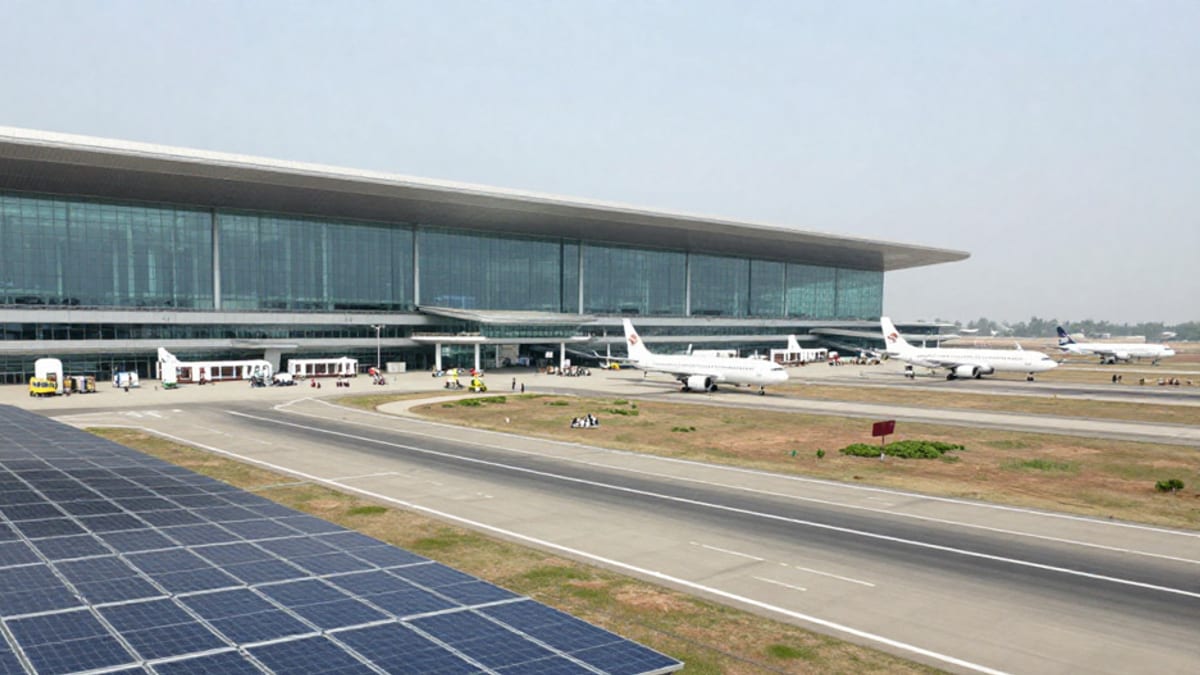
Image by Latest International / Global Travel News, Breaking World Travel News
A New Global Gateway for India’s Capital Region
Noida International Airport, located near Jewar in Uttar Pradesh’s Gautam Buddha Nagar district, is designed to become the second major international gateway for the National Capital Region and one of India’s largest greenfield aviation projects. Publicly available information shows that Phase 1 will open with a single runway and one passenger terminal sized to handle around 12 million passengers annually, with the broader master plan scaling capacity to tens of millions more in later phases.
The airport is being developed under a public private partnership, with Noida International Airport Limited as the public-sector promoter and Yamuna International Airport Private Limited, a special purpose vehicle of Zurich Airport, as the concessionaire. Reports indicate that successive development stages are planned through the 2030s and 2040s, as demand grows for both passenger and cargo movements across northern India.
Recent coverage from Indian and international business outlets highlights that authorities have set the inauguration of the first phase for late March 2026, positioning commercial operations to ramp up soon after. The opening is expected to ease pressure on Delhi’s Indira Gandhi International Airport by diverting traffic from fast-growing catchment areas such as Noida, Greater Noida, Ghaziabad, and large parts of western Uttar Pradesh.
Government and industry analyses suggest that, once fully built out, Noida International Airport could become one of the busiest hubs in Asia by mid-century, aligning with India’s wider push to turn the country into a global logistics and manufacturing base.
Connecting to Global Markets and Industrial Corridors
Strategically sited along the Yamuna Expressway and within the broader Yamuna Expressway Industrial Development Authority region, Noida International Airport is intended to plug directly into India’s emerging network of industrial corridors. Investment promotion documents show that logistics parks, warehousing clusters, and manufacturing zones are being planned around the airport to support just-in-time supply chains for sectors such as electronics, automobiles, textiles, and pharmaceuticals.
Official masterplan material and recent infrastructure updates describe an integrated multimodal hub that will eventually combine expressways, regional rapid rail, metro extensions, and dedicated bus networks in a single ground transport centre next to the terminal. The first phases are expected to rely mainly on road access and bus links, with rail-based connectivity scheduled to follow in later build-out stages as additional demand materialises.
Cargo is a central pillar of the project’s long-term vision. Planning documents presented at aviation forums outline a dedicated cargo precinct sized for hundreds of thousands of tonnes of annual throughput in the initial phase, with the potential to exceed one million tonnes in the full development scenario. This capacity is viewed as a critical enabler for exporters in Uttar Pradesh and neighbouring states seeking faster, more reliable direct air links to Europe, the Middle East, North America, and East Asia.
Analysts note that, combined with other new airports such as Navi Mumbai and the expansion of existing hubs, Noida International Airport is expected to play a key role in supporting India’s targeted growth in both passenger numbers and air freight volumes over the coming decades.
Advanced Digital Systems and Seamless Passenger Experience
Beyond capacity, Noida International Airport is being positioned as a technology-forward facility designed around contactless travel and integrated digital platforms. According to publicly shared project briefings, the terminal architecture has been planned from the outset to accommodate biometric-based boarding using India’s DigiYatra framework, enabling passengers to move from entry to boarding gate with minimal document checks.
The plans point to extensive self-service infrastructure, including automated check-in kiosks, common-use self-bag-drop units, and automated border control systems, all integrated into a central airport operations platform. This digital backbone is expected to allow real-time coordination between airlines, ground handlers, security agencies, and transport providers, with the aim of reducing turnaround times and improving on-time performance.
Industry coverage notes that the airport’s operator intends to draw on Zurich Airport’s experience in Europe and Latin America to standardise processes such as wayfinding, queue management, and baggage handling. The design approach emphasises intuitive passenger flows, daylight-filled concourses, and clear visual signage to enable smoother movement of first-time travellers and business passengers alike.
In line with broader trends across Indian aviation, there is also a strong push toward app-based services, from parking reservations and curbside check-in to retail pre-ordering and digital payment options throughout the terminal. Observers suggest that this ecosystem could position Noida International Airport as a test bed for new travel technologies in the Indian market.
Sustainable Design at the Core of the Masterplan
Sustainability has been placed at the centre of the airport’s planning and construction strategy. According to investor presentations and project disclosures, the goal is to create a carbon-conscious facility that meets or exceeds national green building standards while aligning with Zurich Airport’s corporate climate commitments.
The development roadmap highlights energy-efficient terminal design using high-performance glazing, optimized shading, and natural light, combined with LED lighting and smart building management systems to reduce overall consumption. Large-scale rooftop solar installations and the procurement of renewable power from off-site sources are expected to contribute a substantial share of the airport’s electricity needs over time.
Water conservation and circular resource use form another key pillar. Planning documents reference rainwater harvesting systems, on-site wastewater treatment and reuse for landscaping and non-potable applications, and measures to minimise stormwater runoff. Landscaping plans emphasise native and drought-tolerant species suited to the region’s climate, with the dual aim of lowering irrigation demand and supporting local biodiversity.
Waste management strategies outlined in public-domain material include high levels of segregation at source, partnerships with recycling vendors, and efforts to limit single-use plastics within the terminal. Aviation sustainability specialists point out that such initiatives, if fully implemented and maintained, could allow Noida International Airport to benchmark itself against leading low-emission airports globally.
Regional Economic Catalyst and Competitive Pressures
Economic impact assessments produced for the project forecast that Noida International Airport will become a major employment generator and investment magnet for western Uttar Pradesh. Construction alone has already mobilised thousands of workers and significant capital, and long-term operations are expected to support jobs across aviation, hospitality, logistics, maintenance, and retail.
Real estate and industry reports describe a surge of interest in commercial, residential, and industrial developments along the Yamuna Expressway corridor, driven in part by expectations around the airport. Planners anticipate that improved connectivity could draw in technology firms, educational institutions, and health-care providers, gradually transforming the wider area into a multi-sector urban cluster.
At the same time, sector commentary notes that the project has faced schedule pressures, with several revisions to its commercial opening timeline over recent years. Penalties outlined in concession agreements and heightened public scrutiny have reinforced expectations that remaining milestones will be closely monitored as the airport approaches full operational status.
As India’s aviation market becomes increasingly competitive, Noida International Airport is projected to play a dual role: providing much-needed capacity relief to the Delhi region and serving as a showcase for how new large airports in the country can combine advanced technology, sustainable design, and trade-focused connectivity to integrate more deeply into global markets.