

More news on this day
Year-round nonstop flights from Missoula to Chicago are redefining what it means to live, work and travel in western Montana, turning a once-seasonal connection into a powerful new gateway for the region.
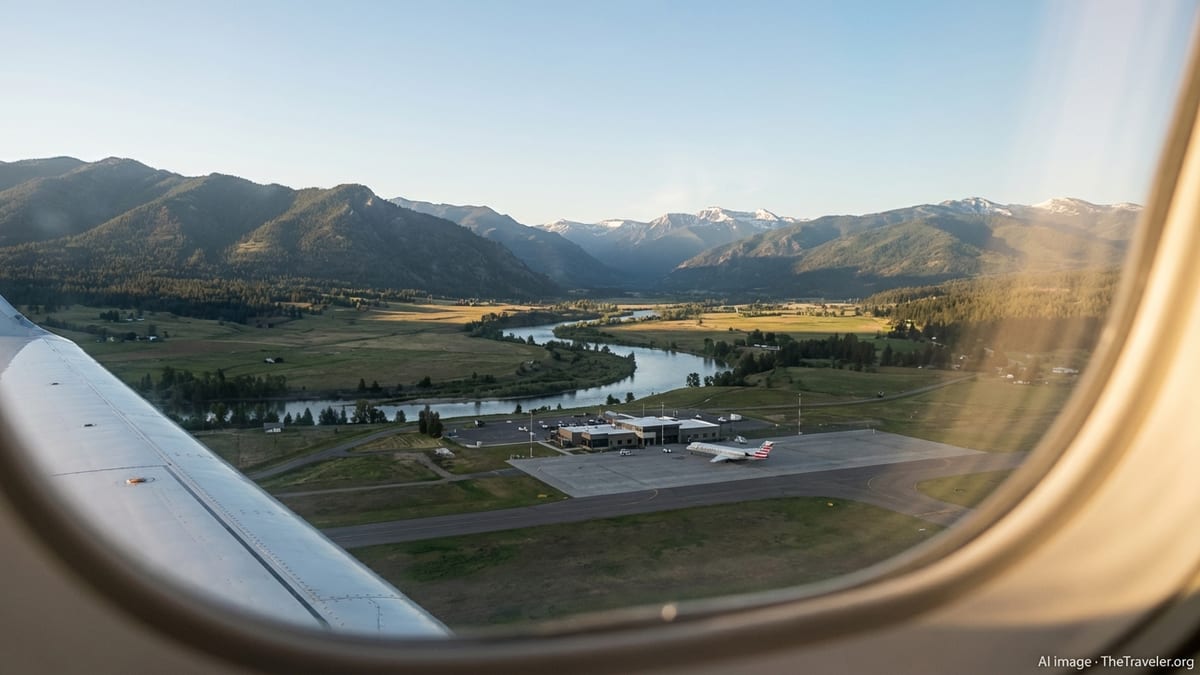
A Seasonal Link Becomes a Year-Round Gateway
When American Airlines launched its new year-round nonstop service between Missoula Montana Airport and Chicago O’Hare International Airport on December 18, 2025, it marked a turning point for one of the fastest-growing corners of the Northern Rockies. What had long been a primarily summer-focused route, shared seasonally by American and United, is now embedded in the core schedule, giving Missoula travelers a dependable, mid-day bridge to one of the country’s premier aviation hubs.
For years, direct flights from Missoula to Chicago operated only during peak travel months, limiting how reliably residents, students, and businesses could plan cross-country trips. The expanded service took shape after a lengthy courtship between local leaders and airline planners, culminating in a Small Community Air Service Development Grant and more than a million dollars in combined federal and local funding to underwrite the risk of a year-round schedule.
Airport officials say the new service, currently offering roughly ten weekly flights in and out of Chicago, is already reshaping booking patterns. Travelers who might previously have routed through Denver, Salt Lake City or Seattle are increasingly choosing Chicago as their primary eastbound connection, rewarding both the convenience of a single hop and the stability of a route that no longer disappears with the first winter snow.
The shift from seasonal to year-round is more than a scheduling tweak. It signals that Montana’s demand curve has changed, with winter travel among residents, visiting friends and relatives, and outdoor recreation travelers strong enough to sustain the thin air-service economics that often challenge mid-sized mountain communities.
How Community Investment Helped Land the Route
Securing a permanent nonstop connection to Chicago did not happen by chance. Missoula’s new air link is the product of a carefully orchestrated regional campaign that brought together public agencies, tourism groups and private-sector leaders around a single goal: convincing a major carrier that Missoula could support a year-round flight into one of the country’s busiest airports.
Through the Take Flight Missoula initiative, partners including Destination Missoula, Western Montana’s Glacier Country, the Missoula Economic Partnership, the Missoula Tourism Business Improvement District and the Montana Department of Commerce pooled resources to create a revenue guarantee and marketing fund. That local money, combined with a federal air service grant, gave American Airlines a cushion during the early years of the route, reducing the financial risk of flying a regional jet on a frontier schedule.
Community leaders argue that the investment is less a subsidy than a catalyst. By improving access to national and international markets, they say, the nonstop Chicago route will generate downstream tax revenue, visitor spending and business growth that far exceed the initial outlay. In their view, every seat filled on a Missoula–Chicago flight represents not just a traveler but a potential long-term connection to Montana.
The collaborative model has become increasingly common across the rural West, where small and mid-sized airports compete intensely for limited aircraft and crews. Missoula’s success story is now being watched by other Montana cities and peer communities across the region, all of which face the same challenge: how to punch above their weight in a constrained air-service environment.
Shorter Trips, Bigger Horizons for Travelers
Practically, the new nonstop flights cut hours from many journeys that once required multiple connections or long drives to larger airports. The Missoula–Chicago flight clocks in at around three hours and forty minutes in the air, covering roughly 1,300 miles in a single hop and trimming what could otherwise be a full day of travel into a compact cross-country trip.
From Chicago O’Hare, Missoula-based travelers gain one-stop access to more than 150 destinations served by American Airlines and its partners, ranging from major East Coast business centers such as New York, Boston and Washington to leisure favorites in Florida, the Southeast and beyond. The route also plugs neatly into international departures across Europe, Asia and Latin America, giving Montanans faster options for long-haul itineraries that previously required backtracking through western hubs.
Travel agents in Missoula report that families are increasingly comfortable planning winter and spring journeys that once felt logistically daunting, including school trips, medical visits and extended holidays. With a mid-day departure window, the Missoula–Chicago flight often allows same-day onward connections that arrive on the East Coast by evening, transforming a two-day slog into a single travel day.
The new schedule matters for inbound travelers as well. Visitors from the Midwest and East Coast can now reach Missoula with fewer layovers, making a long weekend in western Montana more realistic. Tourism officials say that ease of access is critical for attracting first-time visitors who might be curious about Montana’s outdoor offerings but unwilling to endure complex connections.
Economic Ripples Across Western Montana
Beyond convenience, the nonstop route is being hailed as a strategic win for the region’s economy. Business leaders argue that reliable connections to a major hub are no longer a luxury, but a prerequisite for communities hoping to attract and retain employers in fields such as technology, professional services and advanced manufacturing.
Executives who once faced a patchwork of itineraries to reach clients and partners now have a more predictable option that ties Missoula directly into the commercial corridors of the Midwest and East Coast. For some firms, easier access to Chicago and its global connections can tip the scales when deciding where to expand or consolidate operations.
Higher education and healthcare institutions are also poised to benefit. Universities recruit faculty, researchers and students across the country and around the world, many of whom weigh air access heavily when considering a move. Academic conferences, medical referrals and specialist travel all become more manageable when a single nonstop flight can drop passengers into a transcontinental network.
Tourism, long a mainstay of western Montana’s economy, stands to gain from both increased volume and higher-spending travelers. The Chicago route aligns Missoula with a vast population base across the Great Lakes region, opening the door for ski trips, summer hiking vacations and shoulder-season getaways marketed directly to Midwestern households who might once have focused on Colorado or Utah.
Competitive Fares and Shifting Route Dynamics
The expansion of nonstop service has also injected fresh competition into Montana’s air-fare landscape. With American Airlines operating year-round and United offering additional seasonal capacity between Missoula and Chicago, two global carriers now vie for passengers on the same long-haul route, a dynamic that typically exerts downward pressure on ticket prices or encourages more flexible fare classes.
Airport and tourism officials note that even travelers who never set foot on the Missoula–Chicago flight could benefit. When an airline adds capacity to a market and faces direct competition on a key route, it often recalibrates pricing across its network. That can translate into more affordable options on flights to other hubs such as Denver, Minneapolis, Dallas and Seattle that connect indirectly to the Midwest and East.
While airfares remain volatile, shaped by fuel prices, labor costs and aircraft availability, early signs suggest the Chicago route is delivering on promises to broaden choice. Aggregated schedule data for early 2026 show roughly ten weekly Missoula–Chicago flights, with frequency likely to fluctuate by season as airlines adjust to demand.
The route also fits into a broader pattern across Montana, where airports in Billings, Bozeman and other cities have added or expanded Chicago and other Midwest links, reflecting the state’s growing profile as both a tourism magnet and a hub for remote-ready professionals.
What It Means for Montana’s Tourism Map
For the state’s tourism industry, the nonstop Missoula–Chicago connection is as much a branding opportunity as a transportation upgrade. Marketers can now promote western Montana in major Midwestern media markets with the simple message that snow-capped peaks, blue-ribbon rivers and thriving small cities are only one flight away.
Travel planners see particular potential in shoulder seasons, when hotels, outfitters and attractions have room to grow. With dependable winter service, ski resorts near Missoula can sell long weekends to Chicago-based travelers who want to maximize slope time and minimize airport transfers. In spring and fall, national park gateways, cultural festivals and food-and-beverage events can target travelers who value direct access and shorter stays.
The route also dovetails with a broader shift in how visitors experience Montana. Rather than focusing solely on traditional park-based itineraries, many are seeking more urban amenities, from craft breweries and live music to university sports and local arts. Missoula’s identity as both a cultural center and a launch pad for outdoor adventure aligns naturally with a nonstop connection from a major metropolitan area.
At the same time, tourism leaders are mindful of the pressures that increased visitation can bring, from housing strain to trail congestion. The hope is that improved air access can help spread travel more evenly across the calendar and across the region, supporting businesses while easing peak-season bottlenecks.
Inside the Passenger Experience
Onboard, the Missoula–Chicago flights are typically operated with regional jets such as the Embraer 175, offering a mix of first-class and economy seating on a two-by-two configuration that eliminates the middle seat. For passengers accustomed to larger narrow-body aircraft, the cabin feels compact but modern, with overhead bins sized for most carry-ons and Wi-Fi available on many departures.
The mid-day departure and arrival pattern is designed to feed Chicago’s bank of afternoon and evening connections while avoiding some of the congestion that plagues early-morning and late-night waves at major hubs. Travelers departing Missoula in late morning or around midday can often reach East Coast destinations by early evening, while westbound passengers returning home from Chicago avoid red-eyes and overnight layovers.
In Missoula, the new flights operate out of the airport’s recently modernized facilities, which feature expanded security lanes, brighter gate areas and improved concessions that reflect the region’s character. At Chicago O’Hare, passengers connect into a sprawling but steadily modernizing terminal complex that is undergoing a multibillion-dollar makeover, including a new global concourse and upgrades aimed at smoothing transfers for both domestic and international travelers.
Combined, the onboard product and terminal improvements are intended to make the journey feel less like a long-haul trek from a remote outpost and more like a seamless segment of a national network, even in the depths of winter.
A New Baseline for Connectivity in the Northern Rockies
As the Missoula–Chicago route settles into its first full year as a year-round service, industry observers say it is quickly becoming part of the region’s baseline infrastructure rather than a seasonal perk. The expectation among many travelers is that the nonstop will be there when needed, whether for a last-minute family emergency, a cross-country business pitch or a hard-earned vacation.
Airport officials, however, stress that sustained community use remains critical. Load factors and revenue performance in the coming seasons will determine whether current schedules hold, grow or contract. If bookings remain strong, Missoula could press for additional frequency or larger aircraft in peak periods; if demand softens, airlines could pivot capacity elsewhere in their networks.
For now, the early verdict from local leaders, tourism operators and frequent flyers is that nonstop service from Missoula to Chicago has already begun to change the way western Montana sees itself. No longer a geographic cul-de-sac at the northern end of the Rockies, Missoula is increasingly positioned as a connected, outward-facing community with the air links to match its ambitions.
In practical terms, that means a student in Missoula can board a mid-morning flight and wake up the next day in London or Rome, a business owner can schedule a same-day meeting in Chicago’s Loop, and a Chicago family can decide, on a whim, that their next long weekend will be spent watching the Clark Fork River roll past the mountains instead of Lake Michigan. For a region that has long balanced its sense of remoteness with its appetite for connection, that is nothing short of a game-changer.