

More news on this day
Holland America Line’s Noordam is set to make Sydney and San Diego pivotal turnaround ports in 2026, as a transpacific repositioning cruise helps spotlight a broader revival in Pacific tourism and long-haul cruising.
Get the latest news straight to your inbox!
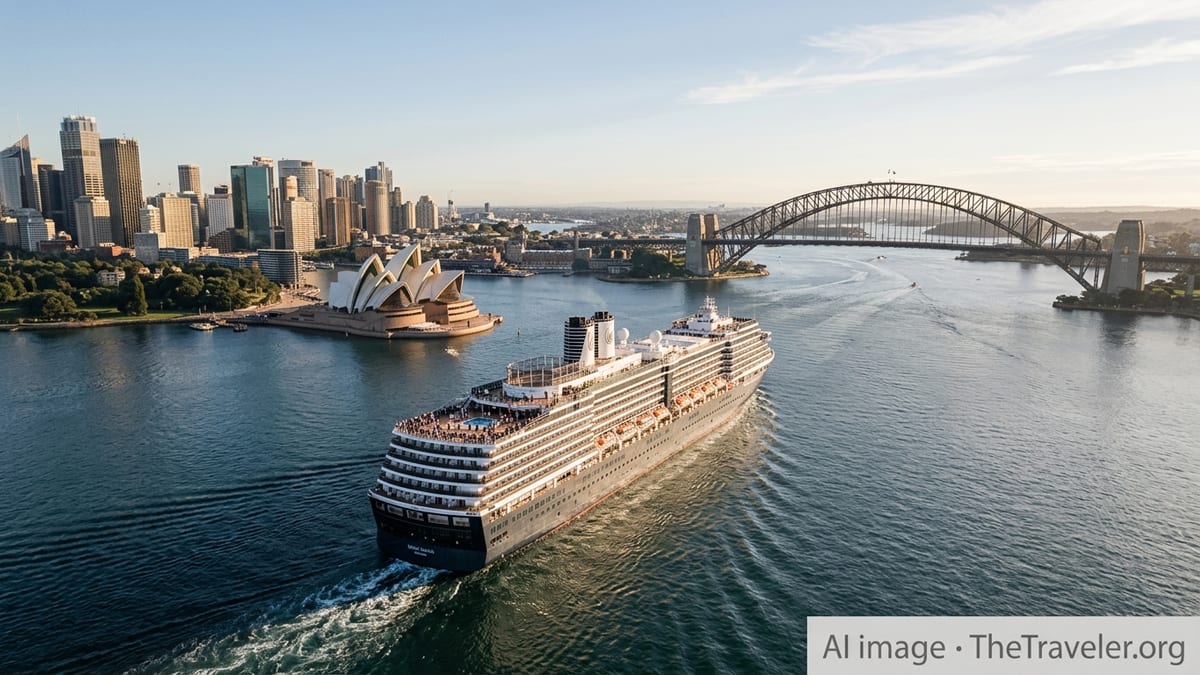
How Noordam’s 2026 Route Connects Two Pacific Gateways
Holland America’s deployment plans for 2026 position Noordam as a key link between Australia and the U.S. West Coast, with Sydney and San Diego emerging as strategic bookends for extended Pacific itineraries. Planning documents and trade listings for 2025–26 show Noordam operating a series of South Pacific crossings and regional voyages that either start or end in these ports, effectively stitching together Oceania, Hawaii and North America into one continuous corridor for long-haul cruisers.
According to publicly available itineraries, Noordam’s 2026 schedule includes a multiweek South Pacific crossing that departs from Sydney in mid March, visiting a string of island destinations before continuing on toward North America. Separate Holland America planning materials for 2025–26 highlight San Diego as a homeport for longer Mexico, Hawaii and Pacific sailings, indicating that the California city will play a growing role in repositioning patterns across the basin.
The Sydney departure joins a broader portfolio of so called legendary or extended voyages that the line has been building out for the mid 2020s. These itineraries typically run several weeks, combine marquee cities with remote islands, and are designed to appeal to experienced cruisers seeking longer, more immersive journeys that connect multiple regions in a single trip.
For travelers, the emerging pattern means more options to treat Sydney and San Diego as either anchors for back to back itineraries or standalone gateways to the wider Pacific. The alignment also creates new opportunities for tourism boards and local operators at each end of the route, as they tap into a steady stream of international passengers moving in both directions.
Signals of a Pacific Tourism Rebound
The renewed focus on extended South Pacific crossings comes as cruise tourism around the Pacific shows signs of a sustained rebound. Industry figures compiled by the Cruise Lines International Association indicate that global passenger volumes surpassed pre pandemic levels in 2023, with the Australia, New Zealand and South Pacific region accounting for the majority of Australian cruise demand by 2024. Analysts note that these trends have continued into the 2025–26 booking cycle, helped by pent up demand for international travel and longer holidays.
Economic assessments prepared for Pacific island governments also point to cruising as a growing contributor to tourism earnings in 2026, particularly from Australia and North America. Recent research from regional banks and tourism consultancies suggests that island economies are working to spread cruise visits beyond capital ports to secondary islands, an approach aimed at diversifying income and reducing pressure on already busy hubs.
On the U.S. side, San Diego and other West Coast ports are forecast to benefit from the same trajectory. Travel industry outlooks for 2026 highlight strong ship deployment along the West Coast and to Hawaii and Mexico, with several lines scheduling additional sailings and refurbishing terminals to handle long haul traffic. The inclusion of repositioning voyages such as Noordam’s South Pacific segment is seen as one way to balance seasonal demand between Alaska, the Pacific islands and Australasia.
For Sydney, the return of large scale international crossings is part of a changing cruise landscape following fleet realignments across the region. The integration of former local brands into larger global fleets has prompted lines to rethink where and how they base ships. Using Sydney as an anchor for long repositioning cruises toward North America allows operators to retain a strong Australian presence while tapping into a wider international network.
Key Itinerary Features for 2026 Repositioning Sailings
While specific day by day timings can shift, current schedules give a broad picture of what travelers can expect on Noordam’s 2026 South Pacific repositioning cruise. The March departure from Sydney is structured as a multiweek voyage that blends sea days with calls at island nations across the South Pacific, followed by a transoceanic segment toward the North American coast. Listings from several cruise retailers show the itinerary marketed as a South Pacific crossing, with an emphasis on gradual ocean travel and scenic approaches.
These repositioning routes typically include ports in New Caledonia, Fiji, American Samoa or French Polynesia, although exact combinations vary. Sea days across the mid Pacific and a crossing of the International Date Line are standard features, giving passengers extended time on board as well as the experience of moving between hemispheres and time zones in a single journey. In some cases, the cruise can be sold as part of a longer sequence that continues up the West Coast or connects to Alaska.
San Diego’s role in 2026 is linked to this broader pattern. Planning brochures for Holland America’s 2025–26 holiday seasons reference the city alongside Sydney and Mexican Riviera ports, underscoring its function as a turnaround point for extended voyages in the eastern Pacific. For guests, that translates into more itinerary combinations: some may choose the full transpacific crossing between Sydney and the U.S. West Coast, while others might book a segment that begins or ends in California and pair it with a separate sailing.
For the wider industry, these itineraries serve as repositioning in two senses: physically moving ships between seasonal deployments and symbolically signaling that the South Pacific and West Coast are open again for higher value, long duration cruise tourism. The 2026 season is therefore being watched as a test of how robust demand will be for such extended Pacific journeys in the mid decade period.
What Travelers Should Know Before Booking
Travel advisers and cruise retailers are encouraging prospective guests to pay close attention to timing, cabin categories and air arrangements when considering a 2026 transpacific sailing. Repositioning cruises are often once per season events, which means cabins on preferred decks or with specific views can sell out early. Because Noordam’s South Pacific voyage ties together multiple regions, travelers also need to factor in one way long haul flights either to Sydney or from San Diego, depending on the direction of travel they choose.
Publicly available itineraries emphasize that schedules and port calls can change based on operational or regulatory considerations, so travelers are being urged to review the latest details close to departure. Many industry commentators suggest looking at optional pre or post cruise land stays in Sydney, San Diego or key island ports to make the most of the long journey. This can help offset jet lag and allow time to experience urban culture on top of the onboard and island segments.
From a budgeting perspective, analysts note that repositioning cruises can offer comparatively strong per night value given their length and number of sea days, even though the upfront ticket price may appear higher than a shorter regional sailing. Travelers are also being reminded to factor in potential visa requirements, travel insurance that covers medical care and evacuation across multiple countries, and any health documentation rules that may apply in 2026.
Given the distances involved, cruise specialists advise paying particular attention to travel time buffers. Arriving at the embarkation city at least one day before departure is widely recommended, especially when flying into Sydney from North America or Europe. Similarly, building flexibility into return travel from San Diego can help mitigate the impact of any itinerary adjustments or delays.
Regional Impact on Sydney, San Diego and the Islands In Between
Tourism and port authorities in both Sydney and San Diego view extended cruises as catalysts for broader visitor spending. Reports from cruise and port industry groups indicate that passengers on longer itineraries tend to book higher value shore excursions, stay more nights in pre and post cruise hotels, and spend more on dining and cultural experiences compared with short break cruisers. That pattern is particularly important for city centers and waterfront districts that have invested in revitalization projects aimed at attracting both locals and visitors.
For Pacific island destinations along Noordam’s route, the return of large repositioning ships in 2026 offers a renewed opportunity to showcase local culture and develop new tourism products. Regional coverage from outlets in Australia and the Pacific notes that several island governments are seeking to spread cruise arrivals beyond main capitals to outer islands, with an emphasis on community based tourism, handicrafts and nature based excursions. The goal is to ensure that cruise spending reaches smaller communities while preserving environmental and cultural integrity.
San Diego’s strengthening role as a West Coast cruise hub dovetails with similar growth in other North American ports, creating a network of embarkation points for itineraries that touch the Pacific islands, Mexico, Hawaii and Australasia. Travel trade analysis suggests that this network effect can make it easier for travelers from different regions to access long haul voyages without connecting through a single dominant port.
Against that backdrop, Noordam’s 2026 repositioning cruise between Sydney and the U.S. West Coast is being viewed as part of a broader inflection point for Pacific cruising. If current projections hold, the season will test how effectively ports, local communities and cruise lines can convert renewed demand into sustainable, broadly shared tourism benefits across the ocean.