

More news on this day
US air travelers faced another day of mounting frustration on February 24 as the aftermath of a powerful nor’easter snarled operations at Miami International Airport, where 50 flight cancellations and at least 121 delays rippled across major carriers including American Airlines, Spirit, Delta and United.
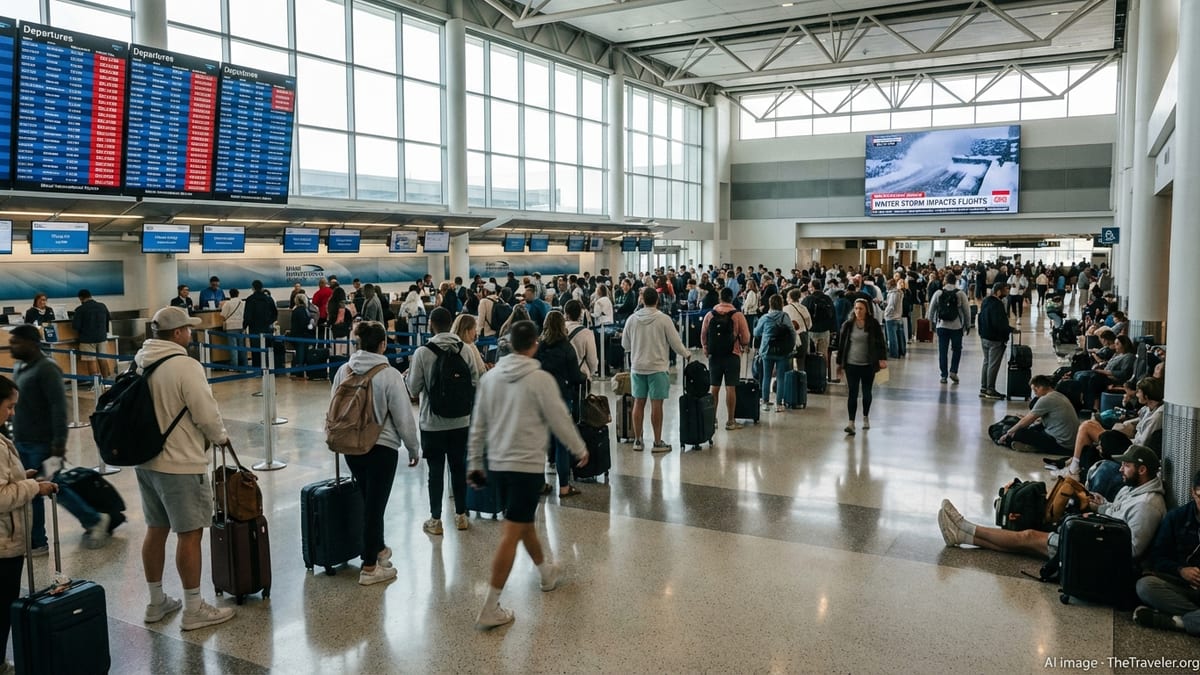
Miami International Struggles With Knock-On Effects
Miami International Airport, a critical gateway for both domestic and Latin American traffic, is now grappling with the second straight day of serious disruption tied to the winter storm hammering the US Northeast. As of early Tuesday, airport data showed 50 flights canceled and 121 delayed, all on domestic routes, as aircraft and crews remained out of position across the national network.
The figures reflect a sharp shift from the usual steady winter operations at Miami, which has avoided the snow and ice but not the cascading impacts of a systemwide weather event. Airlines are scrambling to rotate planes and reassign crews as far away as Florida to cope with extensive schedule changes in Boston, New York, Philadelphia and Washington, D.C., where blizzard conditions, high winds and visibility issues have constrained airport capacity.
For passengers, the numbers translate into crowded gate areas, snaking customer-service lines and rolling departure boards, with Miami’s role as a connecting hub amplifying the disruption as missed inbound flights cause further knock-on delays for travelers heading to the Caribbean, Central America and the US West Coast.
Airport officials in South Florida have urged passengers to arrive early and remain flexible, warning that the recovery from the nor’easter will likely extend beyond Tuesday as airlines work through backlogs and reposition aircraft throughout their networks.
Major US Carriers Hit as Winter Storm Hernando Disrupts Networks
The storm, named Winter Storm Hernando by forecasters, has rapidly become one of the most disruptive aviation events of the season, forcing airlines to cancel more than 10,000 flights nationwide between Sunday and Tuesday. That pressure has landed heavily on the major US carriers that dominate Miami’s schedule, including American Airlines, Delta Air Lines, United Airlines and ultra-low-cost operator Spirit Airlines.
American, which maintains a major hub operation at Miami International, has been responsible for nearly half of the cancellations there today, trimming departures and arrivals as it juggles constraints at key Northeast airports. Delta has also scrubbed multiple flights to and from Miami, while United and Spirit have been forced to ground additional services as their fleets and crews remain scattered across weather-affected hubs.
Systemwide, the storm’s combination of heavy snow, gusty winds and whiteout conditions in the Northeast has led carriers to issue proactive travel waivers, encouraging passengers with flexible plans to move their trips to later in the week. Industry analysts say this strategy, while disruptive in the short term, can help airlines avoid the more severe gridlock that occurs when flights are left on the schedule only to be canceled at the last minute.
Complicating matters, carriers are also working to absorb residual congestion from earlier operational snags, including a recent technical issue at Delta that slowed check-in and boarding across parts of its network just as the nor’easter intensified, stretching resources across multiple regions.
South Florida Airports Share the Burden
Miami is not alone in feeling the aftershocks of the nor’easter. Across South Florida, Fort Lauderdale-Hollywood International Airport and Palm Beach International Airport are also reporting high levels of disruption, creating a regional bottleneck for travelers trying to enter or exit the state.
By early Tuesday, Fort Lauderdale had logged dozens of cancellations and delays, particularly on routes to New York, Boston and other Northeastern cities directly in the storm’s path. Palm Beach International has also seen a surge in grounded flights, with some carriers canceling large portions of their schedules to the Northeast while they wait for conditions there to stabilize and runways to fully reopen.
At Miami, the 50 cancellations and 121 delays are adding to a backlog that began building over the weekend, when airlines first started preemptively scrubbing flights as forecasts called for a classic nor’easter with heavy snow, coastal flooding and significant wind. The knock-on effect is that even flights to destinations enjoying clear skies are being disrupted as aircraft remain stuck at snowbound airports or arrive late into South Florida.
Local aviation observers note that while Florida’s mild weather may offer a welcome contrast to blizzard conditions to the north, its airports are deeply interconnected with the national air traffic system, and thus highly vulnerable to major events unfolding hundreds or even thousands of miles away.
Passengers Face Long Lines, Limited Options and Rising Fares
For many travelers moving through Miami International on Tuesday, the nor’easter’s impact is measured not in weather maps but in hours spent in queues and on hold with airline call centers. Social media posts from passengers show long lines curling around ticket counters as families, business travelers and cruise passengers attempt to rebook missed connections or salvage vacation plans.
With aircraft fully booked in the peak winter travel period, re-accommodation options have been limited, particularly for those heading to or from smaller Northeastern cities where frequency has already been reduced in recent years. Some travelers are being routed through alternative hubs such as Atlanta, Charlotte or Dallas, while others are facing multi-day waits for the next available seat to their destination.
Travelers report that last-minute fares on remaining open routes have climbed sharply, reflecting strong demand and reduced capacity. While some airlines are waiving change fees and fare differences for affected passengers, others are only offering flexibility within specific travel windows, leaving budget-conscious flyers with difficult choices.
Airport staff and airline ground crews in Miami have spent much of the day assisting stranded customers with meal vouchers where policies allow, helping them locate hotel rooms and advising them on their rights under US Department of Transportation rules for cancellations and delays, particularly where disruptions are tied to weather rather than operational issues within the airline’s control.
What Travelers Through Miami Should Do Now
With schedules still in flux, travel experts advise anyone flying into or out of Miami International over the next 24 to 48 hours to treat their booking as tentative rather than fixed. Passengers are urged to monitor their flight status closely through airline apps or text alerts, and to confirm departure times before heading to the airport.
Those with nonessential trips may find it easier to take advantage of the travel waivers many carriers have issued, shifting their plans to later in the week or even into early March to avoid the worst of the congestion. Flexible travelers might also consider alternative airports in South Florida, such as Fort Lauderdale or Palm Beach, where a different mix of carriers and routes could offer more options, though these facilities are also feeling the storm’s effects.
At the terminal level, arriving early remains key. Security lines in Miami and other South Florida airports have grown longer as disrupted passengers crowd earlier flights in hopes of securing standby seats. Officials recommend that domestic travelers arrive at least two hours before departure, and international passengers even earlier, to account for potential check-in delays and busy security checkpoints.
While the nor’easter itself is expected to weaken as it moves away from the Northeast, the operational hangover across the US air transport system is likely to persist. For thousands of passengers funneling through Miami International today, the real challenge will be navigating the complex and often slow-moving process of getting planes and people back to where they need to be.